How to Charge Portable Power Station While Driving
Charging your portable power station inside a moving vehicle requires understanding automotive electrical limits. Proper mobile power integration protects both your vehicle alternator and your generator battery.

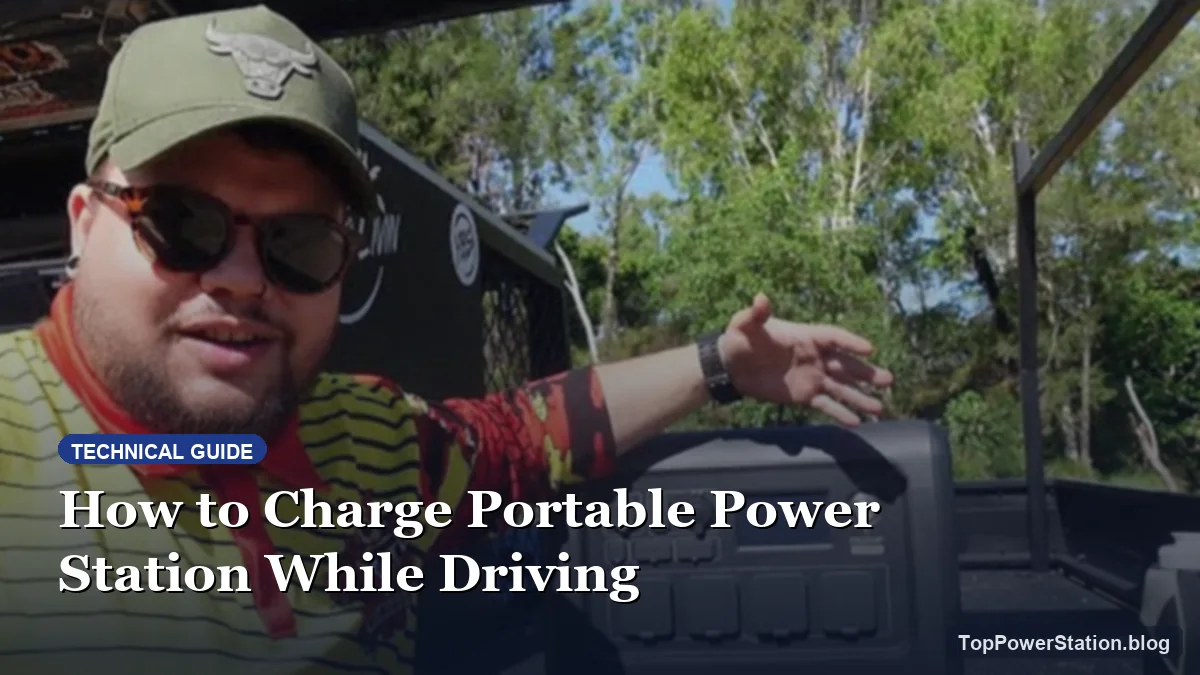
Always match your generator input limits to your vehicle socket capacity. Never exceed ten amperes on standard accessory ports without upgrading dedicated wiring.
Ready to compare models? Start with our Best Portable Power Station: Top Backup & Off-Grid Picks.
Practical Quick-Reference Table
| Scenario / Metric | Recommended Target | Why It Matters |
|---|---|---|
| Standard 12V Socket | Max 10A to 15A | Prevents blown fuses and melted factory wiring harnesses. |
| Dedicated DC-DC Charger | 20A to 40A | Safely delivers faster power without straining factory circuits. |
| Inverter Efficiency Loss | 10% to 20% wasted | Direct DC charging avoids unnecessary energy conversion overhead. |
| Cable Gauge (AWG) | 10 AWG to 8 AWG | Minimizes voltage drop over extended vehicle run lengths. |
| Alternator Capacity | 130A minimum | Ensures sufficient headroom for vehicle and auxiliary loads. |
| Cabin Ventilation | Unobstructed airflow | Prevents thermal throttling during high-draw charging sessions. |
Understanding Vehicle Electrical Architecture for Mobile Power
Modern vehicles utilize complex electrical systems designed to power critical engine components and accessories. Connecting a large energy storage device demands careful evaluation of your alternator output capacity.
Standard automotive alternators generate alternating current that rectifies into direct current for onboard electronics. Drawing excessive auxiliary power can overheat factory wiring harnesses if limits are ignored.
Manufacturers typically provision accessory sockets for low-draw devices like smartphones or GPS units. High-capacity energy storage systems require dedicated power routing to prevent blown fuses.
Evaluating your vehicle electrical handbook helps determine safe continuous amperage thresholds. Maintaining adequate headroom ensures your starter battery remains fully charged during extended trips.
Modern vehicle alternators typically output between 13.5 and 14.8 volts while running, supplying sufficient electrical pressure to power auxiliary electronics without draining the primary starter battery prematurely.
Factory wiring harnesses often feature restrictive gauges, frequently using 16 AWG copper wire which introduces measurable voltage drop over long vehicle runs before reaching your trunk or cargo area.
Smart alternator systems found on newer automobiles actively modulate output down to 12.2 volts during cruising to conserve fuel, which can disrupt charging cycles when powering options from our best portable power station guide.
Consulting your vehicle owner manual helps identify maximum circuit capacities, ensuring you never exceed standard fuse ratings like the typical 15-amp limit associated with standard interior accessory power outlets.
- Verify factory alternator amperage ratings before connecting auxiliary loads.
- Monitor vehicle voltage gauges during initial power station connection.
- Keep engine running while charging to prevent starter battery depletion.
- Avoid using cheap splitters that concentrate high current loads.
Standard 12V Socket Output Limitations
Factory accessory outlets rarely sustain more than ten to fifteen amperes of continuous current. Pushing past this threshold triggers thermal protection circuits or trips standard blade fuses.
Voltage drop over long cable runs further reduces the actual power delivered to your generator. Shorter cable routing significantly improves overall charging efficiency while driving.
- Calculate maximum wattage by multiplying socket volts by rated amps.
- Inspect accessory plug tips for built-in replaceable glass fuses.
Utilizing DC-to-DC Cigarette Lighter Adapters Safely
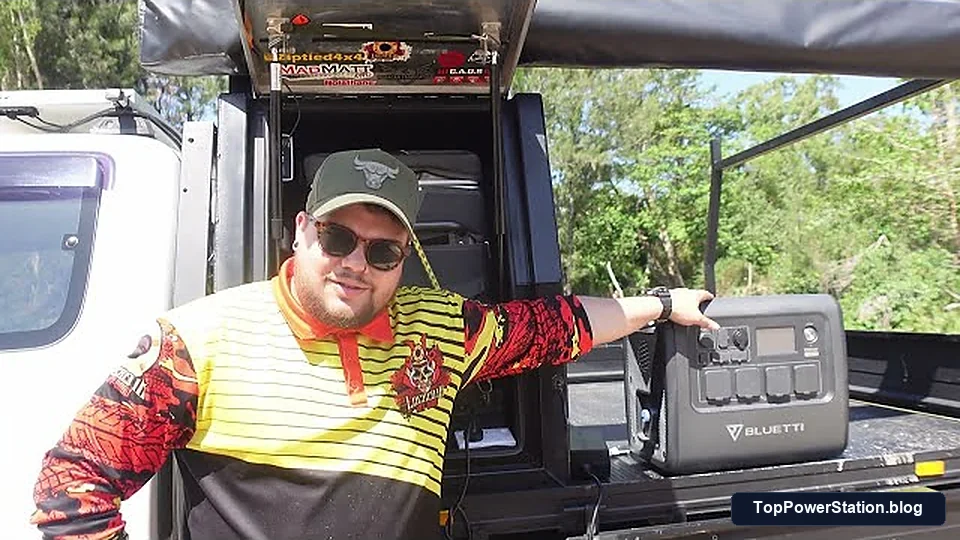
Cigarette lighter adapters offer the simplest plug-and-play method for mobile generator charging. Most power stations include a standard 12V vehicle charging cable out of the box.
These adapters regulate input voltage to match the delicate internal chemistry of lithium batteries. However, charging speeds remain relatively slow due to strict factory socket limitations.
Users must ensure the adapter plug fits snugly inside the vehicle socket to prevent arcing. Loose connections generate high resistance, leading to excessive heat and melted plastic housings.
Disconnect the adapter immediately if the plug feels unusually warm during use, especially when running heavy equipment selected from our best portable power station for camping recommendations.
Standard auxiliary power outlets are generally rated for a maximum of 120 watts of continuous power delivery, making them unsuitable for high-capacity charging units without proper input limitation adjustments.
Quality 12V charging cables incorporate replaceable glass tube fuses inside the threaded tip to protect your vehicle electrical system from sudden current spikes or internal short circuit events.
Always configure your power station charging app or menu settings to draw no more than 8 amps from the socket to prevent overheating the factory wiring and melting receptacle housings.
Periodically inspect the metal contact points inside the socket for carbon buildup or debris, which can increase electrical resistance and cause severe thermal degradation during long driving sessions.
- Check adapter fuse ratings before initiating long road trips.
- Avoid wrapping coiled cables tightly to prevent heat accumulation.
- Unplug charging adapters when restarting the vehicle engine.
- Keep auxiliary sockets clean from dust and metallic debris.
Managing Fuse Ratings and Wire Gauges
Factory charging cables incorporate inline fuses designed to protect vehicle wiring. Replacing blown fuses requires matching the exact amperage rating specified by the manufacturer.
Thicker internal wire gauges reduce electrical resistance and improve overall power transfer. Upgrading to heavy-duty cabling prevents voltage sag during high-draw charging sessions.
- Always carry spare fuses matching your specific charging cable.
- Inspect wire insulation periodically for signs of abrasion.
Video Walkthrough: Charge Your Power Station While Driving! (Easy DIY Install)
Integrating Dedicated Dual-Battery Systems and Alternators
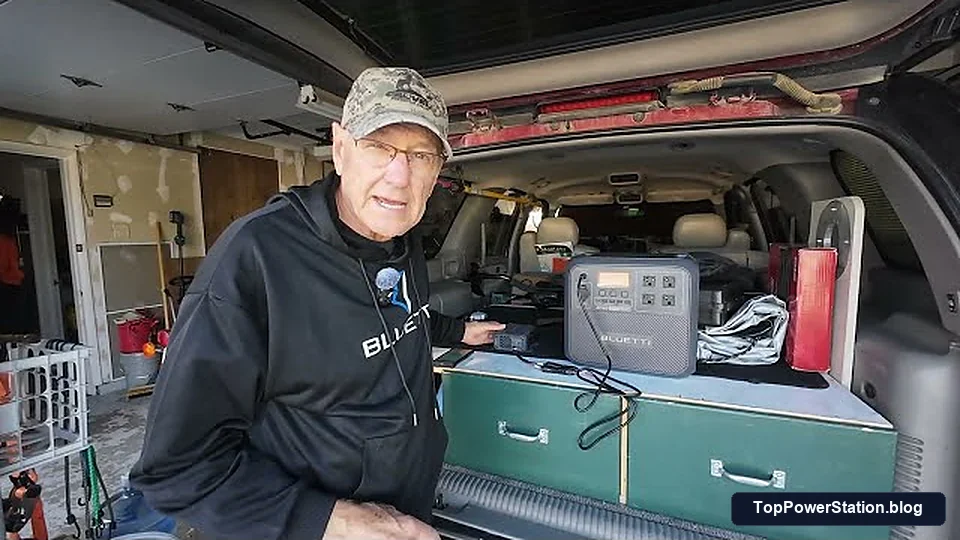
Advanced overland setups often utilize dedicated secondary batteries paired with specialized DC-DC chargers. This hardware isolates your starter battery while safely transferring high current.
Smart battery isolators monitor alternator output and only connect auxiliary circuits when voltage rises. This automation ensures your vehicle will always start reliably in remote areas.
Professional installation requires running heavy-gauge cables directly from the engine bay to the rear cargo area. Securely fastening these lines prevents chafing against sharp metal vehicle frames.
Configuring custom charging profiles maximizes energy transfer speed without overloading your factory alternator. Proper tuning extends equipment lifespan significantly across demanding off-road conditions.
Installing an isolated auxiliary battery utilizing a voltage sensitive relay ensures your starter battery remains fully charged while routing excess alternator output directly to your mobile power ecosystem.
Heavy-duty installations require running 2 AWG cable directly from the engine bay to the rear cargo area, minimizing voltage drop over extended runs and maximizing current transfer efficiency.
Modern DC-to-DC battery chargers step up or regulate current precisely, protecting lithium chemistry packs by delivering a stable three-stage charging profile even when vehicle voltage fluctuates erratically.
Secure all running cables with rubber-lined P-clamps every twelve inches, preventing chaffing against sharp metal chassis components that could trigger catastrophic electrical shorts during rugged off-road driving.
- Install circuit breakers near both battery connection terminals.
- Select DC-DC chargers compatible with your specific battery chemistry.
- Secure all routing lines away from hot exhaust components.
- Test isolation relays annually for proper voltage switching.
Isolator Configuration and Voltage Sensing Relays
Voltage sensing relays automatically engage auxiliary charging circuits when alternator output exceeds thirteen volts. This prevents deep discharge cycles on your primary starting battery.
Proper configuration prevents parasitic draw when the vehicle engine remains turned off. Manual override switches provide emergency jump-starting capability if primary batteries fail unexpectedly.
- Set engagement thresholds according to manufacturer specifications.
- Verify ground connections are free of paint and corrosion.
Harnessing Portable Inverters and AC Charging Methods
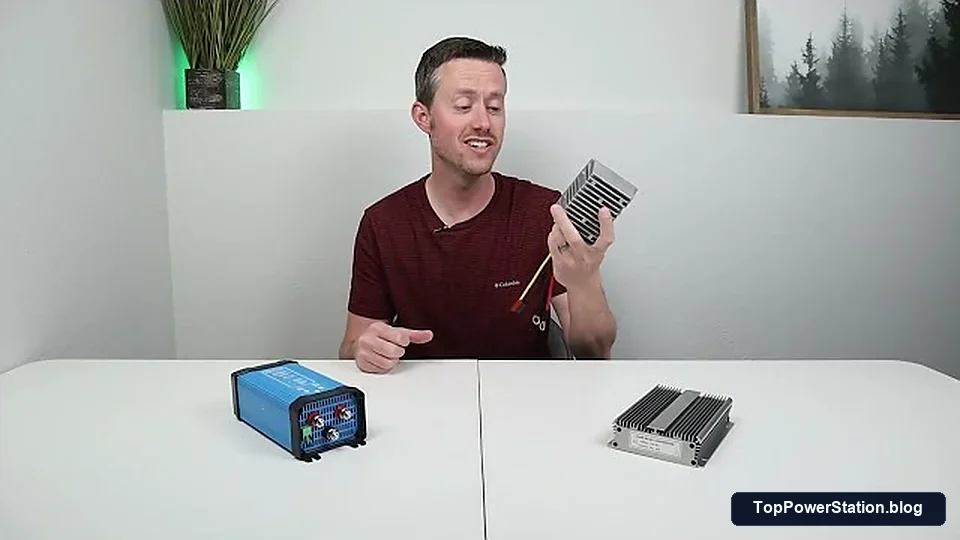
Some users connect standard AC wall chargers to vehicle-mounted DC-to-AC power inverters. While functional, this method introduces multiple conversion steps that reduce overall system efficiency.
Inverting 12V DC power to 110V AC, only to convert it back to DC, wastes energy. Expect noticeable heat generation and reduced net charging speeds during operation.
Pure sine wave inverters are mandatory when charging sensitive electronics safely, a critical feature highlighted in our best portable power station for home backup lineup.
Calculate total continuous inverter draw against your vehicle alternator capacity limits. Exceeding safe thresholds will quickly drain your starter battery or pop heavy fuses.
Connecting your power station to a vehicle-mounted pure sine wave inverter allows utilizing the original AC wall charger, though this method introduces a double-conversion energy loss of 15 to 20 percent.
Never plug high-wattage power stations into dashboard inverters exceeding your alternator output capacity, as continuous loads above 300 watts demand direct battery connections using heavy ring terminals.
Ensure your mobile inverter features low voltage cutoff protection to automatically shut down AC power before draining your starter battery below safe engine cranking thresholds.
Pure sine wave output is mandatory for sensitive AC charging bricks to prevent internal transformer hum, excessive component heat generation, and potential premature failure of your power station.
- Mount inverters in well-ventilated locations away from moisture.
- Choose pure sine wave inverters for sensitive electronic gear.
- Never exceed the continuous wattage rating of your inverter.
- Turn off the inverter when the vehicle engine is idle.
Efficiency Losses Through Inversion Stages
Double conversion systems typically suffer fifteen to twenty percent total energy loss. This wasted power transforms directly into ambient heat within your vehicle cabin.
Direct DC-to-DC charging remains vastly superior for fuel efficiency and battery health. Reserve AC inversion methods for emergency backup scenarios only.
- Monitor inverter cooling fans for proper airflow operation.
- Calculate parasitic losses before planning extended trips.
Managing Thermal Regulation and Ventilation Inside Vehicles
Vehicle interiors experience extreme temperature fluctuations during normal daytime driving conditions. Direct sunlight through windows can quickly overheat portable power stations during active charging.
High ambient temperatures trigger internal thermal protection circuits, temporarily halting power intake. Ensuring adequate cabin airflow prevents premature charging shutdowns on long journeys.
Never enclose your power station inside tightly sealed storage boxes without ventilation, which helps maintain efficiency values calculated through our power station runtime calculator accurately.
Position your equipment securely on stable flooring to prevent sliding during sudden braking maneuvers. Use heavy-duty tie-down straps to anchor heavy power units firmly in place.
Cabin temperatures inside closed vehicles can easily exceed 130 degrees Fahrenheit during summer months, drastically impairing the lithium-ion battery management system ability to safely accept high-rate charging current.
Position your power station on the floorboard in a secure, well-ventilated space, maintaining a minimum clearance of four inches around all integrated cooling fan intake and exhaust ports.
Avoid placing heavy cargo, blankets, or luggage directly on top of operating charging units, as restricted airflow rapidly elevates internal component temperatures and triggers thermal shutdown protection modes.
Utilize vehicle air conditioning climate controls to direct cool airflow toward your trunk area during extended driving trips to maintain optimal internal battery temperatures below 40 degrees Celsius.
- Keep cooling vents clear of blankets, bags, and cargo gear.
- Park in shaded areas whenever possible during prolonged stops.
- Use sunshades to minimize radiant heat buildup inside vehicles.
- Monitor power station internal temperature displays regularly.
Preventing Overheating in Confined Trunk Spaces
Enclosed trunk compartments trap heat efficiently and restrict vital cooling airflow. Providing dedicated DC fans improves thermal management for rear-mounted equipment setups.
Check equipment surface temperatures periodically during warm summer driving conditions. Relocate units to the main cabin area if thermal warnings appear.
- Clear cargo away from intake and exhaust cooling vents.
- Install small 12V circulating fans in enclosed cabinets.
Preventive Maintenance Protocols for Mobile Charging Setups
Routine inspection of your mobile charging cables prevents unexpected failures on the road. Vibrations from driving loosen plug connections and terminal screws over extended periods.
Clean metal connector pins periodically using specialized electrical contact cleaner sprays. Removing oxidation ensures optimal electrical conductivity and prevents localized hot spots.
Test inline fuses and circuit breakers annually to verify proper trip mechanics. Replacing aging wiring harnesses maintains peak performance across harsh driving environments.
Store charging cables neatly without sharp bends to protect internal copper strands. Proper maintenance extends the functional lifespan of your entire mobile power ecosystem.
Establish a monthly inspection routine to check all high-current Anderson Powerpole or XT60 connectors for signs of surface oxidation, melting plastic housings, or loose pin retention forces.
Clean metallic connection terminals using a specialized electrical contact cleaner spray every 90 days to remove road grime, dust accumulation, and microscopic grease films that impede current flow.
Verify torque specifications on all battery terminal lugs and chassis ground connections annually using a calibrated wrench to prevent high-resistance joints that generate dangerous localized heat spots.
Store detachable charging cables loosely coiled in protective canvas bags rather than tight sharp bends to prevent microscopic copper strand breakage inside the outer insulation jacketing.
- Inspect cable insulation for cracking or fraying regularly.
- Tighten mounting hardware on inverters and dual-battery systems.
- Clean dust from cooling fans and ventilation grilles.
- Verify firmware updates for smart power station units.
Routine Inspection of Connectors and Terminals
Battery terminals and Anderson power poles accumulate grime during off-road travel. Inspecting these contact points prevents high resistance faults and power loss.
Apply dielectric grease to exposed electrical connections to inhibit rust formation. Simple preventive steps ensure reliable power delivery whenever you travel.
- Check terminal torque specifications using a wrench.
- Replace corroded ring terminals immediately.
Frequently Asked Questions
Can I charge my portable power station using a standard car cigarette lighter?
Yes, most units include a 12V adapter cable for standard vehicle sockets. Always monitor amperage limits to prevent blowing factory fuses.
Will charging a power station drain my vehicle starter battery?
It can deplete your battery if the engine is turned off. Always keep your vehicle running while charging large capacity power storage units.
Why is my power station charging so slowly inside my vehicle?
Standard 12V accessory ports limit power output to ten amps. Upgrading to a dedicated DC-to-DC charger significantly increases charging speed.
Is it safe to leave a power station plugged into a car overnight?
Leaving units plugged in overnight risks draining your starter battery completely. Always disconnect charging cables unless using a dedicated smart isolator.
How do I prevent my power station from overheating while driving?
Ensure adequate cabin ventilation and keep cooling fans completely unblocked. Avoid placing heavy power units inside sealed trunk compartments without airflow.