How to Calculate Watt-Hours for Power Station
Calculating power station storage capacity ensures your critical devices stay operational during grid failures. Master these foundational formulas to match exact electrical loads with reliable portable generators.


Multiply your running wattage by required hours, then divide by inverter efficiency to determine true portable power station capacity needs.
Ready to compare models? Start with our Best Portable Power Station: Top Backup & Off-Grid Picks.
Practical Quick-Reference Table
| Scenario / Metric | Recommended Target | Why It Matters |
|---|---|---|
| Smartphone Charging | 10 to 20 Watt-Hours | Accounts for minor charging conversion losses efficiently. |
| Laptop Operation | 50 to 100 Watt-Hours | Matches typical mobile computing power draws under load. |
| CPAP Machine Night | 300 to 400 Watt-Hours | Sustains medical hardware through eight continuous operational hours. |
| Mini Refrigerator | 500 to 700 Watt-Hours | Handles compressor surge cycles and intermittent cooling duties. |
| Inverter Efficiency | 85 Percent Average | Reflects real-world DC-to-AC power conversion energy loss. |
| Capacity Depth | 80 Percent Usable Limit | Preserves long-term lithium battery health and cell longevity. |
Decoding Electrical Units and Storage Fundamentals
Understanding portable power station capacity requires separating volts, amperes, and watt-hours into distinct electrical concepts. Selecting options from our refrigerator power station roundup helps clarify how voltage pushes current safely.
Amperes measure the actual volume of electrical current flowing through a circuit per second. Combining these metrics yields wattage, which defines the instantaneous power consumed by your running appliances.
Watt-hours quantify total energy storage capacity over a specific duration of time. A power station rated at one thousand watt-hours can theoretically deliver one hundred watts for ten hours straight.
Understanding watt-hours requires grasping volts and amp-hours. Voltage represents electrical pressure, while amp-hours measure total charge capacity over time within your lithium battery bank.
Multiplying nominal voltage by amp-hours yields total energy storage capacity. Standard portable power stations typically operate on 12V or 48V internal architectures depending on their power output class.
Manufacturers specify total energy capacity under strict laboratory conditions. Real-world users must account for inverter efficiency loss which typically consumes 10 to 15 percent during direct current conversion.
- Volts measure electrical pressure across circuits.
- Amperes track the volume of current flow.
- Watts indicate instantaneous power consumption rates.
- Watt-hours define total stored energy capacity.
Differentiating Running Watts from Surge Ratings
Motors inside refrigerators and pumps require massive initial surges to start spinning. Your calculations must account for peak surge wattage alongside continuous running power.
Failing to factor in starting surges will trip internal overload protections instantly. Always verify the maximum surge rating of both your appliances and your generator.
- Identify continuous running wattage requirements.
- Check motor compressor startup surge peaks.
- Verify inverter overload safety thresholds.
Cataloging Device Power Demands and Duty Cycles
Accurate load calculation begins with auditing every electronic device you plan to power. Locate the nameplate technical label on each appliance to find exact voltage and amperage draws.

Multiply the listed amperes by operating voltage to determine total wattage if only current is provided. Document both continuous loads and intermittent usage patterns for precise mathematical modeling.
Heating elements and motor-driven compressors rarely run continuously under normal household conditions. Factoring in realistic duty cycles prevents massive overestimation of your total energy consumption needs.
Accurately sizing your portable generator starts with listing every appliance's running wattage. Check the manufacturer label or specification plate for true operational draw measured in watts or amperes.
Motor-driven equipment like refrigerators introduces surge power demands. Compressors require up to three times their normal running watts during initial startup phases, impacting your total energy budget calculations.
Duty cycle analysis reveals how long appliances actually run daily. A refrigerator cycles on and off intermittently, meaning it rarely consumes its maximum rated hourly wattage continuously over twenty-four hours.
- Locate nameplate ratings on all target devices.
- Convert device amperage specifications into watts.
- Account for intermittent appliance duty cycles.
- Separate continuous loads from peak requirements.
Reading Technical Labels on Modern Electronics
Nameplates often list maximum power consumption rather than average running loads. Use a plug-in power meter to measure actual real-world wattage during standard operating conditions.
Switch-mode power supplies on modern laptops exhibit variable draw characteristics. Measuring actual consumption ensures your calculated watt-hour requirements reflect true operational scenarios.
- Use inline power meters for accurate readings.
- Ignore maximum burst ratings on continuous loads.
- Account for variable power supply draws.
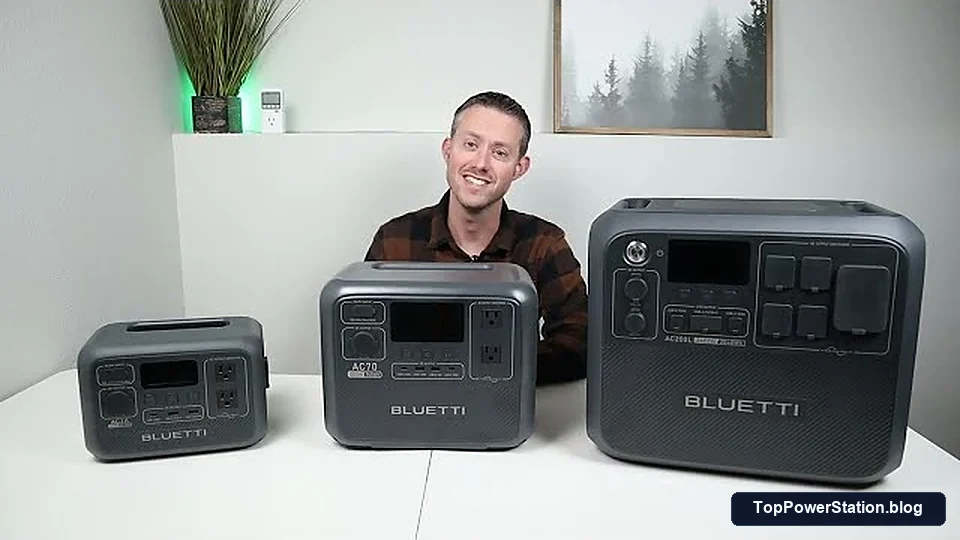
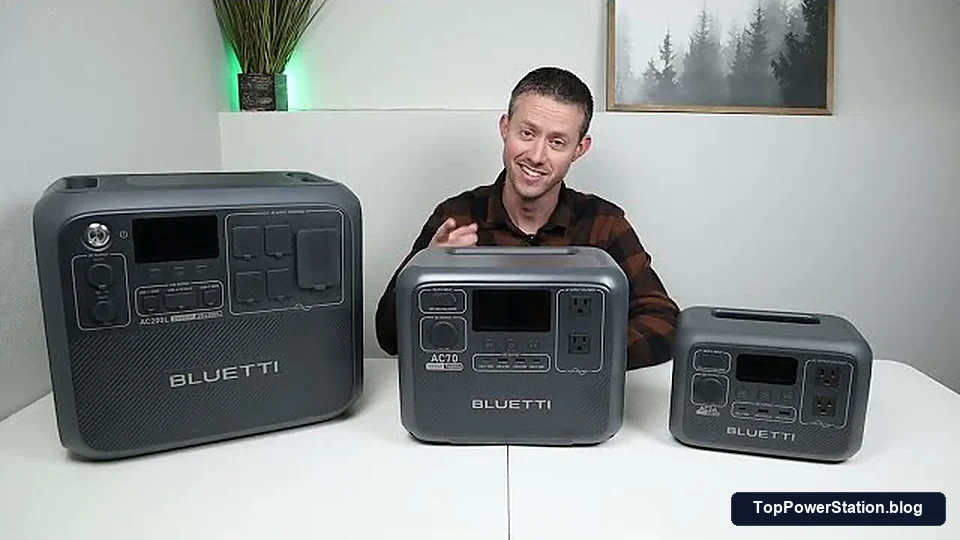
Video Walkthrough: Easily Calculate Power Station Run-times! - Bluetti AC2A, AC70, AC200L Compared!
Applying the Core Mathematical Calculation Formulas
The fundamental equation for determining required capacity involves multiplying device wattage by running hours. Divide that subtotal by inverter efficiency coefficients to secure realistic operational estimates.
For example, running a sixty-watt television for five hours requires three hundred base watt-hours. Factoring in conversion losses means you actually need approximately three hundred fifty watt-hours total.
Always structure your equations systematically to avoid overlooking minor peripheral loads. Charging accessories and internal cooling fans also consume small amounts of stored station energy.
Calculate total runtime by dividing usable watt-hours by the appliance wattage. For example, a 500Wh generator running a 50-watt device yields roughly ten hours under theoretical laboratory conditions.
Always apply a depth of discharge safety margin to protect internal battery cells. Standard LiFePO4 batteries safely allow up to 80 percent discharge without degrading their long-term cyclic lifespan.
Factor in inverter conversion efficiency by multiplying your total available storage by 0.85. This practical adjustment prevents unexpected shutdowns when powering sensitive electronics via standard AC household outlets.
- Multiply wattage demand by desired operating hours.
- Divide baseline energy results by efficiency factors.
- Add safety margins for internal cooling fans.
- Incorporate peripheral charging accessory draws.
Factoring Inverter Efficiency and Conversion Loss
Inverting stored direct current into alternating current generates thermal waste energy. Top options evaluated within our home backup power stations operate at roughly eighty-five percent efficiency during heavy loads.
This fifteen percent conversion loss means stored energy capacity diminishes before reaching your appliances. Never assume a one-to-one ratio between stored watt-hours and delivered output.
- Expect fifteen percent average conversion loss.
- Thermal dissipation reduces total output capacity.
- Prioritize DC ports for higher efficiency.
Addressing Environmental and Battery Chemistry Variables
Ambient operating temperatures significantly alter actual usable battery capacity during discharge cycles. Extreme cold conditions increase internal resistance and reduce chemical reaction speeds inside lithium cells.
Conversely, operating power stations in excessive heat degrades overall battery lifespan and triggers thermal throttling. Maintain moderate storage temperatures to ensure you achieve calculated runtime expectations consistently.
Depth of discharge limits also dictate how many watt-hours you can safely extract. Modern lithium-iron-phosphate batteries permit deeper discharges than older chemistry types without sustaining damage.
Ambient temperature drastically alters available battery capacity. Operating portable power stations below freezing causes chemical reactions to slow down, reducing usable watt-hours by up to thirty percent.
Battery chemistry dictates longevity and performance under heavy thermal loads. Modern lithium iron phosphate cells offer superior thermal stability compared to older lead-acid variants found in traditional backup systems.
Proper ventilation prevents thermal throttling during high-draw operations. Maintain at least four inches of clearance around cooling fans to ensure optimal airflow and prevent premature thermal shutdown events.
- Cold temperatures increase internal battery resistance.
- Excessive heat triggers thermal protection throttling.
- Observe manufacturer depth of discharge limits.
- Maintain moderate ambient operating environments.
Chemistry Differences Between NMC and LFP Cells
Nickel Manganese Cobalt chemistries offer high energy density in compact form factors. However, Lithium Iron Phosphate cells provide vastly superior cycle life and thermal stability for heavy users.
Understanding your power station internal chemistry helps you predict degradation over time. LFP batteries retain usable capacity far longer than alternative chemical compositions during daily cycling.
- NMC cells offer high initial energy density.
- LFP batteries deliver extended operational cycles.
- Compare degradation rates across chemistry types.
Executing Step-by-Step Practical Scenario Worksheets
Let us calculate an emergency medical equipment backup scenario requiring steady power. A CPAP machine draws forty watts and operates for eight hours during a typical overnight power failure.
Multiply forty watts by eight hours to yield three hundred twenty baseline watt-hours. Dividing by an inverter efficiency factor of eighty-five percent requires a three hundred seventy-six watt-hour minimum.
Adding a twenty percent safety buffer for battery aging results in four hundred fifty watt-hours. Selecting a unit matching this target ensures reliable overnight medical equipment operation.
Create a realistic emergency outage worksheet by summing critical loads. A 100W medical device and a 15W LED lamp combine to demand 115 watts of continuous power output.
Multiply combined hourly load by your target operational timeframe. Running those essential devices for eight hours requires 920 watt-hours of raw energy before applying inverter and efficiency loss factors.
Select a power station rated above your calculated threshold. Running our interactive power station runtime calculator helps determine if a 1500Wh unit provides sufficient safety buffers.
- Calculate baseline energy for medical devices.
- Apply inverter efficiency conversion divisors.
- Incorporate a twenty percent aging buffer.
- Select matching power station capacity ratings.
Calculating Multi-Device Simultaneous Run Times
When running multiple devices simultaneously, sum their individual continuous wattages together. Divide total station capacity by this combined wattage to find approximate total runtime under heavy loads.
Always prioritize critical loads if total wattage approaches maximum inverter limits. Shedding non-essential appliances extends overall operational duration during extended grid outages.
- Sum continuous wattages for combined loads.
- Divide total capacity by aggregate consumption.
- Shed non-essential appliances to save power.
Video Walkthrough: Watts vs Watt hours
Preventive Maintenance to Preserve Storage Capacity
Regular maintenance ensures your portable power station retains its calculated watt-hour capacity over years. Units chosen from our camping power station guide require storage at a fifty percent charge in climate-controlled environments.
Perform routine calibration cycles by fully discharging and recharging the internal battery management system. This practice maintains accurate percentage readouts on the digital display screen.
Inspect exterior connection ports for dust accumulation and oxidation to maintain low electrical resistance. Clean contacts periodically with dry microfibers to ensure maximum energy transfer efficiency.
Regular firmware updates optimize internal battery management systems. Manufacturers frequently release patches that improve charging algorithms and enhance overall energy transfer efficiency across all available ports.
Store units at a fifty percent state of charge during long periods of non-use. Keeping lithium cells fully charged or completely empty accelerates permanent capacity degradation over time.
Inspect all physical connector fittings and heavy-duty cables annually. Corroded contacts increase electrical resistance, generating excess heat and wasting precious stored watt-hours during high-amperage charging sessions.
- Store units at fifty percent charge levels.
- Perform periodic full calibration cycles.
- Inspect connection ports for dust buildup.
- Clean contact terminals with dry cloths.
Monitoring Battery Health via Digital Displays
Modern power stations feature advanced battery management systems tracking voltage and temperature metrics. Monitor input and output wattage readouts to catch potential system anomalies early.
Calibrated internal monitors prevent unexpected shutdowns by providing precise remaining runtime estimates. Trust these digital metrics once your baseline mathematical calculations are confirmed.
- Review battery management system readouts.
- Track input and output wattage metrics.
- Rely on calibrated digital time estimators.
Frequently Asked Questions
How do I convert amp-hours to watt-hours?
Multiply your total amp-hours by the nominal system voltage. This simple equation reveals your total watt-hour capacity instantly.
Why does my power station run out of power faster than calculated?
Inverter conversion losses and environmental temperatures reduce actual usable energy. Always factor in an eighty-five percent efficiency rating for accurate estimates.
Do DC ports provide better efficiency than AC outlets?
Yes, using direct current ports bypasses the inverter entirely. This eliminates conversion losses and maximizes total runtime for compatible devices.
What is the recommended depth of discharge for daily use?
Limiting your regular discharges to eighty percent preserves long-term battery health. Modern lithium chemistry handles deep cycling, but shallow cycling extends lifespan significantly.
How do starting surges affect my capacity calculations?
Motors require brief high-wattage bursts to start spinning from rest. Ensure your generator surge rating handles peaks without tripping internal safety overloads.