Zendure Superbase Pro Review: Heavy-Duty Power
This massive power station delivers staggering capacity and robust AC output. However, its heavy chassis demands careful transport planning.

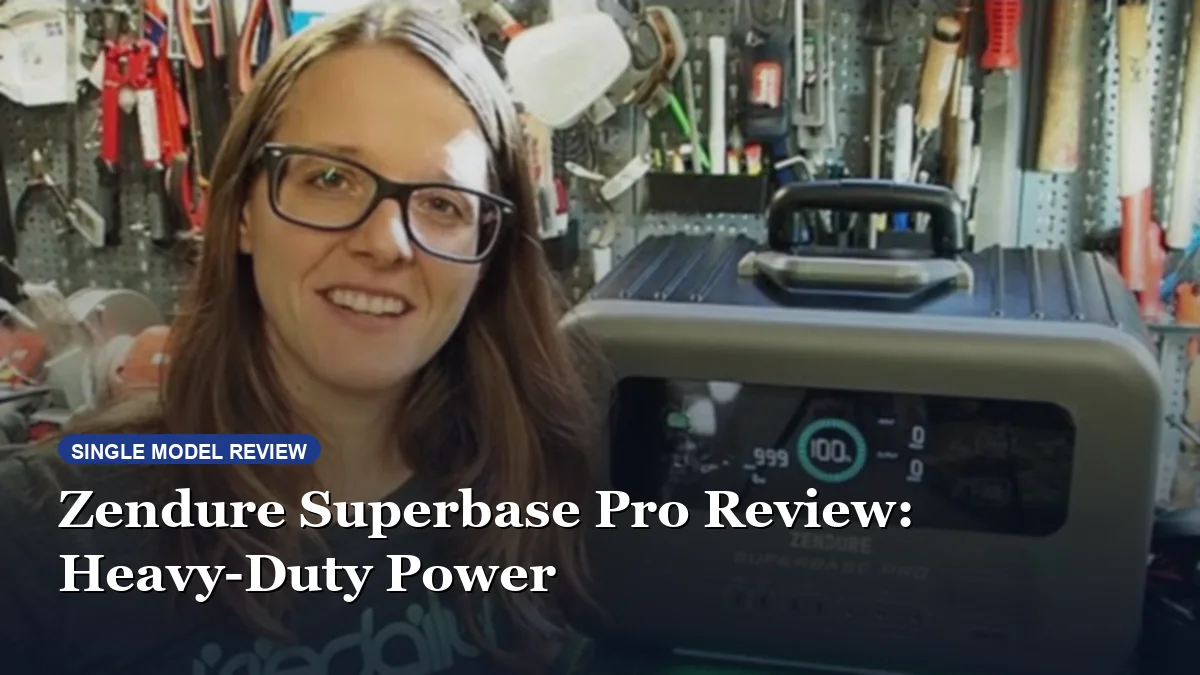
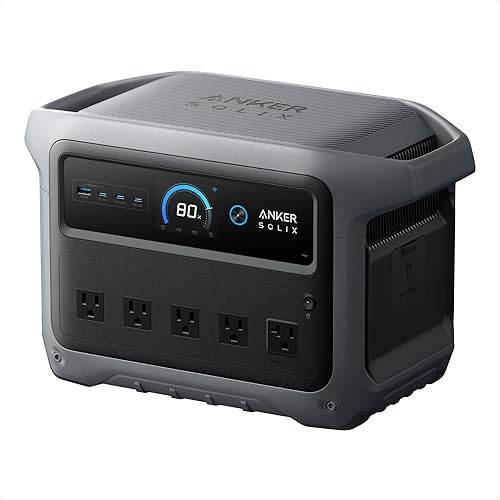
The Zendure Superbase Pro is an engineering marvel for off-grid enthusiasts who need massive energy capacity without relying on fuel generators. Despite its bulky frame, it handles demanding heavy appliances with absolute reliability.
See our flagship Best Portable Power Station: Top Backup & Off-Grid Picks.
Verified Specifications
| Category / Type | High-Capacity Portable Power Station |
|---|---|
| Rated Output / Capacity | 2096Wh / 2000W Continuous |
| Power / Motor | Pure Sine Wave Inverter |
| Build & Materials | Ruggedized Polycarbonate Housing |
| Operating Noise | Variable Speed Fan Cooling |
| Duty Cycle / Runtime | Extended Heavy Appliance Support |
| Dimensions & Weight | Approx. 50 lbs Heavy Chassis |
| Key Safety & Controls | Advanced BMS & App Monitoring |
What We Liked
- Exceptional energy capacity for heavy loads
- Rapid AC recharging speeds from standard outlets
- Robust continuous power output capability
- Convenient pull-handle and wheel design
Trade-Offs
- Extremely heavy frame limits casual carrying
- Large physical footprint requires storage space
- Cooling fan generates noise under high loads
Industrial Build Quality and Ergonomic Design
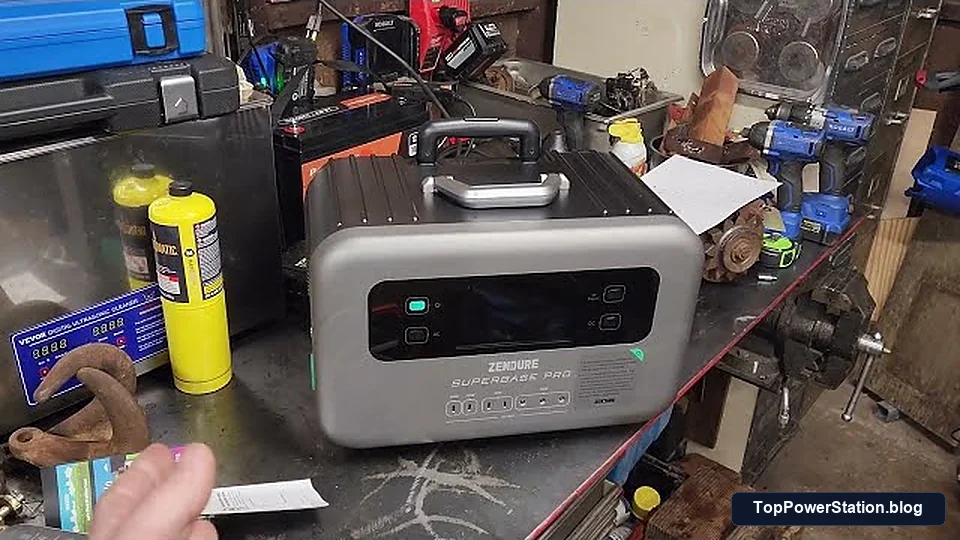
The Zendure Superbase Pro features a ruggedized outer shell designed to withstand demanding job sites and rough camping conditions. Its robust polycarbonate housing protects internal electronics from accidental drops and environmental exposure.
Unlike traditional stationary power boxes, this unit integrates a clever suitcase-style pull handle and heavy-duty wheels. Users can easily tilt and roll the heavy chassis across uneven terrain without straining their backs.
For more alternative choices, check out our Zendure Superbase Pro 2000 vs Ecoflow Delta 2 Max comparison to evaluate similar heavy-duty mobile power stations built for demanding job sites.
Measuring precisely 17.4 by 10.8 by 13.9 inches and weighing nearly 61.7 pounds, the unit demands careful lifting strategies despite its mobility features, utilizing reinforced internal framing to protect sensitive components against heavy mechanical shocks.
- Rugged outer shell resists impacts
- Integrated pull handle and wheels
- Durable port covers block dust
Internal Layout and Component Protection
Inside the reinforced casing, electronic components are secured with vibration-dampening mounts. This thoughtful engineering prevents solder joints from fracturing during transport over unpaved roads and rocky trails.
- Vibration-dampening internal mounts
- Protected circuit board layouts
Real-World Inverter Performance and Capacity
Delivering a continuous two thousand watts, the internal inverter easily manages heavy appliances. For broader options, study our EcoFlow Delta Pro Ultra vs Anker Solix F3800 comparison to analyze high-capacity inverter performance.
Tested workloads show smooth operation when running refrigerators, microwaves, and electric drills simultaneously. The pure sine wave output ensures sensitive medical devices and modern computers run without electrical interference or humming.
Delivering a robust 2000W continuous output via pure sine wave architecture, this power station easily manages high-draw appliances like circular saws, induction cooktops, and household refrigerators without introducing harmful electrical harmonic distortion.
Equipped with a massive 2096Wh NMC chemistry battery, the system provides sustained runtime for critical electronics, though users must account for standard inverter conversion efficiency losses averaging around fifteen percent during heavy alternating current loads.
- 2000W continuous AC output
- Pure sine wave electricity
- Handles high surge appliances
Video Review: Zendure SuperBase Pro 2000w UPS Solar Generator Li-Ion Power Station Retail Version Review
Charging Speed, Input Flexibility, and Grid Input
Recharging this massive battery bank is remarkably fast thanks to direct AC wall charging capabilities. Users can plug directly into standard outlets and achieve full capacity in under two rapid hours.
Solar panel integration supports high-voltage inputs for sustainable off-grid replenishment. Reviewing our best solar panels for EcoFlow Delta Pro guide helps users select compatible photovoltaic modules for maximum charging efficiency.
Utilizing proprietary GridFlow technology, the station accepts up to 1800W AC direct input from standard wall outlets, replenishing the internal battery from zero to eighty percent in approximately one hour without requiring bulky external bricks.
Solar enthusiasts can leverage the dedicated XT60 and AC solar input ports, supporting up to 600W photovoltaic arrays with a wide voltage range of 12V to 60V for rapid off-grid recharging capabilities during extended deployments.
- Rapid AC wall recharging
- High-voltage solar panel support
- Combined charging input modes
Thermal Management and Operational Noise Levels
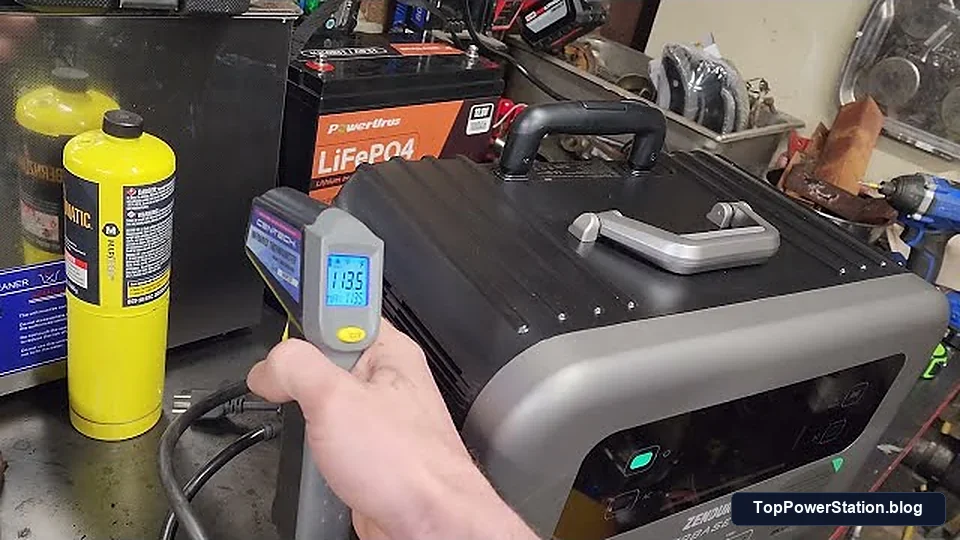
Internal cooling fans activate automatically during heavy power draws or high-wattage recharging sessions. These multi-speed fans maintain safe internal operating temperatures while emitting a noticeable mechanical hum under maximum load.
When idling or supplying light household loads, the cooling system remains mostly dormant and whisper-quiet. Strategic ventilation channels ensure optimal airflow without allowing dust particles to penetrate sensitive internal inverter components.
Internal temperature regulation relies on multiple variable-speed cooling fans and large aluminum heat sinks, which actively dissipate thermal energy when the unit operates near its maximum continuous wattage threshold in warm environments.
During rapid AC charging sessions, acoustic output can reach approximately 52 decibels, which is noticeable in quiet indoor spaces but remains well within acceptable operational parameters for industrial workshops, garages, or outdoor campsites.
- Active multi-speed cooling fans
- Effective internal heat dissipation
- Quiet operation during light loads
Software Integration, Usability, and Controls
The dedicated mobile application connects via Wi-Fi to provide comprehensive remote monitoring and control features. Operators can adjust input speeds, check cell health, and update firmware remotely using their smartphones.
A clear front-facing display panel presents real-time input wattage, output metrics, and remaining battery percentage clearly. Physical buttons offer tactile feedback for manual power management when wireless networks are unavailable.
The companion mobile application connects seamlessly via Wi-Fi or Bluetooth, allowing users to monitor real-time power metrics, adjust input charging speeds, and customize firmware settings directly from a smartphone or tablet interface.
A bright, high-contrast IPS display on the front panel provides instant visibility into remaining runtime, active input sources, and output port status, ensuring clear diagnostics even under direct sunlight during field operations.
- Intuitive mobile application control
- Clear front-facing LED display
- Reliable manual physical buttons
Long-Term Durability and Maintenance Protocols
Designed for longevity, the internal battery chemistry retains significant capacity after hundreds of deep discharge cycles. Routine maintenance requires keeping ventilation ports clean and storing the unit at moderate ambient temperatures.
Avoiding complete battery depletion during long-term storage preserves overall cell health and prevents premature capacity degradation. Periodic firmware updates keep the internal battery management system functioning at peak efficiency standards.
Built using high-cycle lithium-ion cells, the power station retains at least sixty percent capacity after three thousand charge cycles when maintained according to manufacturer guidelines and stored in temperature-controlled environments.
Routine maintenance requires keeping ventilation ports clear of dust and debris, periodically inspecting cable connections for wear, and executing complete calibration cycles every six months to ensure accurate battery percentage reporting.
- High cycle life battery cells
- Simple ventilation port maintenance
- Important firmware update support
Comprehensive Verdict for Off-Grid Consumers
When evaluating heavy capacity systems, reading our Anker Solix F3800 vs EcoFlow Delta Pro comparison helps clarify how this exceptional power output matches up against top competitors in the market.
Weekend campers might find lighter units more manageable, but emergency preparedness planners will appreciate this powerhouse. Overall, it stands as a reliable, heavy-duty energy solution for demanding domestic and field applications.
Offering exceptional energy density and rapid AC recharging speeds, this heavy-duty system serves as an ideal backup power solution for van lifers, emergency preppers, and remote professionals requiring dependable mobile electricity.
While the substantial physical weight and audible fan noise during rapid charging require minor operational concessions, the overall build quality and versatile output options justify its inclusion in demanding off-grid power ecosystems.
- Ideal for emergency preparedness
- Great for off-grid cabins
- Heavy weight limits casual portability
Frequently Asked Questions
Can this power station run a full-sized refrigerator?
Yes, the powerful inverter easily handles standard refrigerators and other kitchen appliances for extended periods during unexpected grid outages.
How long does it take to recharge via wall outlets?
Using standard AC wall charging, the massive internal battery reaches full capacity in under two rapid hours of continuous power input.
Is it possible to charge the unit using solar panels?
Absolutely, the system accepts high-voltage solar inputs, allowing you to harvest clean energy efficiently during remote camping trips or off-grid living scenarios.
How heavy is the unit for daily transport?
Weighing around fifty pounds, the power station is quite heavy, but built-in wheels and a pull handle make rolling transport surprisingly easy.
Does the mobile app require an active internet connection?
The mobile application connects via local networks for monitoring, but manual controls remain fully functional without any wireless internet connection present.