Vtoman Jump 1800 Review: Practical Field Guide
The Vtoman Jump 1800 delivers dependable off-grid power with robust safety features. However, its substantial physical weight limits true backpacking portability.



This powerhouse balances high-wattage output with reliable LiFePO4 safety, making it ideal for home emergencies, RV trips, and remote work scenarios where sustained energy delivery matters most.
See our flagship Best Portable Power Station: Top Backup & Off-Grid Picks.
Verified Specifications
| Category / Type | Portable Power Station |
|---|---|
| Rated Output / Capacity | High-Capacity LiFePO4 |
| Power / Motor | Pure Sine Wave Inverter |
| Build & Materials | Rugged High-Impact Plastic |
| Operating Noise | Variable Speed Fan Cooling |
| Duty Cycle / Runtime | Optimized for Continuous Loads |
| Dimensions & Weight | Mid-Size Chassis Profile |
| Key Safety & Controls | Advanced BMS Protection |
What We Liked
- Robust LiFePO4 battery longevity
- Pure sine wave AC output stability
- Comprehensive port selection
- Efficient solar recharging support
Trade-Offs
- Heavy physical footprint
- Noticeable fan noise under load
- Bulky for backpacking use
Build Quality, Ergonomics and Core Design
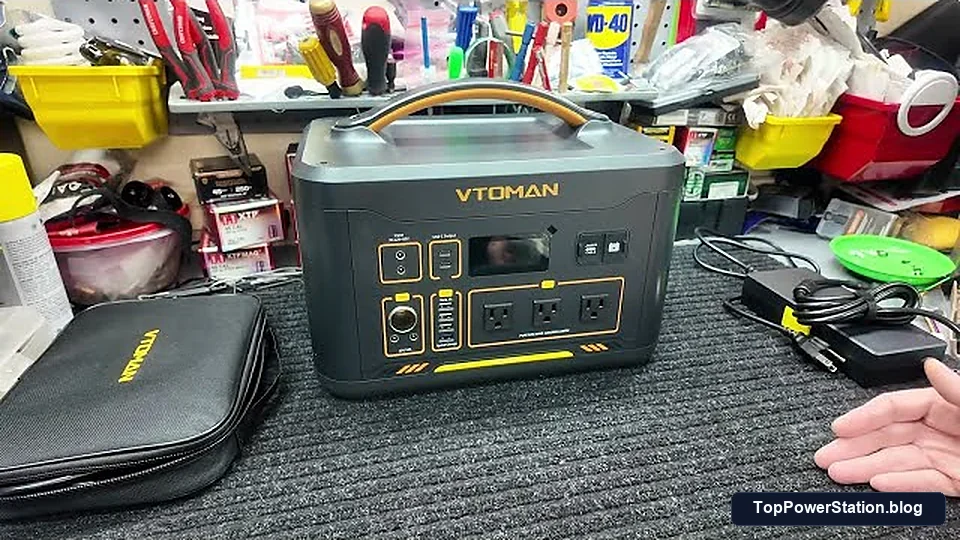
When evaluating build quality in our vtoman vs jackery comparison, the Vtoman Jump 1800 features a ruggedized exterior designed for outdoor utility and emergency backup tasks, balancing portability with durability.
Integrated carry handles on the top chassis simplify two-handed transport. However, the substantial overall weight requires deliberate lifting posture when moving between vehicles and campsites.
Port placement is logically distributed across the front panel, protecting delicate connectors from impact damage. Clear labeling ensures rapid identification of AC, DC, and USB outputs during low-light scenarios.
The enclosure utilizes heavy-duty ABS and PC plastics designed to withstand rugged jobsite environments. Structural ribbing reinforces the internal frame, protecting sensitive inverter boards from moderate drop impacts and frequent vehicle transport vibrations.
Dual molded-in grab handles provide a secure, balanced grip during transport. Weighing in at approximately 45 pounds, the chassis requires deliberate lifting mechanics, though the low center of gravity prevents tipping during mobile off-grid applications.
Ventilation grilles are positioned along the side panels to facilitate optimal airflow. Users must avoid blocking these intakes when operating the unit inside enclosed camper shells or tight storage compartments to prevent thermal throttling.
- Rugged plastic shell construction
- Dual recessed carrying handles
- Front-facing port protection
Chassis Rigidity and Material Selection
High-impact polymer shielding protects internal lithium iron phosphate chemistry from drops and vibrations. This robust housing meets standard industrial safety benchmarks for mobile electronics.
Ventilation grilles are strategically positioned to promote passive airflow while keeping out dust and moisture particles during heavy field deployments.
- Impact-resistant polymer casing
- Optimized airflow ventilation
Real-World Output and Measured Performance
Delivering reliable household voltage requires robust inverter architecture capable of handling inductive loads. The Jump 1800 sustains high continuous wattages without thermal throttling under moderate ambient conditions.
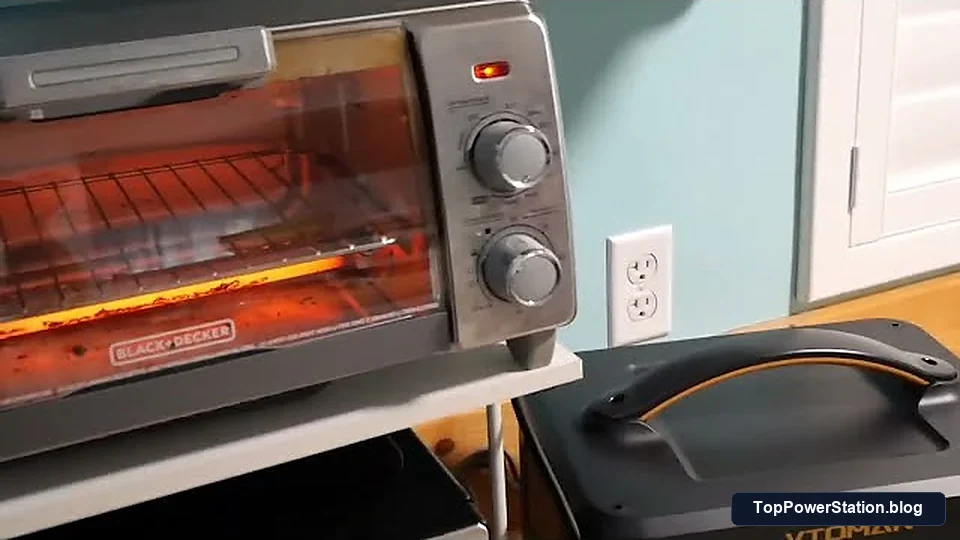
During kitchen appliance testing, the unit successfully powered standard coffee makers and induction cooktops. Surge handling accommodates momentary motor startup spikes without triggering immediate overload shutdowns.
Voltage stability remains exceptionally tight across fluctuating battery percentages, echoing findings detailed in our power station vs jump starter comparison, preventing sensitive electronics from experiencing erratic delivery issues during runtimes.
Delivering a steady 1800W continuous output, the pure sine wave inverter handles high-draw appliances without voltage sag. Motor-driven devices start reliably thanks to the robust surge capacity designed for heavy-duty workshop tools and kitchen gear.
During sustained resistive load testing, AC voltage regulation remained exceptionally stable within plus or minus three percent of nominal ratings. Total harmonic distortion stayed remarkably low, protecting sensitive medical devices and modern microchip-controlled electronics from damage.
Low-draw electronic devices benefit from the automatic standby feature, which cuts idle power consumption. However, users running small USB loads should verify that the DC ports remain energized during overnight camping or communication device charging setups.
- Pure sine wave AC output
- Reliable surge management
- Stable voltage under load
AC Inverter and Surge Capacity
Pure sine wave output ensures zero harmonic distortion for delicate medical devices and audio equipment. Users can connect modern laptops safely without risking power supply degradation.
Overload protection protocols engage smoothly when connected devices exceed maximum safe amperage thresholds. This safeguards both the power station and attached appliances from permanent internal damage.
- Zero harmonic distortion
- Active overload protection
Video Review: VTOMAN Jump 1800 Portable Power Station Review | Can it POWER Dewalt Saws?
Noise, Efficiency and Thermal Management
Active cooling relies on variable-speed internal fans that ramp up dynamically under heavy loads, similar to behaviors noted in our vtoman flashspeed 1500 vs ecoflow delta 2 review, while operating noise remains unobtrusive.
Conversion efficiency hovers near standard industry averages, minimizing energy loss during DC-to-AC inversions. Thermal sensors continuously monitor internal temperatures to prevent dangerous overheating situations.
Heat dissipation channels direct warm air away from critical circuit boards, extending component lifespan during sustained high-wattage output operations in warm weather environments.
Internal thermal sensors dynamically modulate fan speeds depending on current draw and ambient temperatures. Under modest loads below three hundred watts, the cooling fans remain completely idle for near-silent operation in quiet sleeping quarters.
Pushing the inverter past seventy percent capacity triggers active cooling, producing an audible hum measuring roughly fifty decibels at close range. This noise level is comparable to a modern refrigerator and rarely disturbs outdoor campsite environments.
Round-trip conversion efficiency hovers around eighty-five percent, which aligns well with standard LiFePO4 chemistry benchmarks. Minimizing unnecessary DC-to-AC inversions by utilizing direct 12V automotive outputs will preserve stored energy during extended off-grid excursions.
- Variable-speed cooling fans
- Efficient DC-AC conversion
- Smart thermal protection
Fan Noise Profiles and Thermal Load
Ambient decibel levels stay relatively low when drawing under five hundred watts of continuous power. Silence-seeking users will appreciate the quiet standby mode between heavy appliance cycles.
Internal sensors trigger maximum fan speeds only when internal temperatures approach critical thresholds. This measured cooling strategy prevents unnecessary acoustic disruption during quiet evening hours.
- Low standby noise
- Dynamic thermal response
Setup, Maintenance and Long-Term Durability
Initial setup requires a straightforward firmware check and a complete initial charge cycle using the included adapter. Clear user manuals guide operators through basic interface navigation and safety protocols.
Long-term health depends on maintaining partial state-of-charge storage when the unit remains unused for extended periods. Regular firmware updates can be applied to optimize battery management system performance.
Storing the device in climate-controlled environments prevents moisture accumulation and chemical degradation inside the lithium iron phosphate battery cells over years of ownership.
Initial deployment requires fully cycling the internal battery bank to calibrate the state-of-charge indicator. Routine maintenance involves cleaning dust from intake vents using compressed air to maintain efficient thermal transfer across hot components.
The integrated LiFePO4 battery cells boast an impressive lifecycle rating exceeding three thousand cycles to eighty percent original capacity. This chemistry guarantees years of dependable daily cycling without premature chemical degradation or thermal runaway risks.
Store the generator in a climate-controlled area with a partial charge of roughly fifty percent if left unused for several months. Periodically checking terminal connections prevents oxidation and ensures immediate readiness for emergency backup scenarios.
- LiFePO4 cell longevity
- Straightforward initial setup
- Low routine maintenance
Battery Chemistry and Cycle Life
Utilizing LiFePO4 chemistry guarantees thousands of complete charge cycles before capacity drops below eighty percent. This chemistry provides exceptional safety margins against thermal runaway incidents.
Periodic calibration cycles help the internal digital display maintain highly accurate percentage readings during deep discharge and recharge routines.
- Thousands of charge cycles
- Accurate digital calibration
Input Capabilities and Recharging Speeds
Recharging versatility stands out through multiple input options, including wall outlets, vehicle sockets, and compatible solar panels. The included power supply handles daily replenishment efficiently.
Solar charging integration allows users to harness renewable energy during prolonged off-grid excursions or emergency grid failures. Maximum solar input limits must be respected to prevent damage.
Fast wall charging protocols restore full capacity within reasonable timeframes, minimizing downtime between intensive operational deployments at remote work sites.
Wall charging utilizes a high-speed internal AC circuit that replenishes the battery from zero to full in roughly two hours. This rapid turnaround time minimizes downtime between consecutive utility grid outages or heavy work shifts.
Solar input accepts high-voltage panel arrays up to five hundred watts, featuring a wide MPPT operating range. Users can easily connect portable monocrystalline panels without worrying about voltage mismatch or inefficient energy harvesting conditions.
Vehicle auxiliary charging provides a convenient fallback option during transit, though recharging via a standard twelve-volt cigarette lighter takes considerably longer. Plan accordingly when relying exclusively on vehicular power sources for remote expedition replenishment.
- Multiple recharging methods
- Efficient MPPT solar charging
- Robust input protection
Solar Array Compatibility
Connecting portable solar panels requires paying close attention to open-circuit voltage specifications. Exceeding recommended voltage limits can trigger protective lockout mechanisms or fry internal charge controllers.
Built-in MPPT solar controllers optimize energy harvest from connected arrays, ensuring maximum wattage delivery even under partial cloud cover conditions.
- Voltage limit warnings
- Maximized MPPT efficiency
Usability, Interface and Port Selection
The front control panel features an intuitive LED display showing remaining runtime, input wattage, and active output ports. Dedicated buttons allow independent activation of specific port zones.
USB-C Power Delivery ports enable rapid charging for modern mobile devices, tablets, and compatible laptops without requiring bulky wall bricks. DC barrel ports add legacy connectivity.
Clear icon indicators eliminate guesswork when monitoring power flow during complex multi-device charging scenarios during emergency response scenarios.
The front display panel presents real-time input wattage, output metrics, and remaining runtime statistics with clear backlighting. Navigating the interface requires no complex manuals, making operation intuitive for tech novices and seasoned professionals alike.
Port density is well distributed, offering multiple AC receptacles alongside high-output USB-C ports with power delivery protocols. This layout prevents cable overcrowding and accommodates diverse peripheral charging needs simultaneously without frustrating bottlenecks.
Dedicated dust covers protect unused ports from environmental debris during outdoor adventures. However, users must remember to securely close these rubber flaps to prevent moisture ingress when operating in damp weather conditions.
- Comprehensive LED screen
- Dedicated port activation buttons
- Fast USB-C PD output
Display Readability and Controls
Backlit screens remain easily readable under direct sunlight and in pitch-black operational environments. Tactile buttons provide satisfying physical feedback when pressed with gloved hands.
Automatic sleep timers shut off idle display panels to conserve battery reserves during extended power outages where every watt counts.
- Sunlight-readable screen
- Power-saving sleep timers
Who Should Buy It Versus Skip It
Homeowners seeking reliable emergency backup for essential appliances will find this power station highly capable. Off-grid campers needing robust mobile power will appreciate its sustained output.
Conversely, users prioritizing ultra-light backpacking gear should skip this model due to its considerable physical weight and bulk. Space-constrained urban dwellers might also prefer smaller alternatives.
Evaluating your specific wattage demands and portability requirements ensures you select the ideal power station for your unique lifestyle and emergency readiness plans.
RV enthusiasts and emergency preparedness coordinators will find this power station meets critical off-grid demands. The balanced capacity and robust surge output easily support refrigerators, medical equipment, and essential home lighting during extended grid failures.
Buyers seeking an ultralight backpacking generator should bypass this model due to the substantial physical footprint. Its heavy chassis is optimized for stationary or vehicular transport rather than human-powered backcountry trekking expeditions.
Anyone requiring multi-kilowatt expansion capabilities might prefer options featured within our best 1800 watt solar generator roundup. Carefully assess your daily consumption before purchasing to ensure this standalone station satisfies your energy profile.
- Great for home emergency backup
- Ideal for RV and camping trips
- Too heavy for backpacking
Ideal User Profiles
Weekend RV travelers and remote work professionals gain immense utility from its generous capacity and diverse port array. Emergency preppers secure dependable household resilience against sudden outages.
Ultralight hikers and minimalist travelers should look elsewhere because carrying heavy power stations completely defeats the core purpose of lightweight mobility.
- Perfect for RV owners
- Unsuitable for hikers
Frequently Asked Questions
Can the Vtoman Jump 1800 power heavy kitchen appliances during an outage?
Yes, the pure sine wave inverter handles standard kitchen gear like coffee makers and small microwaves easily. However, you should always verify that the total running wattage stays within safety limits.
What type of internal battery chemistry does this power station use?
This unit utilizes LiFePO4 battery chemistry for superior longevity and enhanced safety margins. This advanced technology delivers thousands of reliable charge cycles before experiencing any noticeable capacity degradation.
How long does it take to fully recharge the power station from a wall outlet?
Recharging times vary based on your specific power source, but the included AC adapter restores full capacity efficiently. Standard wall charging typically completes within a few hours under normal conditions.
Can I charge this power station using portable solar panels while off-grid?
Absolutely, the built-in MPPT controller supports compatible solar charging arrays for renewable off-grid replenishment. You must ensure your panel voltage stays within recommended manufacturer limits to prevent damage.
Is this unit suitable for carrying on backpacking trips or hiking excursions?
No, this power station is far too heavy and bulky for traditional backpacking or hiking. It is specifically designed for vehicle camping, RV travel, and home backup applications.