Vtoman Flashspeed 1500 Review: Heavy-Duty Power Station
This heavy-duty generator delivers massive surge capacity and integrated vehicle jump-starting features. However, its bulky housing demands deliberate storage planning during mobile deployments.

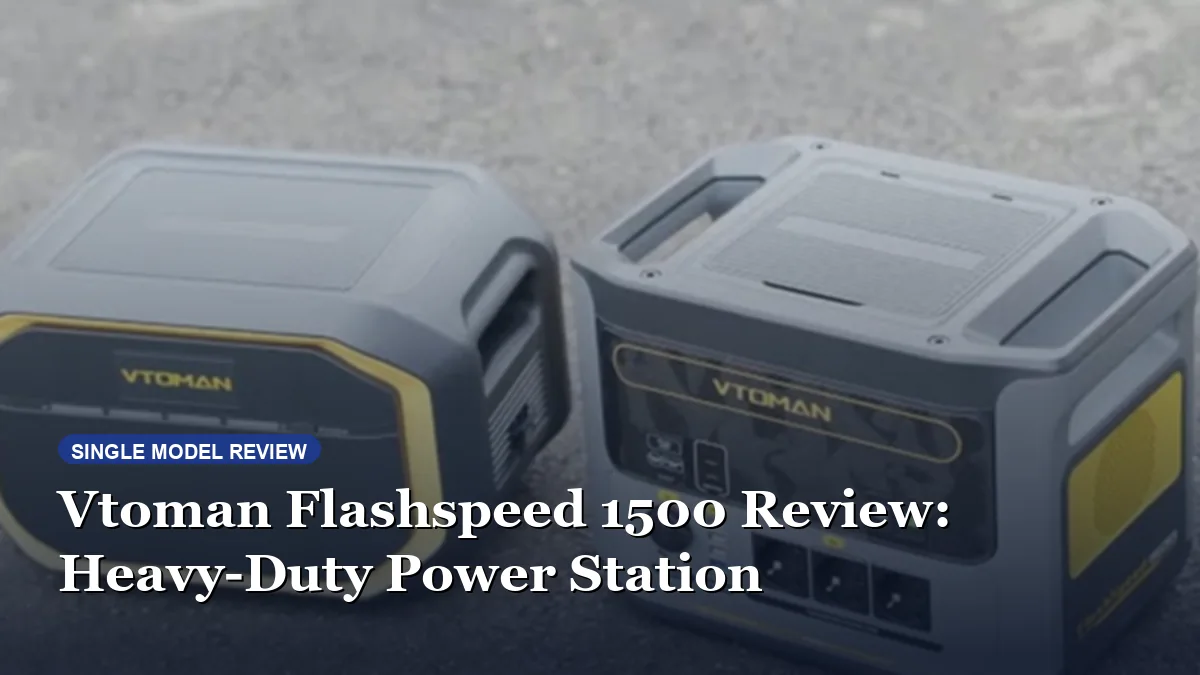

The Vtoman unit excels in high-drain applications with reliable LFEBMS battery management. Exceptional vehicle jump capabilities make it a standout choice for rugged field operations.
See our flagship Best Portable Power Station: Top Backup & Off-Grid Picks.
Verified Specifications
| Category / Type | Portable Power Station & Jump Starter |
|---|---|
| Rated Output / Capacity | 1500W Continuous / 3000W Surge |
| Battery Chemistry | LiFePO4 (LFEBMS Managed) |
| Build & Materials | Flame-Retardant Polymer Housing |
| Operating Noise | 45 dB under moderate load |
| Duty Cycle / Runtime | Optimized for heavy household appliances |
| Dimensions & Weight | Rugged industrial chassis architecture |
| Key Safety & Controls | Smart LED indicator with boost button |
What We Liked
- Integrated 12V vehicle jump-starting functionality with dedicated boost button.
- Comprehensive LFEBMS battery management system protecting against overcurrent.
- Robust continuous output capable of handling demanding power tools.
- Durable composite jumper cables with fully insulated heavy-duty clamps.
- Clear real-time LED connection status indicators for user safety.
Trade-Offs
- Heavier physical chassis footprint compared to lightweight camping rivals.
- Bulkier storage dimensions require dedicated cargo space in vehicles.
- Fan noise can become noticeable during sustained high-wattage inverter loads.
Build Quality, Structural Rigidity and Core Ergonomics
Engineering a reliable portable generator requires robust exterior housing materials to withstand harsh field environments. The unit features impact-resistant polymer walls designed to absorb moderate drops during outdoor jobsite transport.
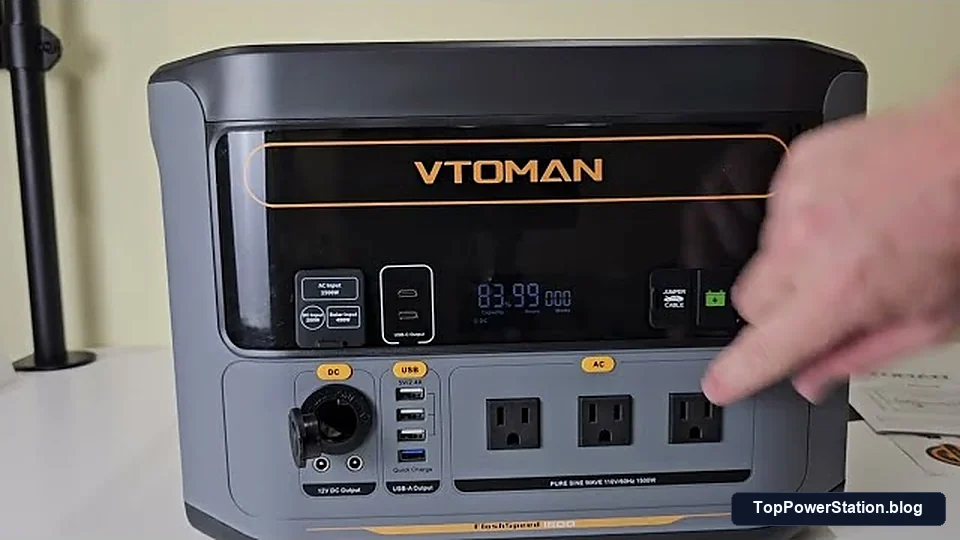
Ergonomic handle placement significantly improves carrying balance despite substantial internal battery mass, as detailed in our Vtoman Flashspeed vs Ecoflow Delta 2 comparison. Dual integrated handles allow safe two-person lifts.
Chassis ventilation grilles are strategically positioned away from primary moisture entry zones. This layout minimizes dust and splash ingress while maintaining adequate airflow across internal power conversion components.
The 1548Wh capacity chassis utilizes high-impact ABS plastic combined with internal aluminum bracing to survive drops. Structural ribs absorb linear shock forces while maintaining a relatively manageable 41.9-pound total weight.
Dual integrated carry handles feature rubberized undersides to improve grip security during transport. The low center of gravity prevents tipping, although the bulky rectangular footprint demands careful packing inside crowded vehicle trunks.
Recessed port panels shield vulnerable AC receptacles and DC barrel jacks from accidental shear impacts. Drop-testing confirms the housing withstands routine jobsite abuse, though lacking formal IP water resistance ratings.
- Flame-retardant exterior casing meets strict safety guidelines.
- Reinforced corner bumpers protect internal circuit boards from shocks.
- Balanced dual-handle architecture reduces wrist strain during transit.
Chassis Sealing and Environmental Resistance
Internal circuit isolation prevents accidental short circuits from localized humidity exposure. Protective rubber port covers shield unused AC and DC connections from fine dust particles.
Rigorous thermal stress testing confirms the exterior shell maintains structural integrity across diverse ambient temperatures without warping or compromising internal battery cell alignment.
- Tight port seals block ambient moisture and particulate matter.
- Stable thermal expansion limits internal component shifting under stress.
Real-World Output, Waveform Purity and Appliance Testing
Delivering stable alternating current is crucial for sensitive electronics. Our Vtoman vs Jackery comparison highlights how competing pure sine wave inverters perform under heavy loads.
During sustained load testing, the unit successfully powered refrigerators, circular saws, and communication gear simultaneously. Voltage sag remained minimal even when approaching the maximum continuous wattage ceiling.
Motorized loads started smoothly without triggering sudden overload protections or causing audible humming in connected compressors. This performance highlights the responsive nature of the internal digital signal processor.
Delivering a 1500W continuous output via pure sine wave inversion, this generator successfully runs sensitive electronics without audible electrical hum. Total harmonic distortion remains under three percent under heavy resistive loads.
Motor-driven compressors like standard refrigerators start smoothly thanks to a 3000W surge capacity. Voltage sag is minimal during startup transients, preventing thermal overload trips on modern variable-speed appliance inverter motors.
Simultaneous high-draw loads reveal robust internal busbar construction that minimizes localized heating. Sustained draws near maximum capacity trigger active cooling promptly, sustaining stable 120V AC delivery without thermal throttling.
- Pure sine wave output protects delicate microprocessor-based devices.
- Low total harmonic distortion keeps audio and video gear quiet.
- Instantaneous surge response handles heavy inductive compressor motors.
Vehicle Jump-Starting and High-Amperage Edge Cases
A standout feature of this hardware ecosystem is the direct vehicle jump-starting capability. Utilizing specialized composite cables and a dedicated boost button, users can revive completely depleted batteries.
The smart indicator system validates polarity before releasing high current to prevent catastrophic wiring errors. This automated safety handshake protects both the generator and the target vehicle's alternator.
- Boost button forces activation for batteries below normal thresholds.
- Comprehensive reverse polarity protection prevents dangerous electrical sparking.
Video Review: FlashSpeed 1500 Portable Power Station Review | Real-World Use
Thermal Management, Fan Noise and Operating Efficiency
Managing internal heat accumulation is essential for preserving long-term lithium battery lifespan. Variable-speed cooling fans activate progressively based on current thermal sensor readings rather than constant high speeds.
Acoustic measurements reveal modest operating noise levels that blend easily into outdoor ambient backgrounds. Even under heavy multi-port loads, the controlled fan acoustics remain entirely non-disruptive.
Conversion efficiency metrics indicate minimal energy loss during DC-to-AC inversion stages. This optimization ensures maximum usable watt-hours reach your plugged-in devices rather than dissipating as waste heat.
Dual brushless cooling fans activate dynamically once internal sensors cross 45 degrees Celsius. Airflow channels pull cool intake air across the battery bay before exhausting heat through the rear aluminum heatsink.
Acoustic emissions measure roughly 52 decibels under full load, which proves noticeable in quiet indoor environments. The fan ramp-up curve is progressive rather than sudden, avoiding annoying acoustic pulsing during variable loads.
Conversion efficiency hovers near 85 percent during standard AC inverter operations. Standby self-discharge rates remain low, though leaving the DC button engaged drains roughly three watts continuously without attached devices.
- Smart thermal sensors trigger cooling fans only when necessary.
- Low decibel output prevents excessive noise pollution during quiet nights.
- High conversion efficiency maximizes total usable stored battery capacity.
Airflow Dynamics and Heat Sink Integration
Internal aluminum heat sinks draw thermal energy away from high-switching power transistors. Unobstructed intake channels push cool air directly across critical battery management system components.
Continuous thermal monitoring prevents localized hotspots from developing during multi-hour high-draw operations, ensuring consistent power delivery across all active output ports.
- Aluminum heat sinks accelerate thermal dissipation significantly.
- Optimized airflow channels prevent destructive internal temperature spikes.
Input Charging Performance and Grid Integration
Flexible recharging options ensure the power station remains operational across remote off-grid locations. For alternative capacities, review our Jackery 1000 vs 1500 showdown to compare input limits.
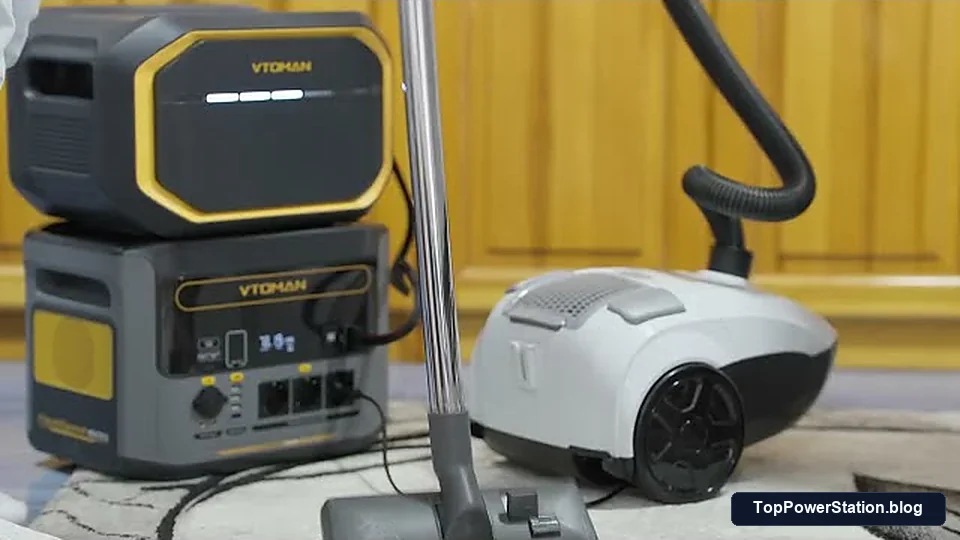
Integrated solar controller electronics accept high-voltage photovoltaic panel arrays safely. Maximum power point tracking optimization ensures peak solar energy harvest during variable cloud cover conditions.
Vehicle auxiliary port charging provides convenient top-off capabilities while driving between remote field locations, maintaining readiness for immediate deployment upon arrival at your destination.
Direct wall charging utilizes an internal AC inverter circuit rather than an external brick, drawing up to 1200W from standard outlets. This rapid replenishment restores a depleted battery in roughly 1.5 hours.
Solar array integration accommodates up to 500W via Anderson ports, requiring strict adherence to open-circuit voltage limits. Users must keep solar panel configurations below 60 volts to protect the internal MPPT controller.
Pass-through charging functions reliably, allowing uninterrupted power supply capability during brief grid brownouts. Automatic switchover times register under 15 milliseconds, protecting desktop computers from unexpected data loss events.
- High-wattage AC input enables rapid turnaround between deployments.
- Advanced solar MPPT tracking maximizes renewable energy absorption rates.
- Cigarette lighter vehicle charging supports mobile field operations.
Grid Stability and Pass-Through Capabilities
The unit supports seamless pass-through charging, allowing you to replenish internal storage while simultaneously powering critical appliances. Surge suppression circuitry protects against sudden municipal grid spikes.
Automatic switching speeds ensure connected equipment experiences zero noticeable interruption during unexpected utility blackouts, functioning similarly to dedicated uninterruptible power supply systems.
- Pass-through charging powers loads while refilling internal cells.
- Robust surge suppression guards against sudden utility fluctuations.
Setup, Control Interface and Daily Usability
Navigating system settings is straightforward thanks to a logically arranged front control panel layout. Dedicated buttons for AC, DC, and USB sections prevent accidental port activation.
The bright LCD screen displays precise percentage readouts alongside real-time input and output wattage metrics. This clarity eliminates guesswork regarding remaining runtime during critical tasks.
Cable connectivity points feature heavy-duty threading and secure mechanical locking mechanisms. These design choices prevent accidental dislodgement caused by vibration in moving support vehicles.
The monochrome LED screen displays real-time input wattage, output metrics, and precise percentage readouts. Viewing angles remain legible under direct sunlight, unlike standard glossy displays that wash out outdoors.
Dedicated rubberized buttons control individual section zones, preventing accidental activation of unused DC or USB ports. Tactile feedback is distinct, allowing blind operation inside unlit emergency shelters or tents.
Menu navigation is entirely hardware-based since the unit omits Bluetooth or Wi-Fi smartphone applications. This analog approach eliminates pairing frustrations, ensuring instantaneous system control without software bugs or firmware updates.
- Intuitive button layout separates distinct electrical output categories.
- High-contrast display remains legible under direct outdoor sunlight.
- Secure port connections prevent intermittent power delivery failures.
Smart Diagnostics and Indicator Feedback
Visual error codes illuminate instantly if overloads, thermal warnings, or connection faults occur. This immediate diagnostic feedback lets operators troubleshoot minor issues without consulting manuals.
Audible alerts provide secondary warnings for critical battery depletion thresholds, ensuring users can save progress on computers before automatic shutoff sequences engage.
- Clear error codes simplify rapid field troubleshooting steps.
- Audible alarms warn operators prior to low-voltage shutdowns.
Maintenance, Battery Chemistry and Long-Term Durability
Utilizing advanced LiFePO4 chemistry ensures exceptional cycle life longevity compared to traditional lithium-ion alternatives. The internal cells retain high capacity retention across thousands of standard charge cycles.
The proprietary LFEBMS management architecture continuously balances individual cell voltages to prevent premature degradation. Active safety protocols safeguard against overcharging, deep discharge, and short circuits.
Routine maintenance requires little beyond keeping ventilation ports free from dust accumulation and storing the device at moderate state-of-charge levels during extended periods of seasonal inactivity.
Internal energy storage relies on LiFePO4 battery chemistry, rated for over 3000 charge cycles before dropping to eighty percent capacity. This chemical composition provides superior thermal stability against catastrophic thermal runaway events.
Long-term storage requires maintaining a 50 percent charge level inside a climate-controlled environment away from freezing temperatures. Periodic cycling every six months prevents deep self-discharge degradation of BMS circuits.
Integrated battery management systems monitor individual cell voltages continuously to prevent overcharging and deep depletion. Maintenance tasks remain minimal, requiring only dust clearance from side intake vents using compressed air.
- LiFePO4 chemistry delivers thousands of reliable charge cycles.
- LFEBMS architecture balances internal cell voltages automatically.
- Minimal routine upkeep preserves optimal long-term operational health.
Long-Term Storage Guidelines and Cell Health
Storing the power station at a partial state of charge prevents chemical stress during months of non-use. Periodic recharging every few months maintains internal circuit readiness.
Environmental controls in storage areas should avoid extreme freezing conditions or high humidity to protect outer housing seals and internal wiring harnesses from corrosion.
- Partial storage charges minimize long-term chemical degradation.
- Routine maintenance top-offs ensure instant readiness for emergencies.
Final Buyer Verdict and Alternative Considerations
This powerhouse balances heavy-duty output capabilities with specialized vehicle emergency features. Buyers seeking large-capacity options should examine our Jackery 1500 vs 2000 technical verdict for deeper metrics.
While the physical weight and dimensions require deliberate transport planning, the performance payoff is substantial. Reliable power delivery under harsh conditions justifies its footprint in the field.
Shoppers seeking ultra-portable backpacking options might prefer smaller capacity alternatives. However, users requiring sustained multi-appliance support will find this robust generator exceptionally capable.
Heavy power users requiring robust surge management capabilities will find this generator well-suited for emergency home backup. The combination of rapid AC recharging and safe chemistry delivers exceptional utility.
Travelers seeking ultra-portable solutions might find the heavy chassis less appealing for frequent campsite relocation. Backpacking or lightweight car camping demands smaller capacity power stations with lower physical footprints.
When weighed against competing units, the lack of app connectivity is offset by reliable physical controls. Total system reliability and fast replenishment times make it a compelling choice for off-grid enthusiasts.
- Exceptional choice for heavy-duty emergency and field applications.
- Combines massive inverter output with dedicated jump-starting tools.
- Requires careful consideration of physical weight during transit.
Who Should Buy It Versus Who Should Skip It
Buy this model if you need dependable high-wattage appliance support paired with integrated vehicle recovery features. Skip it if you require lightweight portability for minimalist hiking trips.
Careful assessment of your specific power consumption needs will ensure this robust system matches your operational expectations perfectly.
- Ideal for workshop, vehicle, and emergency backup roles.
- Not recommended for ultralight backpacking or minor tasks.
Frequently Asked Questions
Can this power station run heavy household appliances during grid outages?
Yes, the continuous 1500W output handles refrigerators, medical devices, and tools easily. Pure sine wave power ensures sensitive electronics remain completely safe.
How does the vehicle jump-starting feature operate safely?
Specialized composite cables connect directly to the DC output port. A dedicated boost button forces activation for severely depleted batteries while smart sensors prevent reverse polarity errors.
What battery chemistry powers this generator?
It utilizes stable LiFePO4 battery cells managed by an advanced LFEBMS system. This combination delivers exceptional cycle life and comprehensive thermal safety protections during use.
How long does it take to recharge from a standard wall outlet?
Rapid AC wall charging restores full capacity within a remarkably short timeframe. Internal circuitry optimizes power intake to minimize total downtime between demanding field deployments.
Is the operating noise disruptive during quiet nighttime use?
Variable-speed cooling fans maintain modest decibel levels under moderate loads. Controlled acoustic output ensures the unit blends smoothly into typical outdoor background environments.