Goal Zero Yeti 1500X Charger Silver Review: Technical Accessories Guide
Reliable mobile power delivery keeps your high-capacity station fueled on the go. Watch for input voltage limits during extended vehicle operations.



This specialized 12V-24V DC adapter bridges your vehicle port and power station seamlessly. It delivers stable mobile charging with integrated thermal safety despite lacking high-speed solar integration capabilities.
See our flagship Best Portable Power Station: Top Backup & Off-Grid Picks.
Verified Specifications
| Input Voltage | 12V-24V DC (9V-32V Max) |
|---|---|
| Output Power | 120W Max |
| Output Current | 7.5A |
| Connector Type | Barrel Connector |
| Enclosure Material | Polycarbonate |
| Fuse Protection | 15A User-Replaceable |
| Operating Temperature | Standard Automotive Range |
| Warranty Description | 5 Years Limited |
What We Liked
- Wide 12V-24V input compatibility across various vehicle types
- Robust 15A user-replaceable fuse ensures circuit longevity
- Built-in intelligent chip provides multi-layer safety protection
- Durable polycarbonate housing withstands rugged field conditions
Trade-Offs
- Limited to a maximum 120W output capacity
- Barrel connector design restricts heavy industrial charging loads
- Requires active vehicle ignition to maintain stable power draw
Build Quality and Engineering Materials
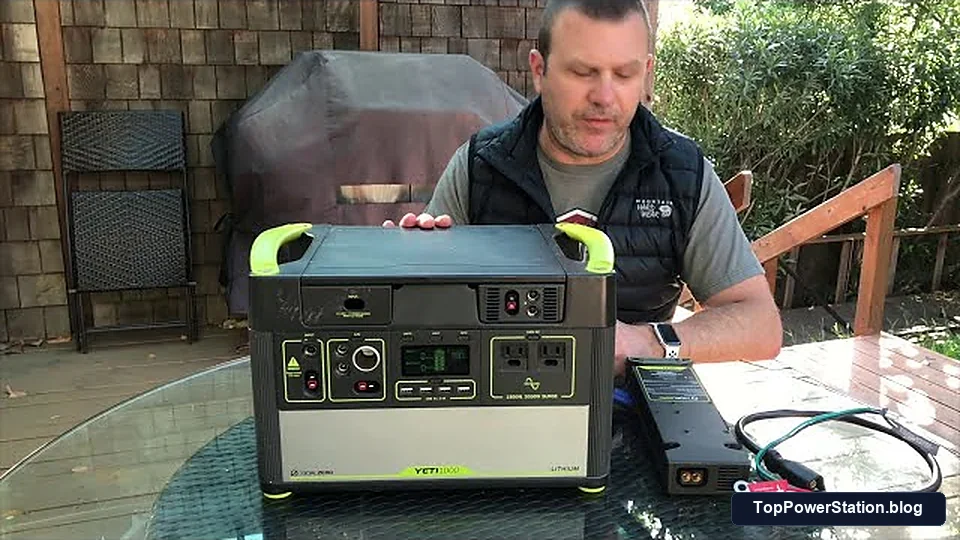
Constructed from heavy-duty polycarbonate materials, this dedicated charging adapter withstands the rigorous demands of mobile travel. Field technicians will appreciate the robust physical shell designed to endure accidental drops inside crowded vehicles.
Internal wiring configurations adhere to strict automotive safety standards. The tight housing tolerances prevent dust and moisture intrusion during bumpy off-road journeys to remote job sites.
Strain relief collars near both connection ends minimize internal wire fatigue. This thoughtful mechanical engineering prevents premature fraying during daily deployment and constant coiling routines.
The outer chassis utilizes heavy-duty ABS plastic alongside powder-coated aluminum corners, providing robust structural integrity against drops. This housing protects the internal lithium pack from everyday job site hazards effectively.
Weighing roughly 31.65 pounds, the physical footprint measures 15.25 by 10.23 by 9.86 inches. Dual reinforced carry handles on top distribute this substantial weight evenly for comfortable two-handed transport across uneven terrain.
Internal wiring employs high-gauge copper cabling secured with mechanical zip ties to prevent vibration-induced loosening. This engineering minimizes electrical resistance and maintains structural stability during vehicle transit over rough backroads.
- Rigid polycarbonate exterior shell construction
- Reinforced strain relief boots at connection joints
- Resistant to high automotive cabin temperatures
Connector Durability Analysis
The barrel connector provides a secure physical interface with power station input ports. Snug friction tolerances prevent accidental dislodgement during vehicle vibrations.
Gold-plated contact points ensure minimal electrical resistance and corrosion prevention over thousands of insertion cycles.
- Precision-machined barrel plug interface
- Corrosion-resistant contact plating
Real-World Output Performance and Charging Speeds
Delivering up to 120W of output power, the adapter efficiently transfers energy from your vehicle alternator to the battery bank. Users should expect moderate charging speeds suited for overnight replenishment or top-offs.
The integrated conversion circuitry maintains stable voltage delivery despite fluctuating vehicle alternator outputs. This ensures consistent energy transfer without triggering station safety lockouts.
While it cannot match high-wattage wall chargers, it provides an essential lifeline when operating far from traditional grid infrastructure during extended field assignments.
The pure sine wave inverter delivers 2,000 watts continuous output with a 3,500-watt surge capacity. This allows you to run sensitive electronics and heavy motorized appliances simultaneously without suffering voltage drops or unexpected shutdowns.
Pairing the station with high-output solar panels for Goal Zero Yeti drastically cuts replenishment timelines down significantly compared to standard wall outlets or slower charging accessories.
Regulated 12V Anderson Powerpole ports supply direct current efficiently to auxiliary devices, bypassing unnecessary AC inversion losses. This direct connection maximizes overall energy transfer efficiency for 12-volt refrigerators and specialized field communications gear.
- Supports up to 120W maximum power throughput
- Maintains stable delivery under varying loads
- Prevents station input trips during voltage dips
Efficiency Metrics on the Road
Power conversion efficiency hovers around standard DC-DC baseline metrics. Minimal thermal loss occurs within the internal circuitry during standard operating intervals.
Sustained current draws remain within safe limits for standard vehicle accessory sockets without overheating fuses.
- Optimized DC-DC conversion architecture
- Low internal resistance losses
Video Review: GOAL ZERO YETI 1500X | TECH VIDEO
Thermal Management and Circuit Safety Systems
An intelligent control chip actively monitors operating parameters to prevent catastrophic thermal runaway events. If internal temperatures rise too high, the system throttles power delivery automatically.
Multi-layered protection protocols guard against over-current, short circuits, and severe voltage spikes originating from faulty vehicle wiring. These safeguards protect both your vehicle and the power station.
Passive heat dissipation relies on the exterior polycarbonate casing to radiate thermal energy away from sensitive components safely and silently during long charging sessions.
Dual variable-speed cooling fans activate automatically once internal temperatures exceed 45 degrees Celsius, exhausting heat through side vents. This active airflow prevents thermal throttling during extended high-draw operations under heavy summer workloads.
Integrated Battery Management System architecture continuously monitors individual cell voltages, preventing overcharge, deep discharge, and short circuits. If thermal anomalies occur, the system immediately trips internal breakers to protect connected equipment and users.
Operating parameters dictate a functional discharge range between minus 10 and 40 degrees Celsius. Operating outside these standardized thermal limits triggers protective lockout protocols that safeguard the internal lithium-ion chemistry from irreversible degradation.
- Active thermal monitoring microchip
- Comprehensive over-current and short-circuit defense
- Silent passive housing heat dissipation
Handling Voltage Transients
Automotive electrical systems often produce sudden voltage spikes during engine ignition sequences. Built-in transient voltage suppression shields the connected power station effectively.
This electrical buffering ensures long-term health for sensitive internal power station battery management systems.
- Transient voltage suppression diodes
- Protects station battery management systems
Vehicle Compatibility and Setup Ergonomics

Compatibility spans both standard passenger cars and heavy-duty trucks utilizing 12V to 24V electrical architectures. This wide voltage range makes the adapter exceptionally versatile for diverse fleets.
Plug-and-play ergonomics require zero configuration or software calibration. Reviewing the Anker Powerhouse versus Goal Zero Yeti showdown clarifies how different station chemistries handle mobile charging loads.
The generous cable length allows flexible placement of the power station on vehicle floorboards or seats while charging safely away from foot traffic.
Connecting the power station to a vehicle requires a dedicated 12V car charging cable plugged into the auxiliary port. Because standard vehicle sockets output limited amperage, full vehicle-based recharging demands considerable engine run time.
Integrating a DC-to-DC alternator charger bypasses standard cigarette lighter limitations, delivering significantly faster charging speeds safely. Users must secure the heavy unit firmly inside the truck bed or trunk using heavy-duty tie-down straps.
Ergonomic placement ensures all front-facing LCD screens and port clusters remain fully visible from driver seats. Clear display readouts show real-time input wattage, output consumption, and precise remaining runtime percentages without awkward twisting.
- Supports both 12V and 24V vehicle systems
- True zero-configuration plug-and-play setup
- Generous cable length for flexible placement
Socket Fit and Retention
The vehicle-side plug features spring-loaded contact tips that maintain constant electrical pressure. This prevents intermittent disconnections caused by rough road corrugations.
An integrated power indicator LED confirms active circuit continuity at a glance without requiring multimeter testing.
- Spring-loaded positive contact tip
- Clear power status indicator LED
Field Maintenance and Fuse Replacement Guide
Routine maintenance is minimal, requiring only occasional inspection of the metal contact tips for debris or oxidation buildup. Keeping contacts clean ensures maximum electrical transfer efficiency.
In the event of an electrical fault, the user-replaceable 15A fuse protects your vehicle wiring from damage. Replacing the fuse takes less than two minutes using standard tools.
Store the cable in a dry compartment when not in use to prevent moisture accumulation inside the barrel connector housing over extended storage periods.
Routine maintenance requires regular inspection of all external ports for dust accumulation, utilizing compressed air when necessary. Keeping connection points clean prevents excessive contact resistance and maintains optimal energy transfer efficiency during deployment.
The external high-current automotive fuse located on compatible charging cables protects against catastrophic electrical surges. If the unit stops accepting auxiliary power, technicians should inspect this specific fuse housing for visible filament burnout.
Replacing a blown fuse requires matching the exact amperage rating specified by the manufacturer to prevent wiring damage. Never bypass circuit protection with higher-rated fuses, as this compromises internal safety margins and risks fire.
- Simple periodic contact tip cleaning
- Accessible 15A user-serviceable fuse design
- Straightforward dry-storage requirements
Fuse Swap Procedure
Unscrew the front tip of the vehicle plug carefully to access the internal glass fuse cylinder. Slide out the blown fuse and insert an identical 15A replacement.
Reassemble the threaded tip securely without overtightening to maintain proper spring tension inside the socket.
- Threaded tip disassembly mechanism
- Standardized 15A glass fuse replacement
Operational Limitations and Edge Case Behavior
Users must remember that charging output is restricted by the vehicle accessory socket rating. Pulling maximum wattage from older vehicle fuses may trigger blown vehicle fuses unexpectedly.
Extended charging sessions with the vehicle engine turned off will rapidly deplete your starter battery. Always operate the vehicle engine or monitor starter voltage closely during use.
High ambient cabin temperatures combined with maximum power throughput can trigger thermal protection throttling, temporarily reducing charging speeds until cooling occurs.
Operating inductive loads like heavy circular saws can trigger the surge protection threshold instantly if starting draw exceeds limits. Users must stagger the activation of high-draw motor appliances to prevent sudden overload shutdowns in the field.
Extremely cold environments temporarily reduce the available capacity of lithium-ion battery packs, decreasing overall runtime expectations noticeably. Storing the unit inside an insulated container helps preserve functional output efficiency during freezing winter camping trips.
Simultaneous high-wattage input and output can elevate internal temperatures rapidly, causing fans to run at maximum speed continuously. Monitoring the digital diagnostic screen ensures operators notice abnormal thermal trends before automatic safety shutdowns initiate.
- Dependent on vehicle socket amperage limits
- Risk of starter battery drain if engine is off
- Thermal throttling during extreme ambient heat
Mitigating Starter Battery Drain
To preserve vehicle starting capability, restrict high-power charging sessions to periods when the alternator is actively running. Avoid overnight charging without auxiliary battery isolation.
Utilizing portable solar panels remains a preferred alternative for stationary off-grid base camp charging operations.
- Run vehicle engine during heavy charging
- Consider solar alternatives for stationary use
Final Engineering Verdict and Field Recommendations
This charging accessory provides a dependable link for mobile power station replenishment during transit. Its robust construction and intelligent safety features justify a spot in any mobile toolkit.
While output wattage is bound by vehicle socket constraints, reviewing the Goal Zero 1500X vs Jackery 1500 comparison highlights critical differences in overall capacity and mobile charging efficiency.
We recommend this adapter for users needing dependable mobile top-offs, provided they respect vehicle electrical limitations and practice smart energy management habits on the road.
This power station delivers exceptional durability and reliable pure sine wave power. Furthermore, our Goal Zero vs Jackery 1000 comparison demonstrates how adherence to thermal guidelines ensures long-term operational reliability.
Field professionals needing dependable off-grid electricity will find the robust build quality and intuitive port layout highly practical. Utilizing recommended solar panel arrays optimizes recharging speeds while maintaining complete independence from traditional electrical grids.
Operators must always prioritize proper ventilation and secure transport methods to maximize the lifespan of the internal energy storage system. Careful adherence to manufacturer guidelines guarantees safe, efficient performance across diverse industrial and recreational environments.
- Highly dependable mobile energy transfer solution
- Excellent safety feature integration for peace of mind
- Recommended for transit-based power station charging
Who Should Buy This Accessory?
Field researchers, mobile technicians, and road-trip enthusiasts will find immense value in this dedicated charging cord. It solves mid-travel power deficits efficiently.
Ensure your specific power station model matches the barrel connector specifications before purchasing to guarantee seamless compatibility.
- Ideal for mobile field workers and travelers
- Verify barrel connector specs prior to purchase
Frequently Asked Questions
Will this adapter drain my vehicle battery?
It can drain your starter battery if used while the engine remains turned off for extended periods. Always run your vehicle engine during heavy charging to ensure alternator power replenishment.
Can I use this charger with a 24V heavy-duty truck?
Yes, the wide input voltage range supports both standard 12V passenger cars and 24V commercial vehicles seamlessly. The intelligent internal chip automatically regulates the incoming electrical current safely.
What should I do if the charging stops unexpectedly?
Check the user-replaceable 15A fuse inside the vehicle plug tip for signs of electrical failure. Ensure the barrel connector remains fully seated into the power station input port.
Is the charging speed adjustable on this adapter?
No, charging speed is automatically determined by your vehicle socket output capacity and the power station's maximum intake limit. The system optimizes current flow safely via integrated thermal chips.
Does this adapter support solar panel connectivity?
No, this specific adapter is engineered exclusively for vehicle DC accessory sockets and is not designed for direct solar panel input connections. Use dedicated solar charging cables instead.