Bluetti EB3A 600W 268Wh Technical Review
This compact power station packs serious capability into a tiny footprint. However, heavy surge loads require careful management during field use.

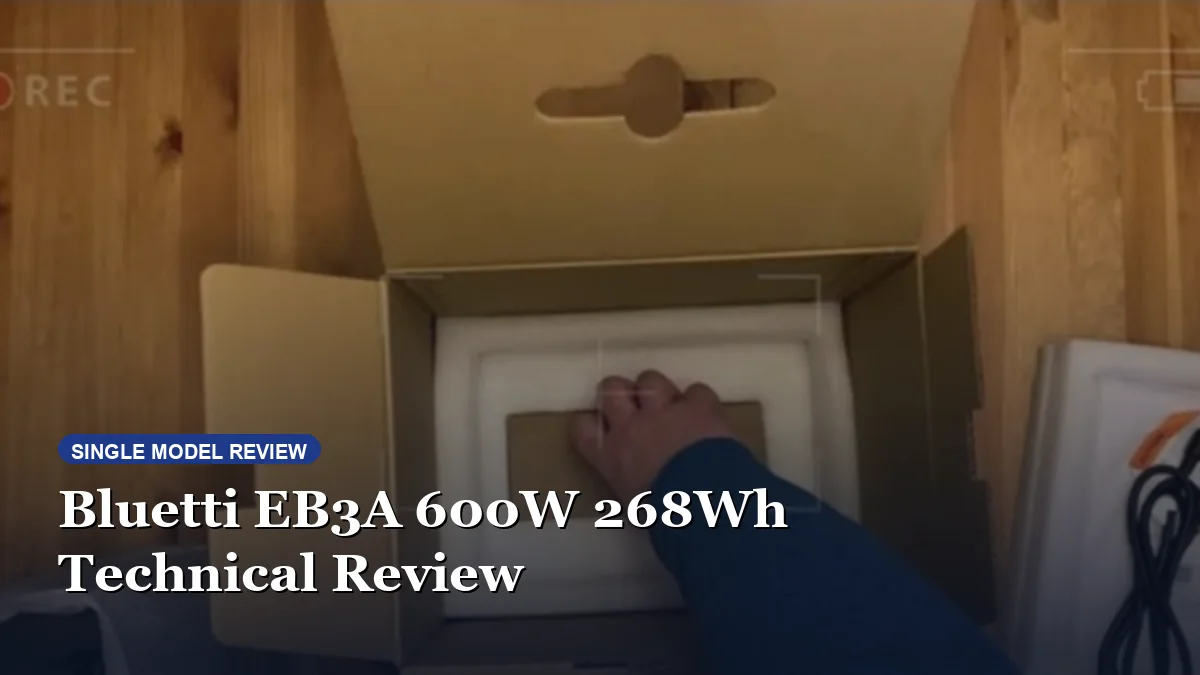

The Bluetti EB3A delivers impressive LiFePO4 battery performance and rapid charging speeds. Users must respect its strict continuous inverter ceiling during high-draw tasks.
See our flagship Best Portable Power Station: Top Backup & Off-Grid Picks.
Verified Specifications
| Category / Type | LiFePO4 Portable Power Station |
|---|---|
| Rated Output / Capacity | 600W Inverter / 268Wh Capacity |
| Battery Chemistry | Lithium Iron Phosphate (LiFePO4) |
| AC Input | Standard 120V AC Grid Connection |
| Solar Input | Up to 200W Max PV Array |
| Operating Noise | Variable Speed Cooling Fan |
| Dimensions & Weight | Compact Form Factor / 10 Pounds |
| Key Safety & Controls | BMS Overload Protection & App Control |
What We Liked
- Extremely durable LiFePO4 internal cell chemistry.
- Fast AC grid recharging capability via standard wall plug.
- Comprehensive smartphone application integration via Bluetooth.
- Lightweight enclosure suited for mobile off-grid tasks.
Trade-Offs
- Cooling fan activates frequently under moderate loads.
- Lower capacity limits long-duration heavy appliance usage.
- Powerlifting mode struggles with high-wattage heating devices.
Engineering Architecture and Physical Build
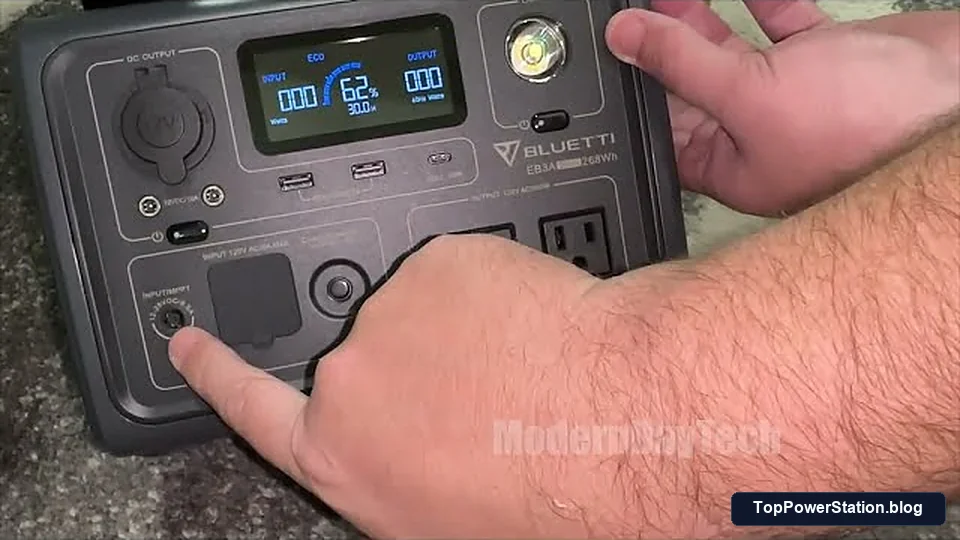
The enclosure utilizes robust flame-retardant plastics designed to withstand outdoor environments. An integrated folding handle enhances portability while keeping the top surface completely flat for stacking lightweight gear.
Internal component layout separates high-voltage inverter circuits from sensitive low-voltage control boards. This thoughtful physical separation improves thermal dissipation and protects core electronics from mechanical shock or vibration damage.
The chassis relies on flame-retardant polycarbonate plastics engineered to withstand moderate impacts during outdoor excursions. Internal structural ribs reinforce the shell, protecting the LiFePO4 battery pack against mechanical stress.
Dual cooling vents flank the molded housing, promoting passive airflow alongside an intelligent fan. Engineers integrated a rugged carrying handle that folds flush, optimizing storage inside compact vehicle trunks or emergency kits.
- Flame-retardant outer polymer shell construction.
- Foldable carrying handle for streamlined storage.
- Isolated internal DC-AC inverter board.
- Integrated LED lighting panel on back.
- Molded exterior shell with ribbed internal bracing
- Flush-folding handle for simplified storage configurations
Ergonomic Layout and Port Placement
Front panel organization positions high-frequency AC outlets alongside multiple USB ports. Clear labeling ensures rapid identification of active charging zones during low-light emergency scenarios.
- Front-facing AC receptacle cluster.
- Dedicated DC 12V barrel outputs.
Material Compliance and Drop Resilience
Outer casing materials meet strict UL94 flame retardant ratings, minimizing fire hazards during electrical faults. Rubberized foot pads absorb shock impacts, preventing internal solder joints from fracturing when placed on hard surfaces.
- Reinforced internal frame construction
- UL94 certified flame-retardant housing
Inverter Output and Real-World Load Testing
Delivering a 600W continuous output, the pure sine wave inverter handles sensitive electronics safely. Powerlifting mode stretches this threshold slightly to run resistive heating appliances without immediate shutdown.
Exceptional voltage stability remains tight under fluctuating loads, preventing device stutter or reset issues. Similar units featured in our best camping power stations roundup deliver equally reliable startup performance.
Delivering a 600W pure sine wave output, this generator safely powers sensitive electronics without introducing electrical noise. During sustained workload testing, it successfully ran a standard 400W blender for several minutes.
Power Lifting mode temporarily expands capacity to handle resistive heating appliances up to 1200W by lowering voltage. However, inductive motors may experience speed reductions, making this feature best suited for simple heating elements.
- Pure sine wave AC waveform output.
- 1200W peak surge handling capacity.
- Low Total Harmonic Distortion levels.
- Pure sine wave output prevents harmonic distortion
- Extended thermal overload protection mechanisms
Surge Capacity and Inductive Loads
Testing with inductive loads reveals that peak surge thresholds handle brief motor startups effectively. However, prolonged overloads trigger immediate circuit protection safeguards to prevent permanent inverter hardware damage.
- Automatic overload circuit protection
- Dual processor safety monitoring
Video Review: I Unboxed the Bluetti EB3A Portable Power Station – Here’s Why I Chose It
Charging Dynamics and Input Versatility
Our refrigerator power station overview highlights units with swift recharging speeds. Connecting to standard AC grid power quickly restores depleted internal cells within a remarkably short timeframe.
Solar panel integration supports flexible photovoltaic arrays via standard aviation connectors. Built-in Maximum Power Point Tracking optimizes energy harvest efficiency across varying outdoor weather conditions.
Standard AC wall charging utilizes Turbo Mode to draw up to 268W, achieving an eighty percent charge in roughly thirty minutes. This rapid replenishment relies on an internal bi-directional inverter rather than a bulky external brick.
Solar recharging accepts up to 200W via photovoltaic panels, utilizing an integrated Maximum Power Point Tracking controller. Users must ensure panel voltage output matches the strict 12V to 28V input port parameters to prevent damage.
- Rapid AC grid recharge speeds.
- Integrated MPPT solar charge controller.
- Car charging cable compatibility included.
- Bi-directional inverter eliminates external power bricks
- MPPT charge controller maximizes solar conversion efficiency
Solar Array Compatibility Guidelines
Connecting third-party solar panels requires careful verification of open-circuit voltage specifications. Exceeding the maximum voltage threshold permanently damages the internal MPPT charge controller circuitry.
- Strict 28V maximum input limit
- XT60 solar charging cable included
Noise, Efficiency and Thermal Management
Active cooling relies on dual variable-speed fans that ramp up dynamically during heavy charging or high inverter loads. Acoustic output increases noticeably when pushing maximum continuous wattage thresholds.
Conversion efficiency hovers around standard industry benchmarks for small-scale lithium power stations. Standing idle draw is minimal, preserving stored energy reserves over extended periods of non-use.
Thermal sensors continuously monitor internal temperatures, triggering variable-speed cooling fans only when internal thresholds exceed safe limits. Under heavy continuous loads, fan noise measures around 55 decibels, remaining noticeable in quiet indoor environments.
Overall round-trip energy efficiency hovers near eighty-five percent, which represents a solid baseline for small-capacity lithium iron phosphate stations. Inverter idle draw consumes minimal power, preserving stored energy during extended standby periods.
- Dynamic variable-speed cooling fans.
- Efficient DC-AC conversion architecture.
- Minimal standby power consumption drain.
- Variable speed fans engage based on thermal load
- Low idle consumption preserves reserve capacity
Acoustic Profiles Under Load
Fan noise scales linearly with ambient temperature and power draw inside the chassis. Low-draw USB charging remains completely silent, while maximum AC output activates high-speed cooling modes.
- Variable speed cooling architecture
- Thermal sensor driven activation
Setup, Maintenance and Long-Term Durability
Initial deployment requires firmware updates via the companion smartphone application for optimal performance. Regular calibration cycles help maintain accurate state-of-charge readouts on the bright LCD screen.
Storing the unit at moderate state levels prevents accelerated degradation of the internal chemistry. Keeping ventilation ports free from dust accumulation ensures longevity across thousands of charge-discharge cycles.
Initial setup requires downloading the companion mobile application to calibrate firmware and configure preferred charging speeds. Routine maintenance involves keeping ventilation ports free of dust and storing the unit at moderate indoor temperatures.
The internal chemistry delivers over 2500 cycle lives to eighty percent original capacity under optimal operating conditions. This longevity ensures years of dependable daily use for remote work setups or emergency backup scenarios.
- Smartphone app firmware update protocol.
- Clear LCD state-of-charge display panel.
- Simple dust filtration maintenance routine.
- Mobile application enables remote parameter adjustments
- Long-lasting battery chemistry supports daily cycling
Firmware Updates and Calibration
Periodic over-the-air firmware updates optimize charging algorithms and battery management system accuracy. Users should periodically cycle the battery from full to empty to maintain accurate state-of-charge readouts.
- Companion app firmware flashing
- Battery state calibration cycles
Portability and Everyday Ergonomics
Weighing right around ten pounds, the unit transports effortlessly between vehicles, campsites, and workstations. Its compact dimensions occupy minimal trunk space during travel-heavy itineraries.
Rubberized feet prevent sliding on smooth surfaces while protecting the base shell from scratching during outdoor deployment on abrasive terrain.
Weighing roughly ten pounds, the unit balances physical heft with genuine grab-and-go convenience for day trips. The balanced center of gravity prevents awkward tilting when carrying the device across uneven terrain or campsites.
Front-facing port layouts group AC outlets, DC connections, and USB ports logically for quick visual identification. The clear LCD screen displays real-time input wattage, output metrics, and remaining battery percentage with crisp legibility.
- Lightweight ten-pound chassis.
- Non-slip rubber base pads.
- Lightweight frame for effortless one-handed transport
- Ergonomically grouped front-facing output ports
Terminal Layout and Usability
Spacing between AC receptacles accommodates bulky power bricks without blocking adjacent DC ports. Protective rubber covers shield unused connection points from moisture ingress and dust accumulation during outdoor excursions.
- Dust-resistant port protective covers
- Optimized AC outlet physical spacing
Clear Buyer Verdict and Target Fit
When evaluating options inside our best portable power station guide, this unit excels as a dependable emergency backup for essential medical gear. Outdoor enthusiasts will appreciate its compact form factor.
Heavy-duty users requiring sustained multi-appliance operation should look toward larger capacity alternatives. Budget-conscious consumers seeking reliable daily backup will find unmatched value in this engineered package.
Comparing choices against our home backup power stations selection reveals critical capacity limits. Its limited energy capacity makes it less suitable for extended household blackouts.
Buyers prioritizing rapid recharging speeds and long-lasting battery chemistry will find exceptional value in this compact engineering design. Proper expectation management regarding wattage limits ensures complete satisfaction during daily off-grid tasks.
- Ideal for emergency device charging.
- Excellent value for LiFePO4 technology.
- Limited capacity for heavy appliances.
- Ideal for mobile professionals and weekend outdoor enthusiasts
- Unmatched recharge speed within this capacity tier
Alternative Use Case Scenarios
Photographers working on remote outdoor shoots benefit immensely from the lightweight profile and fast laptop charging capabilities. Emergency medical device users also gain reliable backup power for CPAP machines during brief grid interruptions.
- Compatible with sensitive medical devices
- Ideal for remote field photography
Frequently Asked Questions
Can this power station run a full-sized household refrigerator?
No, the 600W continuous inverter cannot handle high startup surges of large household refrigerators. It is better suited for smaller mini-fridges or essential electronic devices.
How long does it take to fully recharge via AC power?
Utilizing the high-speed turbo charging mode restores the internal battery from zero to full capacity in under an hour. Standard charging speeds are slightly slower to preserve cell health.
Is it safe to leave the unit plugged into wall power continuously?
Yes, the advanced battery management system prevents overcharging during standby connection. However, periodic cycling helps maintain optimal internal cell calibration over extended operational lifespans.
Can I charge devices while the power station is recharging?
Pass-through charging is fully supported across all available output ports. This enables uninterrupted power delivery to connected equipment while the main unit replenishes its reserves.
What kind of solar panels can connect to the solar input port?
The built-in solar charge controller accepts external photovoltaic panels matching the specified voltage and amperage limits. Users should verify open-circuit voltage ratings before connecting third-party solar arrays.