What Size Power Station Do I Need for CPAP?
Calculate exact battery capacities required for uninterrupted nightly therapy. Master DC connections, humidification loads, and safety protocols for reliable emergency or off-grid operation.


A standard CPAP machine requires a portable power station rated for at least 300 watt-hours for a single night, provided you disable heated humidification and use an efficient DC converter cable.
Ready to compare models? Start with our Best Portable Power Station: Top Backup & Off-Grid Picks.
Practical Quick-Reference Table
| Scenario / Metric | Recommended Target | Why It Matters |
|---|---|---|
| Single Night (No Heat) | 300 Wh Capacity | Runs standard pressures safely without draining reserves. |
| Single Night (With Heat) | 600 Wh Capacity | Heated humidification draws massive continuous amperage loads. |
| Two Nights Backup | 700+ Wh Capacity | Accounts for dual-night usage without midday grid recharges. |
| Connection Type | 12V DC Adapter | Bypasses the inverter conversion loss to save power. |
| Inverter Waveform | Pure Sine Wave | Protects sensitive internal medical motors from damage. |
| Operating Environment | 50 to 85 Degrees Fahrenheit | Preserves chemical lithium battery efficiency throughout the night. |
Decoding CPAP Electrical Load and Wattage Calculations
Modern continuous positive airway pressure devices operate internally on low-voltage direct current. Manufacturers typically bundle external power bricks rated between 60 and 90 watts to supply this continuous therapeutic airflow.
However, your machine rarely draws its maximum rated wattage during normal breathing cycles. Actual power consumption usually hovers near 15 to 30 watts depending on your prescribed pressure setting and mask seal.
Multiplying your running wattage by the expected hours of sleep yields total watt-hours. A twenty-watt draw over eight hours demands at least 160 watt-hours of raw chemical energy from your battery pack.
Always account for realistic buffer margins when sizing your equipment. Electrical systems lose efficiency during power conversion, meaning you should multiply your baseline energy requirements by 1.25 to ensure complete safety.
Calculating your CPAP power draw requires looking past the standard AC brick specifications to find the actual operating wattage under real breathing pressures and varying mask seals.
Most medical devices list maximum ratings on their power supply units, but continuous running draws are significantly lower unless heated humidifiers and heated tubing are actively operating simultaneously.
A standard machine without accessories typically consumes 30 to 60 watts while actively delivering airflow, whereas adding full humidification can easily push total demand past 80 to 100 watts.
Multiply your operating watts by expected nightly run hours to establish watt-hour requirements, then add a mandatory safety buffer to account for inverter conversion efficiency losses during extended deployments.
- Check nameplate labels for peak input voltage requirements.
- Measure actual amperage draw using a bedside watt meter.
- Factor in eight full hours of uninterrupted sleep duration.
- Add a twenty-five percent safety margin for power loss.
Evaluating Humidification and Heated Tubing Demands
Heated humidifiers and thermal tubing represent the single largest electrical drain in medical respiratory therapy. Activating these comfort features can instantly spike your baseline power consumption up to 80 watts continuously.
This massive thermal load drastically reduces your available run time. Disabling the heated humidifier often extends your portable generator capacity by three times, transforming a short session into a reliable overnight backup.
- Water chambers require substantial energy to maintain thermal output.
- Heated tubing adds continuous resistive electrical load to circuits.
- Passive humidification preserves battery reserves without heating elements.
Battery Chemistry Capacity Sizing for Extended Outages
Lithium iron phosphate and lithium-ion chemistries dominate modern portable generator manufacturing. Choosing the correct chemical composition ensures stable voltage delivery throughout your entire night of scheduled respiratory therapy.
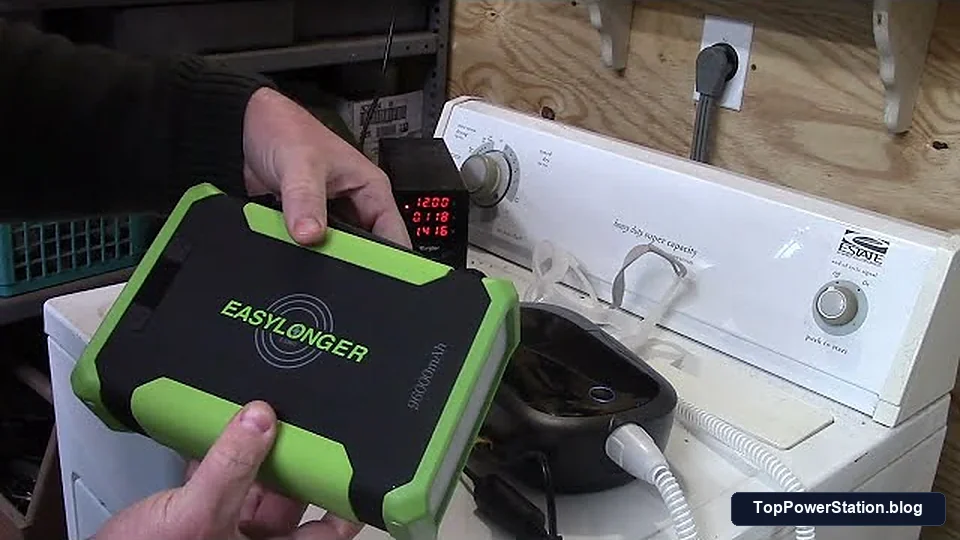
Lithium iron phosphate cells offer exceptional longevity exceeding three thousand cycles before significant capacity degradation occurs. This makes them ideal for frequent travelers and individuals requiring nightly emergency backup protection.
Standard lithium-ion packs provide lighter physical weights but offer fewer overall lifecycle recharges. Explore choices within our camping power station roundup to find portable solutions.
Verify that your selected unit supports pass-through charging if you plan to keep it plugged into a wall outlet. This ensures seamless automatic switching when commercial grid power fails unexpectedly overnight.
Modern portable power stations primarily utilize LiFePO4 battery chemistry because it offers superior thermal stability and enduring cycle lives exceeding three thousand charges before significant capacity degradation.
When sizing a station for multi-night grid failures, select units offering at least 500 watt-hours of capacity to comfortably sustain a standard therapeutic load for two consecutive nights safely.
Older lithium-ion chemistry variants provide high energy density in lighter frames, but they suffer from reduced overall lifespan, making them less ideal for frequent emergency standby deployment cycles.
Always verify the stated watt-hour rating matches usable capacity rather than gross cell capacity to prevent unexpected middle-of-the-night shutdowns caused by overly optimistic manufacturer specifications.
- Prioritize lithium iron phosphate cells for long-term durability.
- Ensure the unit features a regulated 12-volt DC port.
- Confirm automatic UPS switchover times for grid failures.
- Calculate total amp-hours against your machine operating specs.
Video Walkthrough: What Size Power Station Do You REALLY Need?
Maximizing Efficiency Through DC Power Conversions
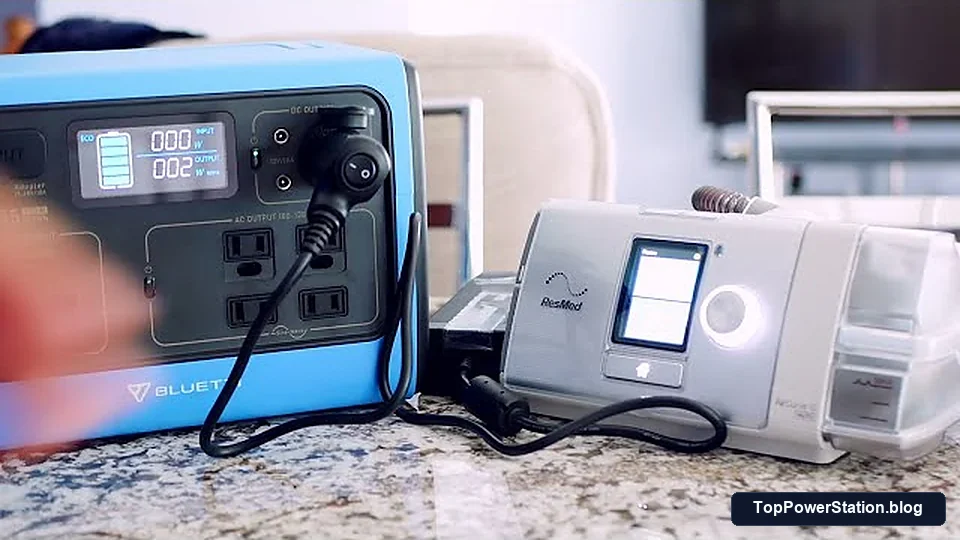
Plugging your respiratory device into a standard wall outlet style AC socket wastes valuable stored energy. Inverters must convert direct current to alternating current, resulting in an efficiency loss of ten to twenty percent.
Using a dedicated DC converter bypasses this inefficient inversion process. Test your expected usage limits with our runtime wh calculator to maximize battery efficiency.
Specialized mobile cords match the exact voltage inputs required by specific medical brands. Always verify polarity and plug dimensions carefully before connecting any third-party cable to sensitive respiratory hardware.
Manufacturers design these specialized cords to protect against power surges. Utilizing proprietary direct current lines ensures stable motor operation without annoying voltage fluctuations interrupting your sleep patterns.
Using native DC-to-DC converter cables bypasses the inefficient AC inverter stage entirely, recovering up to twenty percent of stored battery capacity that would otherwise become wasted thermal energy.
Connecting your breathing machine directly to a 12V cigarette lighter port or specialized DC output port eliminates the double-conversion penalty inherent in standard wall plug setups.
Manufacturer-approved DC power cords regulate incoming voltage precisely, protecting sensitive internal motors from electrical spikes while maximizing overall runtime during prolonged off-grid camping or emergency scenarios.
Disabling the heated humidifier chamber provides the single greatest runtime extension, reducing power draw so drastically that even modest entry-level battery stations can last multiple full nights.
- Acquire manufacturer-approved direct current adapter cables.
- Avoid using standard AC wall outlets whenever possible.
- Inspect cable connectors for secure locking mechanisms.
- Verify correct positive and negative terminal alignments.
Bedside Hardware Setup and Optimal Calibration Steps
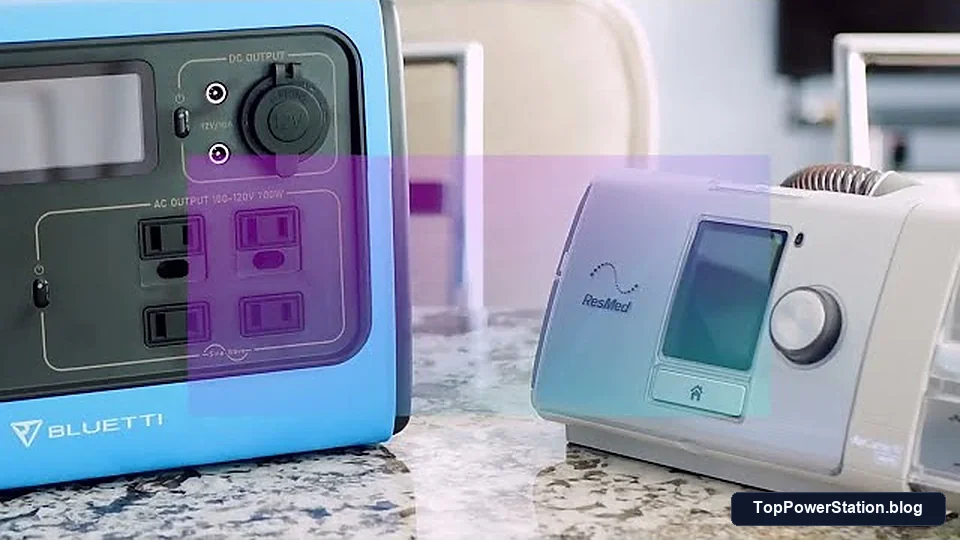
Proper physical placement of your power station prevents accidental cord disconnections in the dark. Position the generator on a stable nightstand or the floor utilizing a short extension strap for security.
Keep cooling fans unobstructed to maintain safe operating temperatures. Blocked ventilation ports can trigger thermal shutdown protection circuits, prematurely cutting off your airflow and interrupting your restorative breathing therapy.
Test your complete emergency setup during daylight hours before relying on it overnight. Verify that the display screen remains legible and that indicator lights do not cause disruptive ambient glare.
Securing excess cabling with velcro straps prevents tripping hazards around the bed. A well-organized bedside workstation guarantees safety and reliability throughout your entire overnight medical treatment cycle.
Proper physical placement of your power station involves keeping it on a stable, flat surface near the bed while ensuring adequate clearance for internal cooling fan ventilation paths.
Secure all cable connections firmly to prevent accidental disconnections during sleep, and route cords safely to avoid tripping hazards when navigating the bedroom in total darkness.
Configure your power station settings to disable automatic eco-shutdown modes that misinterpret low continuous draw. Consult our cpap power station guide to find medical-grade battery solutions.
Test your complete emergency setup during daylight hours before an actual storm strikes, verifying that all adapters fit snugly and the display accurately reports remaining runtime metrics.
- Place the power unit on a stable, flat surface.
- Ensure cooling vents remain clear of bedding materials.
- Test the complete configuration during daylight hours first.
- Organize loose cables safely to prevent tripping hazards.
Diagnostic Troubleshooting for Unexpected Power Shutdowns
Unexpected generator shutdowns usually stem from tripped overload protection or low voltage thresholds. If your machine stops blowing air, check the digital display for error codes and active warning symbols.
Environmental temperature extremes can also trigger internal safety cutoffs. Operating lithium batteries below freezing or above 104 degrees Fahrenheit forces the battery management system to disconnect power immediately.
Check all physical cable connections to ensure they are firmly seated. Loose barrel plugs can cause intermittent power drops that reset your respiratory device and trigger loud audible alarm tones.
Resetting the power station requires turning off all connected loads and cycling the main master power switch. Allow the internal circuitry to stabilize for two full minutes before resuming therapy.
Unexpected middle-of-the-night shutdowns usually stem from low voltage disconnects triggered when high startup surges temporarily drop battery output below operational thresholds for sensitive medical electronics.
Inspect all physical connections for loose terminals or frayed insulation, as minor resistance increases can generate localized heat and prompt internal safety circuits to cut power supply.
If your unit trips repeatedly, verify whether the heated humidifier or heated hose is active, and immediately disable these high-draw resistance elements to lower total instantaneous wattage.
Consult the manufacturer error codes displayed on the screen, noting specific voltage warnings or temperature alerts before resetting the system or switching to backup power sources.
- Inspect digital display screens for active error codes.
- Verify that ambient room temperatures remain moderate.
- Push all cable connectors firmly into their sockets.
- Cycle the main master power switch after unexpected drops.
Routine Maintenance Protocols and Long-Term Storage Safety
Portable power stations require regular maintenance to guarantee readiness during unexpected emergencies. Recharge your battery unit to sixty percent capacity every three to six months during prolonged periods of storage.
Clean exterior housing vents using a dry microfiber cloth to remove accumulated dust. Dust buildup restricts proper airflow and diminishes the cooling efficiency of internal electronic components during operation.
Inspect all charging cables and DC adapters for frayed insulation or bent pins. Damaged wiring presents severe electrical hazards and must be replaced immediately with factory-certified components to ensure safety.
Store your emergency equipment in a climate-controlled environment away from direct sunlight. Proper temperature management prevents premature chemical degradation and preserves your overall battery health over years.
Maintain optimal battery health by cycling your portable power station every three months. Review options in our home backup power guide to protect against extended grid failures.
Store the unit in a climate-controlled environment away from direct sunlight, maintaining ambient temperatures between 50 and 70 degrees Fahrenheit to preserve long-term chemical stability.
Clean exterior intake vents regularly using compressed air or a soft brush to remove dust accumulation that can impede airflow and trigger thermal protection shutdowns prematurely.
Inspect power cables and terminal ports for oxidation or debris buildup, wiping contacts with an isopropyl alcohol swab to ensure optimal electrical conductivity for future emergencies.
- Recharge idle units every three to six months.
- Clean exterior ventilation slots with dry cloths.
- Inspect all power cords for frayed insulation.
- Store equipment within climate-controlled indoor spaces.
Frequently Asked Questions
Can I run my heated humidifier off a portable power station?
Heated humidifiers draw immense electrical loads that drain standard batteries rapidly. You should disable the heating element and rely on passive moisture to achieve eight hours of runtime safely.
How long will a 300 watt-hour generator power my respiratory machine?
A standard unit powers a modern machine for roughly two full nights without heated humidification. Exact durations vary based on your specific prescribed pressure setting and mask seal integrity.
Is it better to use an AC outlet or a DC adapter?
Always use a specialized direct current adapter cable to connect your machine directly. This bypasses the inverter and preserves up to twenty percent more stored energy during use.
Can I leave my emergency power station plugged into the wall continuously?
Modern lithium iron phosphate generators feature smart management systems that prevent overcharging safely. You can maintain them in a standby mode while awaiting unplanned commercial grid power failures overnight.
What maintenance does a bedside power station require?
Recharge idle units to sixty percent capacity every few months and clear dust. Inspect all wiring for damage to ensure absolute reliability during critical nightly medical therapy sessions.