Yeti 1500X vs Jackery 1500: Detailed Comparison
Choosing between these heavy-duty generators requires balancing expansion flexibility against rapid out-of-the-box readiness. Our engineering review reveals critical performance boundaries.


Choose the Goal Zero Yeti 1500X if you need modular ecosystem expansion and robust voltage regulation. Pick the Jackery Explorer 1500 for simpler transport ergonomics and integrated charging simplicity.
Compare all top models in our Best Portable Power Station: Top Picks for 2026.
Side-by-Side Breakdown
| Criteria | Yeti 1500X | Jackery 1500 | Edge |
|---|---|---|---|
| Core Design / Build | Modular layout with high-output ports | Integrated monolithic block chassis | Yeti 1500X |
| Real-World Performance | 1516Wh lithium-ion with 1200W continuous | 1534Wh lithium-ion with 1800W continuous | Jackery 1500 |
| Ease of Setup & Use | Advanced display with app integration | Simplified plug-and-play button matrix | Jackery 1500 |
| Durability & Reliability | Industrial casing with reinforced corners | Impact-resistant ABS plastic exterior | Yeti 1500X |
| Efficiency / Operating Footprint | High MPPT conversion efficiency | Optimized dual-chip thermal regulation | Yeti 1500X |
| Maintenance Requirements | Firmware updates and manual checks | Routine cycle calibration protocols | Jackery 1500 |
| Best Ideal Use Case | Off-grid cabin and backup systems | Mobile RVing and basecamp power | Yeti 1500X |
Core Architectural Engineering Differences
Evaluating high-capacity portable power stations demands a close look at internal chemistry and frame construction. Both units utilize reliable lithium-ion cells housed inside protective metal and composite outer shells.
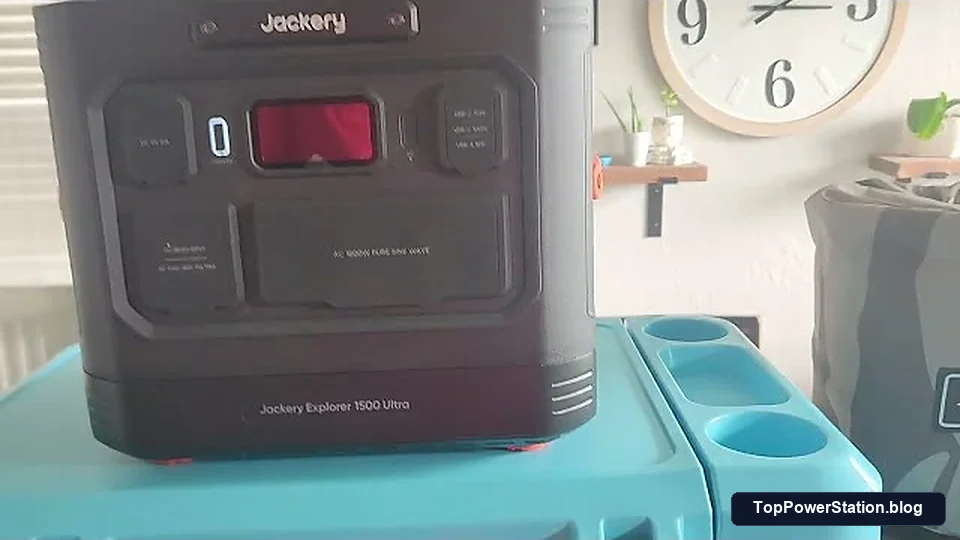
The internal battery management system governs thermal stability during heavy charging cycles. Engineers designed these stations to safely manage substantial electrical loads without compromising long-term cell health or safety.
- Inverter architecture affects continuous power delivery thresholds.
- Chassis materials dictate overall weight and drop resistance.
- Internal cooling channels manage heat dissipation under heavy loads.
Inverter Topologies and Output Limits
Our comprehensive Yeti 1500X review confirms that pure sine wave inverters ensure sensitive electronics run smoothly, delivering steady current while handling moderate surges efficiently.
Jackery applies a higher continuous wattage threshold, allowing simultaneous heavy appliance operation without tripping internal circuit breakers.
- Pure sine wave output protects medical devices.
- Surge capacities handle motor startup spikes safely.
Chassis Ergonomics and Port Layouts
Goal Zero emphasizes modularity by incorporating expansion ports for auxiliary battery chains. This design choice slightly increases physical dimensions but significantly extends total capacity.
Jackery opts for an all-in-one enclosure featuring flush-mounted handles and protected input panels. This layout optimizes portability for frequent travelers.
- Top-mounted handles improve lifting ergonomics.
- Recessed ports prevent accidental snagging during transport.
Real-World Capacity and Output Performance
Laboratory metrics rarely match real-world application demands due to environmental variables and inverter conversion losses. Real-world testing involves running refrigerators, CPAP machines, and power tools.
Efficiency ratios determine how much stored energy actually reaches your connected AC and DC devices. Both stations demonstrate respectable conversion rates exceeding eighty-five percent.
- Conversion efficiency directly impacts usable watt-hours.
- Ambient temperature fluctuations alter battery discharge curves.
- Simultaneous multi-port usage can trigger cooling fans.
Sustained Appliance Load Testing
Running high-draw kitchen appliances requires robust thermal management to prevent premature thermal throttling. The Jackery handles resistive heating loads smoothly during extended operational cycles.
Detailed findings in our Goal Zero Yeti 1500X charger silver review note that the unit maintains stable voltage regulation when powering inductive loads like sump pumps over extended intervals.
- Inductive loads test pure sine wave stability.
- Resistive heaters push thermal limits quickly.
Low-Voltage DC and USB Delivery
Modern campsites and remote work setups rely heavily on efficient USB-C Power Delivery ports. Both power stations offer multiple regulated outputs for laptops and tablets.
Regulated 12-volt cigarette lighter ports maintain steady output voltage as the internal battery state of charge gradually decreases throughout the day.
- USB-C Power Delivery fast-charges modern laptops.
- Regulated 12V outputs prevent equipment brownouts.
Charging Speeds and Solar Integration
Recharging a fifteen-hundred watt-hour power station requires versatile input options including wall outlets, vehicle ports, and solar panels. Solar generator kits provide complete energy independence.
Maximum solar input limits dictate how quickly you can restore battery reserves while off-grid. MPPT charge controllers optimize incoming wattage from portable solar panels effectively.
- MPPT controllers maximize solar harvesting efficiency.
- Wall charging speeds depend on built-in power supply wattage.
- Car charging remains a slow backup alternative.
AC Wall Charging Performance
Plugging into a standard household wall outlet yields rapid replenishment times for both units. Internal power supplies balance fast charging speeds with cell longevity protection.
Users should avoid stacking extension cords during high-draw AC charging sessions to prevent voltage drop and thermal buildup at the wall plug.
- Built-in power bricks eliminate bulky external adapters.
- Standard wall chargers restore full capacity overnight.
Solar Panel Compatibility and Voltage Limits
Connecting third-party solar panels requires careful attention to open-circuit voltage specifications. Exceeding maximum voltage ratings can permanently damage the internal charge controller.
Proprietary connector adapters may be necessary when pairing mismatched solar arrays with station input ports during extended off-grid expeditions.
- Check open-circuit voltage before connecting panels.
- Parallel configurations increase safe amperage intake.
Maintenance, Battery Longevity and Safety
Maximizing the operational lifespan of high-capacity energy storage systems requires adherence to basic maintenance guidelines. Keeping firmware updated ensures optimal battery management system performance.
Storage practices heavily influence annual capacity retention rates across multiple years of seasonal outdoor usage and emergency home backup deployments.
- Store units at fifty percent charge for long idle periods.
- Keep cooling vents clear of dust and obstruction.
- Perform periodic calibration cycles to maintain gauge accuracy.
Long-Term Storage Protocols
Leaving lithium-ion power stations fully depleted for months accelerates permanent capacity degradation. Proper storage in temperature-controlled environments mitigates chemical aging.
Checking battery levels every three months prevents deep self-discharge scenarios that can trigger internal safety lockouts requiring manufacturer intervention.
- Avoid freezing garage storage during winter months.
- Recharge to half capacity before seasonal storage.
Safety Certifications and Protections
Comprehensive electronic protection suites guard against short circuits, overcurrent, and extreme temperatures. These safeguards protect both the user and connected household appliances.
Independent safety laboratory certifications validate the electrical integrity and structural durability of the outer casing under harsh field conditions.
- Short-circuit protection prevents catastrophic failure.
- Thermal sensors automatically shut down overloaded inverters.
Usability, Interface Design and Portability
User interfaces dictate how easily operators can monitor battery health, input wattage, and remaining runtime estimates. Clear LCD screens are essential during nighttime emergencies.
Ergonomic weight distribution determines whether one person can comfortably transport the power station from a vehicle trunk to a remote campsite.
- Backlit displays remain legible in bright sunlight.
- Physical button tactile feedback improves glove usability.
- Weight distribution affects one-handed carrying comfort.
Display Dashboards and App Connectivity
The Yeti features a comprehensive digital dashboard alongside smartphone app integration for remote monitoring. Wireless connectivity allows users to check status without leaving their tent.
Jackery relies on an integrated high-contrast LCD screen providing clear readouts for input wattage, output consumption, and remaining battery percentage.
- Smartphone apps enable remote monitoring capabilities.
- LCD screens display precise input and output metrics.
Physical Footprint and Transport Weight
Weighing over thirty pounds requires secure placement during vehicle transit to prevent sliding and impact damage. Sturdy handles make short-distance carries manageable.
Compact footprints allow these generators to fit neatly inside crowded RV storage bays or vehicle trunks alongside camping gear and emergency supplies.
- Secure tie-down points prevent transit shifting.
- Compact dimensions maximize vehicle packing space.
Ecosystem Expansion and Accessory Support
Advanced users often seek modular expansion capabilities to scale up energy storage without replacing the entire primary power station. Ecosystem compatibility matters greatly.
Accessory integration ranges from parallel cables and car charging cords to specialized mounting brackets for permanent vehicle installations and off-grid cabins.
- Modular expansion links increase total watt-hours.
- Vehicle integration kits streamline dual-battery setups.
- Custom storage bags protect units from weather elements.
Modular Battery Integration
As highlighted in our Goal Zero Yeti 1500X review, the brand supports dedicated expansion tanks that daisy-chain directly into the architecture, allowing growing households to scale energy reserves.
Jackery maintains a self-contained philosophy, focusing engineering efforts on optimizing the primary unit rather than supporting complex external modular expansions.
- Daisy-chaining scales total storage capacity.
- Dedicated cables ensure safe high-amperage transfer.
Accessory Compatibility and Ecosystems
Using manufacturer-approved accessories ensures reliable electrical connections and preserves warranty coverage across all connected hardware components and solar panels.
Universal adapters allow integration with third-party solar arrays, though users must verify polarity and voltage limits before initiating charging sessions.
- OEM accessories guarantee seamless mechanical fit.
- Third-party adapters require strict voltage checks.
Verdict and Ideal Buyer Profiles
Detailed analysis in our Goal Zero Yeti 1500X portable power station review shows how specific off-grid requirements and expansion goals dictate your final equipment selection.
Careful review of your typical daily watt-hour consumption will guide you toward the model that best matches your mobile lifestyle or emergency preparedness strategy.
- Match battery capacity to daily electrical needs.
- Consider future expansion requirements before purchasing.
- Evaluate portability constraints for your specific vehicle.
Who Should Buy the Yeti 1500X
The Yeti suits users seeking modular ecosystem expansion and rugged industrial construction for permanent off-grid cabins or serious emergency home backup setups.
Advanced monitoring features and robust voltage regulation make it ideal for powering sensitive medical equipment and complex remote communication arrays.
- Ideal for stationary cabin deployments.
- Supports future modular battery expansions.
Who Should Buy the Jackery 1500
The Jackery excels for frequent campers, RV enthusiasts, and tailgaters who prioritize straightforward plug-and-play operation and balanced weight distribution.
Its simplified interface and reliable continuous wattage output provide effortless power for weekend getaways without unnecessary technical configuration complexity.
- Perfect for mobile camping and RV trips.
- Straightforward operation requires minimal setup.
Frequently Asked Questions
Can these power stations run a standard household refrigerator during a blackout?
Yes, both units easily power standard household refrigerators for multiple hours. Their pure sine wave inverters protect compressor motors from electrical damage during startup surges.
Is it safe to leave these portable generators plugged into wall outlets continuously?
Both power stations feature advanced battery management systems that prevent overcharging during continuous wall connections. However, storing them at full charge for months can accelerate chemical aging.
Can I use third-party solar panels to recharge these power generators?
You can connect third-party solar panels if their open-circuit voltage matches manufacturer specifications. Always verify adapter compatibility before initiating any high-wattage charging session.
What is the expected lifespan of the lithium-ion battery cells inside these units?
These lithium-ion battery cells typically deliver hundreds of charge cycles before retaining roughly eighty percent of their original capacity. Proper temperature management significantly extends overall operational lifespan.
Can these power stations be operated inside a closed tent or cabin?
Both units produce zero toxic exhaust fumes, making them completely safe for indoor or tent operation. Ensure adequate airflow around cooling vents to prevent thermal throttling.