Which Is Better Bluetti vs Jackery: Definitive Guide
Choosing between these top brands requires balancing advanced chemistry options with seamless portability. Your specific off-grid power demands dictate the ideal system architecture.


Choose Bluetti for expandable capacity and heavy-duty chemistry longevity. Select Jackery when prioritizing ultra-fast setup and lightweight recreational mobility.
Compare all top models in our Best Portable Power Station: Top Picks for 2026.
Side-by-Side Breakdown
| Criteria | Which Is Better Bluetti | Jackery | Edge |
|---|---|---|---|
| Core Design / Build | Modular, industrial-grade chassis built for heavy expansion. | Compact, single-unit housing focused on lightweight travel. | Bluetti |
| Real-World Performance | Sustains high continuous wattage across multiple heavy appliances. | Reliable output optimized for standard camping and emergency gear. | Bluetti |
| Ease of Setup & Use | Feature-rich interface with deep menu customization options. | Plug-and-play simplicity with intuitive physical button layouts. | Jackery |
| Durability & Reliability | Utilizes robust LFP cells rated for thousands of deep cycles. | Proven drop-resistant outer shell with reliable safety protocols. | Bluetti |
| Efficiency / Operating Footprint | Advanced MPPT controllers maximize solar input conversion rates. | Streamlined power delivery minimizes idle self-discharge losses. | Bluetti |
| Maintenance Requirements | Routine firmware updates and dust clearance for cooling fans. | Minimal upkeep with periodic battery calibration cycles. | Jackery |
| Best Ideal Use Case | Whole-home emergency backup and off-grid cabin living. | Weekend camping trips, tailgating, and mobile workstation power. | Split |
Introduction and Core Hardware Philosophy
Evaluating portable power stations demands a deep dive into engineering priorities and daily operational requirements. Modern users expect reliable off-grid electricity without sacrificing safety or convenience.
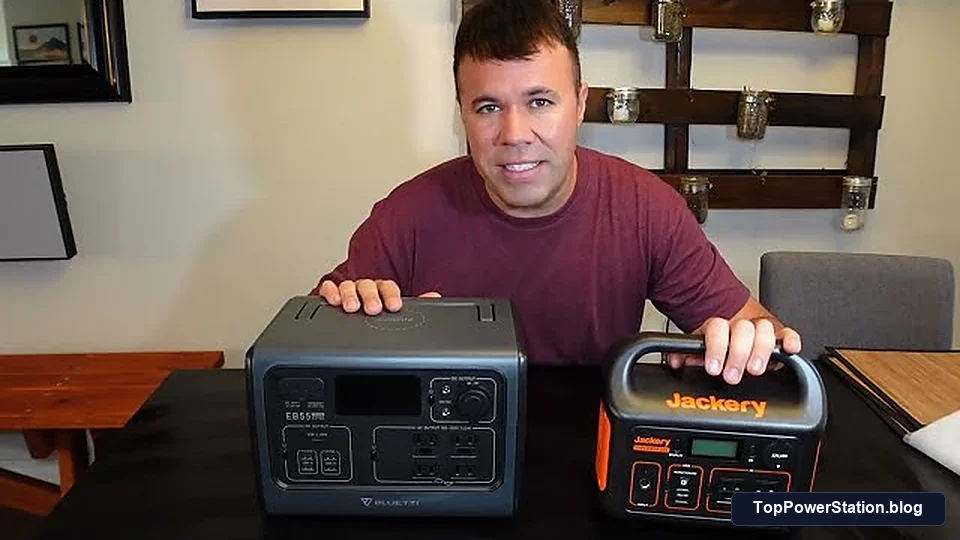
Bluetti engineers heavy-duty units focusing on modular expansion and stationary backup capability. Their industrial styling emphasizes high-capacity energy storage over minimalist travel aesthetics.
Jackery pioneered user-friendly recreational generators with vibrant orange housings and intuitive physical layouts. Their design philosophy targets weekend campers who demand absolute simplicity and effortless transport.
Integrating these systems into existing power setups requires understanding how hardware interfaces with monitoring applications. Advanced users often map custom control sequences much like assigning a keyboard shortcut for fast status checks.
Software platforms must communicate fluidly with internal management systems to prevent thermal throttling. When benchmarking performance metrics, enthusiasts sometimes track operational cycles similarly to tracking benchmark splits in csTimer applications.
Choosing between Bluetti and Jackery requires deep technical evaluation of internal architecture, inverter topology, and advanced thermal management strategies deployed across their respective flagship generation product lines.
Jackery typically prioritizes streamlined plug-and-play usability, focusing on lightweight chassis construction and simplified user interfaces tailored for casual campers who value rapid out-of-the-box deployment.
Conversely, models featured in our best Jackery for camping guide emphasize modular expansion, higher continuous AC output ceilings, and versatile DC charging inputs designed for rigorous off-grid backup.
Understanding these foundational brand philosophies helps technicians match specific hardware capabilities against actual electrical loads, preventing premature equipment failure during extended power outages or field operations.
Our engineering analysis examines mechanical durability, battery chemistry longevity, and firmware reliability to determine which ecosystem best serves demanding industrial and recreational power requirements.
- Bluetti prioritizes modular expansion and high-capacity stationary storage.
- Jackery focuses on recreational simplicity and lightweight portability.
- Both brands utilize advanced digital management for safety monitoring.
- App integration bridges the gap between hardware and user control.
Design Evolution and Industrial Layouts
Industrial housing standards have shifted toward flame-retardant thermoplastics and reinforced aluminum frames. Both manufacturers utilize robust outer shells designed to withstand moderate outdoor abuse during transit.
Internal component layout dictates thermal dissipation efficiency during high-wattage inverter loads. Proper airflow channels prevent localized hot spots near sensitive lithium-ion battery management systems.
- Reinforced frames protect internal electronics from vibration damage.
- Strategic airflow channels optimize passive and active cooling.
Electrochemical Composition and Battery Chemistry
Battery chemistry dictates the overall lifespan, weight profile, and safety threshold of any portable generator. Understanding internal cell construction helps buyers anticipate long-term performance degradation over years of service.
Lithium Iron Phosphate chemistry dominates modern flagship models by offering superior thermal stability. These cells endure thousands of charge cycles before dropping below eighty percent initial capacity.
Traditional NMC chemistries still appear in select lightweight models to reduce physical burden. While offering higher energy density per pound, they feature shorter overall operational lifespans.
Both manufacturers have largely transitioned to lithium iron phosphate chemistry, offering superior cycle life and enhanced thermal stability compared to legacy ternary NMC lithium-ion cells.
Bluetti often specifies LiFePO4 cells rated for three thousand cycles to eighty percent original capacity, integrating robust Battery Management Systems to monitor individual cell voltages.
Jackery deploys similarly durable phosphate chemistries in their Plus series, balancing volumetric energy density with strict safety tolerances to minimize degradation during rapid solar charging cycles.
- LFP cells provide exceptional cycle life and thermal stability.
- NMC options reduce weight but degrade faster under heavy use.
- Battery management systems actively balance individual cell voltages.
Cell Longevity and Thermal Management
Thermal runaway prevention remains the primary design challenge for high-capacity energy storage devices. Sophisticated sensors constantly monitor cell temperatures to trigger emergency shutdown protocols if thresholds are exceeded.
Proper storage environments significantly extend internal chemistry health during seasonal off-periods. Maintaining moderate ambient temperatures prevents accelerated self-discharge and permanent capacity loss.
- Internal sensors prevent dangerous thermal runaway events.
- Controlled storage environments preserve maximum battery health.
Inverter Output Quality and Load Handling
Pure sine wave inverters ensure that sensitive electronics receive clean electricity matching grid power standards. Fluctuating modified sine wave outputs can damage delicate microprocessors found in modern appliances.
Evaluating units across our best Jackery power station lineup reveals how surge capacity ratings determine whether a generator successfully jump-starts heavy motorized compressor loads during initial startup.
Continuous output ratings dictate how many devices can run simultaneously without triggering overload protection. Matching your peak appliance draw to these specifications prevents frustrating system shutdowns.
Pure sine wave inverters are standard across modern units, delivering clean alternating current with less than three percent total harmonic distortion to protect sensitive microprocessor electronics.
Bluetti models frequently excel in surge capacity, safely managing momentary motor startup loads that exceed nominal wattage ratings through advanced digital signal processing algorithms.
Jackery units provide reliable continuous output for standard household appliances, though users must monitor peak load thresholds carefully to avoid triggering automatic overload shutdown protections.
- Pure sine wave output protects sensitive medical and computing gear.
- High surge headroom accommodates motorized compressor startup draws.
- Continuous wattage ratings define practical multi-device capacity.
Managing Complex Electrical Loads
Running inductive loads requires robust inverter transformers capable of absorbing reactive power feedback. High-quality filtering circuits suppress electrical noise that might otherwise interfere with audio equipment.
Overload protection mechanisms instantly cut AC output when current draws exceed safe engineering limits. Resetting these systems typically requires clearing the offending appliance and rebooting the master inverter.
- Filtering circuits eliminate electrical noise for audio devices.
- Rapid circuit breakers protect against accidental short circuits.
Charging Architecture and Input Versatility
Rapid recharging capabilities transform a power station from a static battery into an active utility. Multiple input sources including wall AC, solar panels, and vehicle auxiliary ports provide unmatched flexibility.
Advanced maximum power point tracking algorithms optimize solar panel energy harvesting efficiency. These controllers adjust voltage parameters dynamically as sunlight intensity fluctuates throughout the day.
AC charging speeds vary significantly depending on whether the unit uses external bricks or internal rectifiers. Integrated high-wattage charging circuits eliminate bulky power adapters for easier transport.
Input versatility dictates how quickly a generator restores energy in remote environments utilizing alternating current wall outlets, vehicle cigarette lighters, or portable photovoltaic panels.
As noted in our Bluetti AC180 review, these units support higher maximum solar input wattage, allowing users to chain multiple high-voltage panels safely using integrated maximum power point tracking controllers.
Jackery emphasizes simplified solar panel connectivity with proprietary DC adapters, ensuring straightforward setup while maintaining strict voltage limits to protect internal charging circuitry.
- MPPT solar controllers maximize energy harvesting in variable light.
- Integrated AC charging rectifiers eliminate bulky external power bricks.
- Vehicle auxiliary charging offers convenient backup replenishment on roads.
Solar Panel Compatibility and Safety
Connecting third-party solar arrays requires strict adherence to maximum open-circuit voltage limits. Exceeding these electrical ratings can permanently fry the internal charge controller beyond repair.
Weather-resistant connector standards ensure secure power transmission during sudden outdoor rain showers. Proper cable gauge selection minimizes resistive voltage drops over extended cable runs.
- Strict voltage limits prevent catastrophic charge controller damage.
- Weather-sealed connectors ensure safe outdoor solar connections.
Ergonomics, Portability, and Build Form Factors
Physical dimensions and handle placement dictate how comfortably a power station travels into remote environments. Bulky units require dedicated cart systems, while compact models easily ride in car trunks.
Ergonomic handles molded directly into the chassis prevent structural failure during heavy lifts. Balanced weight distribution reduces strain when carrying units across uneven campsites.
Display screen placement and viewing angles matter greatly during bright outdoor operations. Clear LCD panels provide instant visibility regarding input wattage and remaining runtime percentages.
Physical ergonomics heavily influence field deployment, requiring balance between robust chassis protection and manageable total weight for single-person transport across uneven terrain.
Jackery traditionally utilizes integrated folding handles and compact, injection-molded plastic enclosures that optimize space efficiency inside crowded vehicle trunks during recreational road trips.
Bluetti incorporates heavy-duty structural bracing and dual-grip handles, accommodating larger internal battery capacities and complex thermal cooling vents necessary for sustained high-wattage operations.
- Integrated handles distribute heavy lifting loads securely.
- Balanced chassis design prevents awkward wrist strain during transport.
- High-contrast display screens remain readable under direct sunlight.
Weight Distribution and Frame Integrity
Heavy battery packs demand reinforced internal frames to survive drops and vehicle vibrations. Manufacturers use cross-bracing and shock-absorbing rubber feet to isolate sensitive electronic components.
Compact footprints allow seamless integration into cramped van conversion layouts and emergency closets. Efficient space utilization maximizes storage capacity without unnecessary bulk.
- Rubber feet absorb transit vibrations and prevent sliding.
- Reinforced internal frames protect heavy battery blocks.
Software Integration and Interface Controls
Modern power stations increasingly rely on companion smartphone applications for remote monitoring and parameter adjustments. Bluetooth and Wi-Fi connectivity allow users to check battery status from afar.
Physical interface buttons must offer tactile feedback even when operated wearing cold weather gloves. Menu navigation should remain straightforward without requiring deep dives into complex manuals.
Firmware update capabilities ensure that units receive performance patches and feature enhancements over time. Keeping system software current resolves minor bugs and optimizes charging efficiency.
Digital interface design impacts daily usability, combining physical LCD screens with companion mobile applications communicating via Bluetooth or local Wi-Fi network protocols.
Bluetti applications provide granular data monitoring, firmware update capabilities, and customizable charging modes designed to optimize battery lifespan during stationary grid-tied storage deployment.
Jackery focuses on clean, minimalist app layouts that display immediate input and output metrics clearly without overwhelming users with overly complex configuration menus or settings.
- Companion apps enable convenient remote monitoring via wireless signals.
- Tactile physical buttons ensure reliable operation in adverse weather.
- Over-the-air firmware updates keep internal operating systems optimized.
Interface Customization and Connectivity
Customizable auto-shutoff timers prevent unnecessary battery drain when low-draw devices finish charging. Users can adjust screen timeout durations to conserve precious energy during extended power outages.
Reliable wireless pairing protocols ensure uninterrupted communication between the generator and mobile devices. Secure encryption prevents unauthorized remote access to your household backup system.
- Adjustable auto-shutoff timers conserve stored battery energy.
- Secure wireless protocols protect remote system management apps.
Long-Term Reliability and Maintenance Protocols
Protecting your investment requires understanding basic maintenance schedules and environmental storage guidelines. Regular upkeep prevents premature component failure and ensures emergency readiness.
Dust clearance around cooling vents prevents overheating during sustained high-wattage inverter loads. Periodic cleaning with compressed air maintains optimal internal airflow dynamics.
Battery calibration cycles help the internal monitoring chip accurately calculate remaining runtime percentages. Running the unit down and recharging it fully recalibrates the state-of-charge algorithm.
Sustained operational reliability depends on proper maintenance protocols, including regular firmware updates, periodic calibration cycles, and storage in temperature-controlled, dry environments.
Both brands engineer their enclosures to withstand moderate field vibrations, but users must keep cooling fans free of dust accumulation to maintain optimal thermal dissipation.
Adhering to manufacturer guidelines regarding storage state-of-charge reduces calendar aging, similar to what we observed in our Jackery Explorer 1000 V2 review, ensuring your power station remains dependable.
- Routine vent cleaning maintains vital internal cooling airflow.
- Battery calibration cycles ensure accurate runtime display percentages.
- Proper off-season storage prevents permanent electrochemical degradation.
Troubleshooting Common Operational Issues
Error codes displayed on the LCD screen help diagnose specific input or output faults. Consulting the manual for these codes allows users to resolve minor glitches independently.
Fuse protection on DC outputs prevents damage from incorrectly wired accessories or short circuits. Replacing blown fuses quickly restores functionality to auxiliary ports.
- LCD error codes simplify rapid troubleshooting procedures.
- Replaceable DC fuses protect auxiliary ports from shorts.
Frequently Asked Questions
Can I leave my portable power station plugged into the wall continuously?
Modern power management systems automatically regulate charging to prevent over-voltage damage. However, storing them at full capacity for months can accelerate battery degradation over time.
What is the primary difference between LFP and NMC battery chemistries?
LFP batteries offer thousands of deep charge cycles and superior thermal stability. NMC alternatives provide lighter weights but degrade significantly faster under heavy daily use.
How do I calculate what size power station I actually need?
Sum up the wattage of all devices you plan to run simultaneously. Multiply that total by your required runtime hours and factor in an inverter efficiency loss of fifteen percent.
Are portable power stations safe to use inside an enclosed tent or RV?
Electric generators produce zero carbon monoxide emissions unlike gas engines. This makes them completely safe for indoor or tent use provided cooling vents remain unblocked.
Can I charge my power station while simultaneously powering appliances?
Most modern units support pass-through charging capabilities without harming internal components. Always verify that your total input wattage exceeds your continuous output draw.