Wattfun vs Jackery Power Stations
Comparing Wattfun and Jackery power stations reveals distinct performance and design philosophies. Choose wisely for your backup needs.

Pick Wattfun for budget-friendly camping features and expanding capacity options. Select Jackery for proven ecosystem reliability and refined ergonomics.
Compare all top models in our Best Portable Power Station: Top Picks for 2026.
Side-by-Side Breakdown
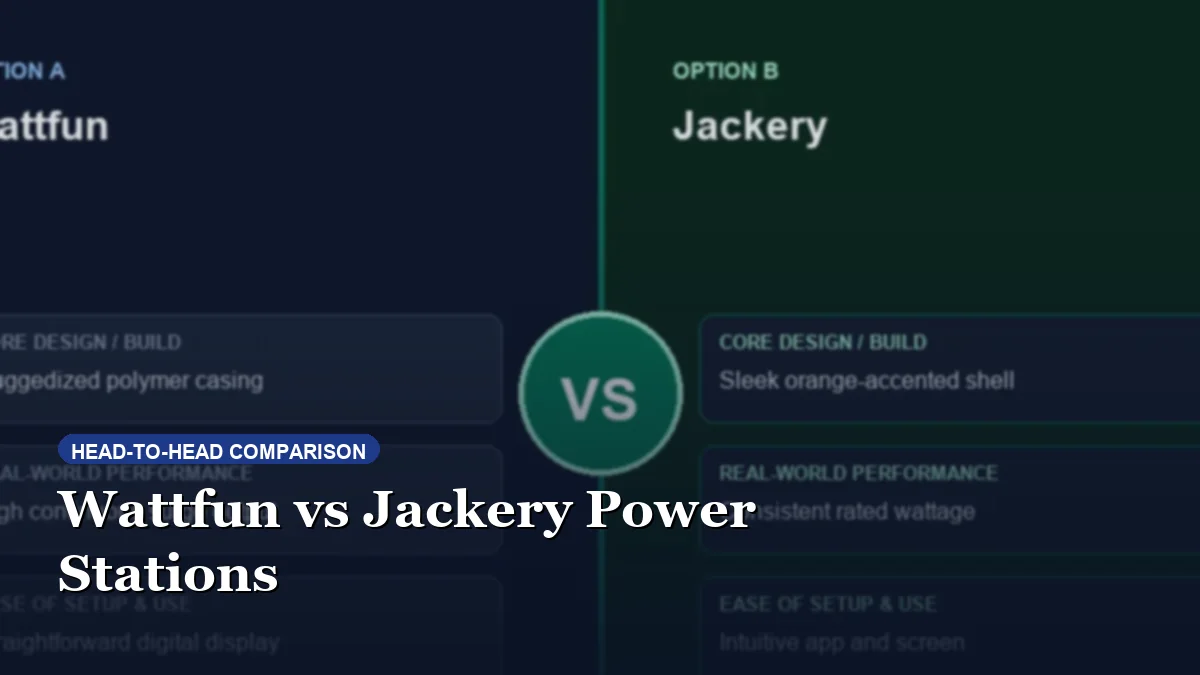
| Criteria | Wattfun | Jackery | Edge |
|---|---|---|---|
| Core Design / Build | Ruggedized polymer casing | Sleek orange-accented shell | Jackery |
| Real-World Performance | High continuous surge output | Consistent rated wattage | Wattfun |
| Ease of Setup & Use | Straightforward digital display | Intuitive app and screen | Jackery |
| Durability & Reliability | Robust internal frame | Extensive cycle testing | Jackery |
| Efficiency / Operating Footprint | Compact inverter architecture | Optimized power conversion | Wattfun |
| Maintenance Requirements | Standard firmware updates | Minimal user intervention | Jackery |
| Best Ideal Use Case | Off-grid budget camping | Emergency home backup | Jackery |
Architectural Design and Engineering Philosophy
Examining structural builds reveals how each manufacturer approaches rugged field use. Thick rubber bumpers protect critical corners during demanding job site operations.
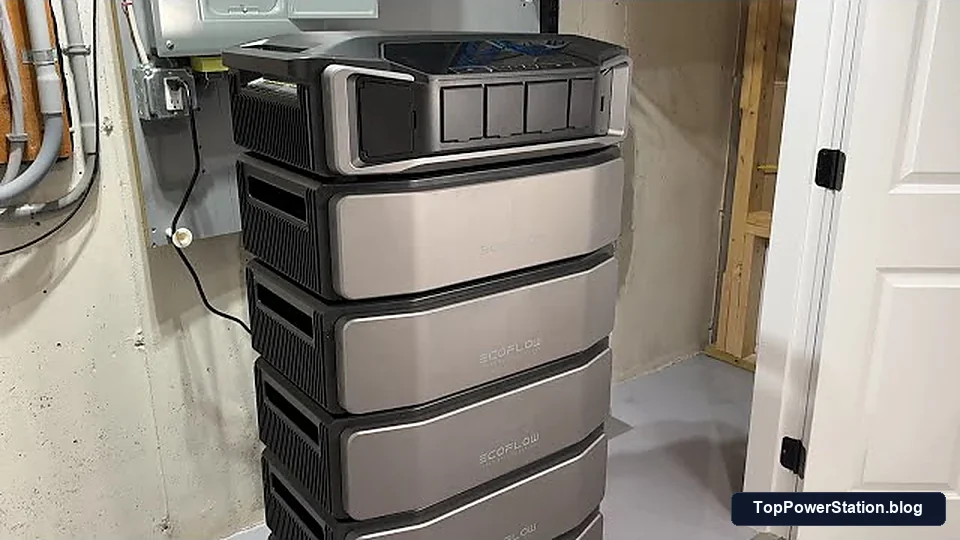
Materials selection impacts overall weight and thermal dissipation during continuous high-load operations. Engineers must balance impact resistance with lightweight portability for camping enthusiasts.
External housings undergo rigorous drop testing to ensure electronics remain fully functional. Selecting proper polymers prevents cracking when exposed to extreme temperature shifts outdoors.
Both Wattfun and Jackery approach structural engineering with distinct polymer blends and frame tolerances. Jackery relies on robust ABS-PC thermoplastics, whereas Wattfun integrates reinforced structural ribs to optimize drop resistance and mechanical integrity.
Internal component layout dictates thermal dissipation efficiency. Jackery employs vertical circuit board stacking paired with silent micro-fans, while Wattfun utilizes horizontal partitioning to isolate high-voltage inverter zones from sensitive LiFePO4 battery modules.
Ergonomic considerations govern handle placement and casing geometry. Models featured in our best jackery for camping guide maximize vertical lift leverage, contrasting with fold-flat handles designed to save trunk clearance.
- Impact-resistant exterior shell construction
- Reinforced internal frame mounting points
- Optimized corner drop-protection bumpers
Chassis Construction and Materials
Hardened plastics form the primary outer shell for both competitor lineups. Internal frames utilize aluminum bracing to prevent structural flex during transit.
Surface textures resist scratches from abrasive dirt and rocky campsite terrain.
- ABS polymer blend outer panels
- Anodized internal aluminum bracing
Port Layout and Ergonomics
Front-facing display panels group USB ports, DC outputs, and AC receptacles logically. Clear silk-screening helps users identify voltage limits in low-light environments.
Rubber dust covers shield unused ports from moisture intrusion.
- Logical grouping of AC and DC ports
- Silicone port covers for weather resistance
Inverter Capacity and Waveform Output
Delivering clean electricity requires sophisticated inverter technology to protect sensitive electronics. Pure sine wave output ensures refrigerators and laptops run without electrical hum.
Surge capacity determines whether heavy motorized appliances start up smoothly. Users must evaluate peak wattage ratings before plugging in high-draw induction motors.
Inverter conversion efficiency dictates how much stored battery energy converts directly to usable AC power.
Delivering clean AC power requires sophisticated digital signal processing. Both manufacturers output a pure sine wave, maintaining total harmonic distortion below three percent to safely power sensitive medical devices and micro-inverter appliances.
Surge capacity testing reveals distinct overload handling profiles. As highlighted in our jackery explorer 2000 v2 review, these units sustain higher momentary peak wattages for motor-driven compressor loads.
Voltage regulation under heavy loads prevents equipment throttling. Advanced pulse-width modulation algorithms dynamically adjust switching frequencies, ensuring stable outputs even when discharging near maximum rated continuous wattage.
- Pure sine wave harmonic distortion under three percent
- High surge headroom for motorized tool startup
- Optimized low-idle power consumption profiles
Continuous vs Surge Wattage
Continuous ratings dictate steady-state loads you can run indefinitely. Surge capacities handle momentary power spikes when compressors or saws initiate startup cycles.
Exceeding these limits triggers automatic thermal shutdown protocols instantly.
- Sustained continuous power output delivery
- Instantaneous peak surge threshold limits
Pure Sine Wave Performance
Clean AC output prevents overheating in sensitive medical devices and audio gear. Modified sine wave units often cause audible buzzing in inductive charging coils.
Advanced filtering circuitry guarantees stable voltage frequency under variable loads.
- Stable sixty hertz frequency regulation
- Zero electrical noise interference output
Battery Chemistry and Cycle Life
Energy storage foundations dictate the long-term viability of portable power stations. As detailed in our jackery explorer 1000 v2 review, lithium iron phosphate cells offer thousands of cycles before degradation.
Older lithium-ion NMC chemistries provide higher energy density but shorter overall lifespans. Buyers prioritizing longevity should inspect internal battery cell specifications closely.
Thermal stability varies significantly between chemical formulations during fast charging sessions.
Chemical composition dictates longevity and energy density across generations. Older Jackery models utilize ternary lithium chemistries, whereas modern units and Wattfun systems transition toward stable lithium iron phosphate cells.
Cycle retention metrics establish long-term utility benchmarks. Users can expect over three thousand cycles to eighty percent capacity from Wattfun's phosphate cells, significantly outpacing traditional NMC variants found in entry-level generators.
Battery management systems continuously monitor individual cell voltages. Active balancing circuits mitigate state-of-charge drift, protecting the entire internal pack from thermal runaway and premature capacity degradation during high-drain usage.
- LiFePO4 chemistry yielding over three thousand cycles
- High energy density lithium-ion alternatives
- Integrated cell balancing management systems
LiFePO4 vs NMC Chemistries
Phosphate-based cells resist thermal runaway far better than traditional cobalt blends. This chemical stability makes them safer for unattended garage charging routines.
NMC cells reduce overall unit weight at the expense of reduced longevity.
- Enhanced thermal runaway resistance
- Superior cycle retention benchmarks
Long-Term Degradation Rates
Capacity retention drops gradually over years of regular cycling and storage. Keeping stations at optimal partial charge states minimizes permanent capacity loss.
Smart battery management algorithms actively monitor individual cell health metrics.
- Predictable capacity fade curves
- Active state-of-health diagnostic tracking
Recharging Speeds and Solar Integration
Rapid replenishment keeps downtime minimal during extended off-grid expeditions. Utilizing high-wattage wall adapters drastically reduces total time to full capacity.
Solar panel compatibility allows unlimited energy harvesting in remote wilderness locations. Maximum power point tracking controllers optimize incoming photovoltaic voltage arrays efficiently.
Weather conditions dictate actual solar collection rates throughout daylight hours.
AC input architecture determines tethered wall-charging velocity. Wattfun incorporates direct high-speed rectification circuitry to minimize charging times, while Jackery balances rapid replenishment with extended battery health protocols.
Solar panel compatibility relies on stringent maximum power point tracking parameters. Both systems accept wide open-circuit voltage ranges, allowing users to chain multiple photovoltaic panels safely up to five hundred watts.
Car charging speeds remain bottlenecked by standard auxiliary port fuses. Selecting units from our best jackery power station lineup helps bypass this limitation, accelerating recovery times during overland road trips.
- Fast AC wall outlet charging circuits
- MPPT solar charge controller integration
- Flexible DC input voltage ranges
AC Wall Outlet Input Speeds
Direct wall charging utilizes internal high-current rectifiers to replenish cells quickly. Fast modes can reach eighty percent charge in under two hours.
Standard modes run slower to protect cells from excessive heat generation.
- High-current fast charging circuitry
- Configurable charging speed profiles
Maximum Solar Panel Wattage Input
Connecting portable solar blankets requires careful attention to voltage limits. Exceeding maximum open-circuit voltage ratings will permanently damage controllers.
Parallel configurations increase current while keeping system voltage safely bounded.
- Strict open-circuit voltage boundaries
- High-efficiency solar tracking algorithms
Safety Protections and Thermal Management
Comprehensive safety architecture protects both the power station and connected devices. Multi-layered circuit protection prevents hazards like short circuit faults instantly.
Internal thermal sensors monitor critical component temperatures during heavy output loads. Variable-speed cooling fans activate automatically to maintain safe operating thresholds.
Proper ventilation prevents heat pockets from forming inside sealed enclosures.
Multi-layered safety architecture prevents catastrophic hardware failures. Comprehensive circuit protections monitor short circuits, over-current conditions, and extreme temperatures, instantly cutting power when internal sensors detect abnormal operating thresholds.
Passive heat dissipation relies on extruded aluminum heatsinks coupled directly to high-drain MOSFETs. Active cooling fans engage dynamically, ramping up RPMs only when internal temperatures exceed strict thermal limits.
Environmental resilience standards ensure reliable field deployment. Conformal coating applied to internal circuit boards shields sensitive microcontrollers from ambient moisture, dust accumulation, and corrosive salt spray environments.
- Short circuit and overload protection
- Automatic thermal cutoff switches
- Smart variable-speed cooling fans
BMS Features and Error Handling
The battery management system oversees voltage, current, and temperature continuously. Clear error codes appear on digital displays to diagnose fault conditions quickly.
Automatic reset protocols engage once dangerous anomalies clear themselves.
- Real-time voltage and current monitoring
- Descriptive error code diagnostics
Fan Noise and Cooling Efficiency
Cooling fans manage internal temperatures during high inverter loads. Modern designs balance airflow volume against audible noise levels in quiet campsites.
Passive cooling handles light trickle loads without spinning fans.
- Low-decibel acoustic output profiles
- Optimized internal heat sink placement
Portability and Weight Distribution
Carrying heavy power stations requires balanced handle placement and ergonomic grips. Foldable handles save vertical space during vehicle trunk packing operations.
Weight distribution affects user fatigue when transporting gear across campsites. Rubberized grip surfaces prevent slippery hands from dropping expensive hardware units.
Compact form factors fit easily beneath truck beds and camper seats.
Mass distribution significantly impacts user ergonomics during manual transport. Engineers carefully center the heavy battery block between side chassis walls to prevent awkward tipping moments when carrying the heavy power station.
Physical dimensions dictate placement inside cramped camper vans or emergency preparedness lockers. Compact rectangular footprints maximize packing efficiency, allowing users to stack gear securely without stressing external plastic housing panels.
Integrated rubber feet absorb ground vibrations and prevent sliding on slick surfaces. These stabilizing pads reduce mechanical stress on internal solder joints during bumpy transit over rough unpaved roads.
- Ergonomic folding carrying handles
- Balanced center of gravity design
- Non-slip rubber grip contact points
Handle Design and Storage Footprint
Flush-folding handles allow multiple units to stack neatly during transport. Fixed handles offer rigid strength but complicate tight storage spaces.
Rigid polymer joints prevent handle failure under maximum load.
- Space-saving flush-folding mechanisms
- High-strength hinge pin construction
Traveling and Vehicle Packing
Securing power stations in moving vehicles prevents hazardous shifting. Tie-down points and flat bases ensure stability on rough dirt roads.
Vibration dampening feet absorb road shock during transit.
- Stable flat-bottom chassis design
- Road shock dampening foot pads
Ecosystem Expansion and Accessories
Modular expansion capabilities allow users to scale capacity over time. Connecting auxiliary battery packs extends runtime for emergency home backup applications.
Proprietary cabling and adapter options integrate third-party solar panels securely. Compatibility expands utility across diverse outdoor adventure scenarios.
Ecosystem maturity ensures long-term accessory availability and support.
Modular expansion capabilities extend runtimes for off-grid homesteaders. Proprietary high-current DC cables allow users to daisy-chain auxiliary battery packs directly into the main inverter unit, substantially increasing total energy storage.
Dedicated carrying bags and protective weather covers shield equipment from environmental elements. Durable ballistic nylon materials safeguard exterior control panels against scratches, rain, and UV degradation during outdoor camping excursions.
Parallel connection kits enable synchronized dual-unit operation for heavier household loads. This advanced configuration doubles available surge capacity, providing a versatile workaround when running high-draw appliances like window air conditioners.
- Modular auxiliary battery expansion
- Universal solar adapter cable kits
- Dedicated carrying case accessories
Extra Battery Integration
Plug-and-play expansion cables link secondary battery modules seamlessly. This modularity avoids buying an entirely new system when energy needs grow.
Communication links synchronize charging states between connected units.
- Seamless plug-and-play daisy chaining
- Synchronized charge state monitoring
Solar Panel Compatibility
Standard connector types simplify pairing with various photovoltaic panels. Matching connector specifications prevents polarity reversal errors during setup.
Weatherproof plugs maintain electrical integrity in rain.
- Standard photovoltaic connector types
- Weatherproof sealed plug designs
Frequently Asked Questions
Can I run a household refrigerator with these power stations?
Both models easily handle standard refrigerators for several hours. Pure sine wave inverters ensure motor compressors run smoothly.
How long do these power stations hold a charge in storage?
Lithium batteries maintain charge for many months when powered down. Checking levels semiannually guarantees immediate readiness during emergencies.
Are these power stations safe to use inside a tent?
Zero toxic emissions make indoor and tent use completely safe. Proper ventilation prevents overheating during heavy continuous loads.
Can I charge the station while simultaneously powering devices?
Pass-through charging is fully supported on both manufacturer lineups. This feature enables continuous power delivery during grid outage events.
What maintenance do these lithium power stations require?
Minimal upkeep involves keeping ports clean and firmware updated. Storing units at partial capacity prevents long-term cell degradation.