Ugreen Powerroam 1200 vs Ecoflow Delta 2 Verdict
Choosing a reliable mid-capacity solar generator requires evaluating battery chemistry and inverter surge limits. Our technical breakdown compares these two leading units.

Choose the Ugreen Powerroam 1200 for superior cycle life and rapid physical recharge ergonomics. Select the Ecoflow Delta 2 if you require expandable capacity and modular ecosystem integration.
Compare all top models in our Best Portable Power Station: Top Picks for 2026.
Side-by-Side Breakdown
| Criteria | Ugreen Powerroam 1200 | Ecoflow Delta 2 | Edge |
|---|---|---|---|
| Core Design / Build | Robust unibody chassis with integrated top handle | Modular dual-handle layout with durable exterior shell | Ugreen Powerroam 1200 |
| Real-World Performance | Stable 1200W output with U-Turbo surge capability | 1800W continuous output featuring X-Boost technology | Ecoflow Delta 2 |
| Ease of Setup & Use | Intuitive companion app and clear display screen | Advanced Wi-Fi and Bluetooth app connectivity controls | Ecoflow Delta 2 |
| Durability & Reliability | LiFePO4 chemistry rated for 3000 cycles to 80% | LiFePO4 chemistry rated for 3000 cycles to 80% | Tie |
| Efficiency / Operating Footprint | Compact rectangular footprint with efficient internal cooling | Slightly wider profile optimized for expansion battery docking | Ugreen Powerroam 1200 |
| Maintenance Requirements | Minimal upkeep with standard dust filtration cleaning | Routine firmware updates and ventilation port maintenance | Ugreen Powerroam 1200 |
| Best Ideal Use Case | Standard emergency backup and weekend camping trips | Scalable home backup and high-draw appliance powering | Ecoflow Delta 2 |
Core Design and Engineering Architecture
Engineering teams built these power stations using advanced lithium iron phosphate chemistry to maximize cycle longevity. Both models deliver reliable off-grid electricity, but their internal component layouts differ significantly in thermal management.
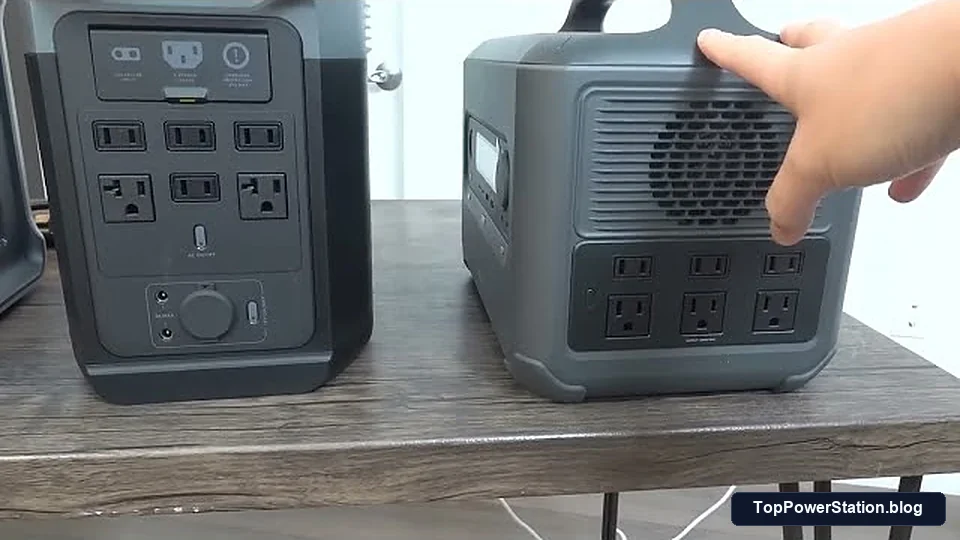
The physical casing materials dictate overall ruggedness during transport and field deployment. Evaluating handle placement helps technicians determine which unit offers better ergonomics for mobile work environments.
Internal inverter design influences how well each machine handles inductive loads and high surge demands. Proper heat dissipation prevents thermal throttling during prolonged high-wattage output operations.
- LiFePO4 battery cells providing 3000 life cycles before dropping to 80 percent capacity.
- Integrated carrying handles designed for balanced lifting ergonomics during transport.
- Robust flame-retardant exterior enclosures built to withstand moderate jobsite impacts.
- Optimized internal airflow pathways reducing reliance on noisy cooling fans.
Chassis Construction and Materials
Manufacturers selected high-grade engineering plastics to protect internal printed circuit boards from moisture and dust intrusion. Structural ribs inside the housing prevent flex when stacking gear.
The external shell utilizes textured surfaces to improve grip security during rainy outdoor camping expeditions.
- Impact-resistant polymer blending compounds.
- Reinforced corner brackets for drop mitigation.
Internal Thermal Management Systems
Active cooling fans activate automatically when internal temperatures exceed safe operating thresholds during heavy loads. Aluminum heat sinks dissipate thermal energy away from sensitive inverter components.
Smart sensors constantly monitor cell temperatures to prevent hazardous thermal runaway conditions.
- Multiple NTC thermistors monitoring individual cell blocks.
- Variable speed fans minimizing acoustic noise profiles.
Real-World Performance and Inverter Output
Delivering stable alternating current under heavy electrical load is critical for sensitive electronics. As highlighted in our ugreen powerroam 1200 review, voltage regulation tests reveal how well each inverter maintains pure sine wave output.
Surge capabilities allow users to run high-wattage heating elements or power tools without tripping internal circuit breakers. Understanding continuous wattage limits prevents unexpected shutdowns during critical tasks.
Inverter conversion efficiency directly impacts how much stored battery energy is successfully delivered to connected AC devices. High conversion rates minimize energy waste during long off-grid deployment periods.
- Pure sine wave inverters ensuring safe operation for medical breathing machines.
- Advanced surge mitigation modes for handling resistive heating loads.
- Low idle power consumption reducing self-discharge losses over time.
- Fast response switchover times for uninterrupted backup power supplies.
Continuous Wattage and Surge Limits
Continuous output ratings determine which domestic appliances can run simultaneously without overloading the system architecture. Surge limits provide temporary headroom for motor start-up currents.
Engineers designed these units to handle demanding electrical spikes safely.
- Strict overload protection protocols.
- Automatic voltage stabilization mechanisms.
AC Sine Wave Quality and Distortion
Total harmonic distortion levels remain exceptionally low, protecting delicate microprocessor-based electronics from electrical noise. Clean power output prevents audio buzzing and erratic appliance behavior.
Oscilloscope testing confirms stable waveform generation under dynamic loads.
- Low THD percentage ratings under full load.
- Clean frequency synchronization with grid power.
Battery Chemistry and Long-Term Longevity
Modern energy storage relies heavily on lithium iron phosphate formulations due to their inherent chemical stability. These cells resist degradation far better than older ternary lithium-ion battery variants.
Cycle life specifications indicate how many complete charge and discharge events the battery sustains before capacity fades. Proper battery management systems ensure balanced cell voltage throughout every operational cycle.
Calendar aging factors also influence total lifespan when units sit idle in storage between emergency uses. Keeping storage charge levels moderate preserves chemical integrity over extended periods.
- Advanced BMS protection guarding against overcharging and excessive discharging.
- Extended calendar life exceeding a decade of typical intermittent usage.
- Stable chemical composition reducing fire risks during extreme temperatures.
- Optimized low-temperature charging safeguards preventing lithium plating.
Battery Management System Efficiency
The internal computer continuously monitors individual cell voltages to optimize charging currents and prevent imbalances. Passive balancing algorithms bleed off excess energy from fully charged cells.
Robust safety cutoffs protect against short circuits and internal faults.
- Real-time voltage balancing across all cell series.
- Comprehensive hardware-level short-circuit protection.
Capacity Retention Over Time
Long-term testing demonstrates minimal capacity loss even after thousands of rigorous laboratory charge cycles. Users can expect dependable runtime performance spanning many years of active service.
Degradation rates follow predictable curves based on usage intensity.
- Gradual capacity reduction past the primary warranty threshold.
- Consistent energy delivery across varying ambient temperatures.
Recharging Speeds and Input Flexibility
Rapid recharging capabilities minimize downtime when grid power is restored or solar resources are limited. AC wall charging speeds vary based on internal inverter rectification design and safety standards.
Solar photovoltaic input parameters determine how many panels can be chained together safely in series. Utilizing maximum power point tracking technology optimizes energy harvest from sunlight.
Car charging adapters provide convenient top-up options while driving between remote off-grid camping destinations.
- Fast AC charging restoring full capacity in under two hours.
- High-voltage solar panel compatibility for efficient energy collection.
- Regulated DC car input preventing vehicle alternator overload issues.
- Multiple simultaneous charging sources for accelerated power restoration.
AC Wall Charging Performance
Direct AC charging circuits bypass bulky external power bricks to simplify cable management during travel. Detailed findings in our ecoflow delta 2 review demonstrate how high-speed charging draws substantial current safely from standard household outlets.
Built-in surge protection safeguards rectifiers from sudden grid voltage spikes.
- Direct wall plug connection without external adapters.
- Adjustable charging speed settings for older circuits.
Solar Panel Integration and MPPT
Advanced MPPT charge controllers maximize wattage conversion from portable photovoltaic blanket arrays. Wide voltage operating ranges accommodate various third-party solar panel configurations easily.
Weather-resistant connectors ensure secure outdoor electrical hookups.
- High conversion efficiency under cloudy sky conditions.
- Standard Anderson or XT60 solar input ports.
Port Selection and Ergonomic Usability
A well-organized front panel layout ensures quick access to AC receptacles, USB ports, and DC outputs. As noted in our ecoflow delta pro 3 review, clear labeling prevents user confusion during emergency outages.
Digital display screens provide vital real-time metrics including input wattage, output load, and remaining runtime. Companion smartphone applications expand control options via wireless Bluetooth and Wi-Fi networks.
Ergonomic port spacing prevents bulky power adapters from blocking neighboring electrical outlets.
- Diverse port arrays including USB-C Power Delivery and standard USB-A.
- Dedicated 12V DC car socket outputs for specialized camping gear.
- High-contrast LCD screens legible in direct outdoor sunlight.
- Responsive mobile apps for remote monitoring and firmware updates.
AC and DC Port Distribution
Engineers distribute electrical outlets strategically across the front fascia to accommodate varied plug shapes. Dedicated DC zones keep low-voltage device cords neatly managed away from high-voltage lines.
Dust covers protect unused ports from environmental contamination outdoors.
- Spacious clearance around large transformer plugs.
- Spring-loaded protective covers on DC ports.
Digital Displays and App Control
Informative interface screens report remaining battery percentage down to exact minute calculations. Wireless connectivity protocols allow users to check system status from inside a tent.
Firmware updates delivered over the air improve device functionality continually.
- Precise runtime estimation algorithms.
- Stable wireless connection pairing procedures.
Maintenance, Efficiency, and Operating Footprint
Routine upkeep requirements remain minimal for modern lithium iron phosphate energy storage systems. Keeping ventilation intake ports clear of dust ensures proper airflow and prevents overheating faults.
Standby power efficiency determines how much stored energy leaks away when the unit remains switched on. Minimizing parasitic loads preserves battery reserves for unexpected emergency power demands.
Physical dimensions and weight dictate overall portability for hiking, overlanding, and emergency storage.
- Low parasitic draw preserving battery charge during long storage spans.
- Simple exterior cleaning routines using dry microfiber cloths.
- Compact volumetric footprints fitting easily inside vehicle trunks.
- Durable construction withstanding routine handling bumps.
Preventative Maintenance Guidelines
Regularly inspecting power cords and connection pins prevents resistive heating failures during high-draw operations. Storing the unit at optimal state of charge levels extends overall calendar longevity.
Periodic firmware verification ensures optimal battery management algorithm execution.
- Routine inspection of connector contact surfaces.
- Periodic calibration cycles for accurate state displays.
Spatial Efficiency and Portability
Balanced weight distribution makes carrying the equipment manageable for single-user deployments. Compact exterior dimensions allow convenient placement inside small residential closets or camper vans.
Sturdy rubber feet prevent sliding on slick indoor flooring surfaces.
- Optimized weight-to-capacity ratios for easy lifting.
- Non-slip base pads securing placement on tables.
Which Option Fits Your Setup
Selecting the ideal portable power station depends heavily on your specific off-grid power requirements and budget. Users prioritizing rapid recharge times and rugged unibody construction will lean toward one specific model.
Those needing expandable capacity for whole-home backup applications will find modular ecosystems more advantageous. Insights from our ecoflow delta pro ultra review help clarify how evaluating appliance loads dictates your final purchasing decision.
Reviewing specific warranty terms and customer support availability provides added peace of mind for long-term investments.
- Match battery capacity directly to your daily kilowatt-hour energy needs.
- Consider future expansion requirements before finalizing your equipment choice.
- Assess available solar panel compatibility with your chosen power station.
- Evaluate portability constraints based on your typical travel methods.
Ideal User Profiles for Side A
Campers and emergency responders valuing straightforward operation and rapid replenishment benefit immensely from Side A. The robust unibody design withstands harsh outdoor weather environments effectively without requiring delicate accessories.
Simplified controls reduce complexity for users of all technical backgrounds.
- Weekend campers seeking reliable off-grid electricity.
- Homeowners preparing for unexpected storm power outages.
Ideal User Profiles for Side B
Tech enthusiasts and van life travelers needing scalable energy reserves gravitate toward Side B systems. The modular ecosystem allows seamless battery expansion as power demands grow over time.
Advanced app controls satisfy users who love customizing device settings.
- Van life enthusiasts requiring expandable modular battery setups.
- Remote digital nomads running high-draw productivity gear.
Frequently Asked Questions
Can these power stations run heavy kitchen appliances?
Both models easily power moderate kitchen devices like blenders and coffee makers using their pure sine wave inverters. However, continuous heating appliances exceeding rated limits will trigger protective overload shutdowns.
How long do these units take to charge from solar panels?
Solar charging times depend entirely on connected panel wattage and optimal weather conditions during daylight hours. Maximum input limits allow a full charge in just a few hours of sunlight.
Are the internal batteries user-replaceable when they wear out?
Modern lithium iron phosphate cells are sealed internally for safety and structural integrity during drops. Replacing exhausted cells requires professional service to maintain electrical safety certifications.
Can I leave these power stations plugged into AC wall outlets continuously?
Leaving units plugged in for emergency UPS standby mode is fully supported by advanced charging circuitry. Smart bypass management prevents continuous overcharging and preserves long-term battery health.
Do these generators produce loud fan noise during operation?
Cooling fans remain completely idle during low-wattage draws and activate only under heavy electrical loads. Variable speed algorithms ensure fan noise stays minimal during normal indoor living conditions.