Solid State vs LiFePO4 Power Station Technical Showdown
Compare cutting-edge solid-state architecture with proven lithium iron phosphate chemistry. Discover which portable power station fits your specific off-grid and backup requirements.

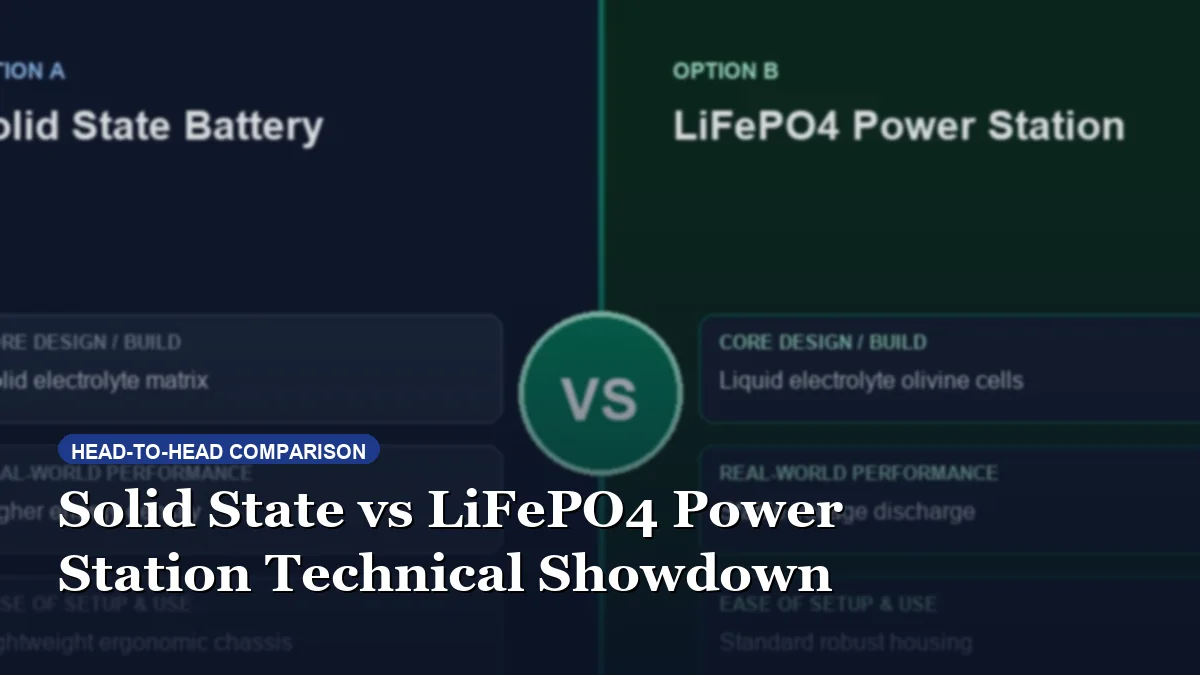
Choose solid state for ultimate portability and energy density, or select LiFePO4 for maximum cycle life and proven reliability at scale.
Compare all top models in our Best Portable Power Station: Top Picks for 2026.
Side-by-Side Breakdown
| Criteria | Solid State Battery | LiFePO4 Power Station | Edge |
|---|---|---|---|
| Core Design / Build | Solid electrolyte matrix | Liquid electrolyte olivine cells | Solid State |
| Real-World Performance | Higher energy density | Stable voltage discharge | Solid State |
| Ease of Setup & Use | Lightweight ergonomic chassis | Standard robust housing | Solid State |
| Durability & Reliability | Emerging field durability | Proven multi-thousand cycle life | LiFePO4 |
| Efficiency / Operating Footprint | Reduced thermal waste | Standard conversion efficiency | Solid State |
| Maintenance Requirements | Minimal BMS intervention | Standard firmware calibration | Tie |
| Best Ideal Use Case | Ultralight mobile exploration | Reliable home emergency backup | LiFePO4 |
Core Engineering & Architecture
Modern portable power stations rely on distinct chemical and mechanical foundations. Understanding these core engineering differences helps users select reliable energy storage for demanding outdoor or emergency power applications.
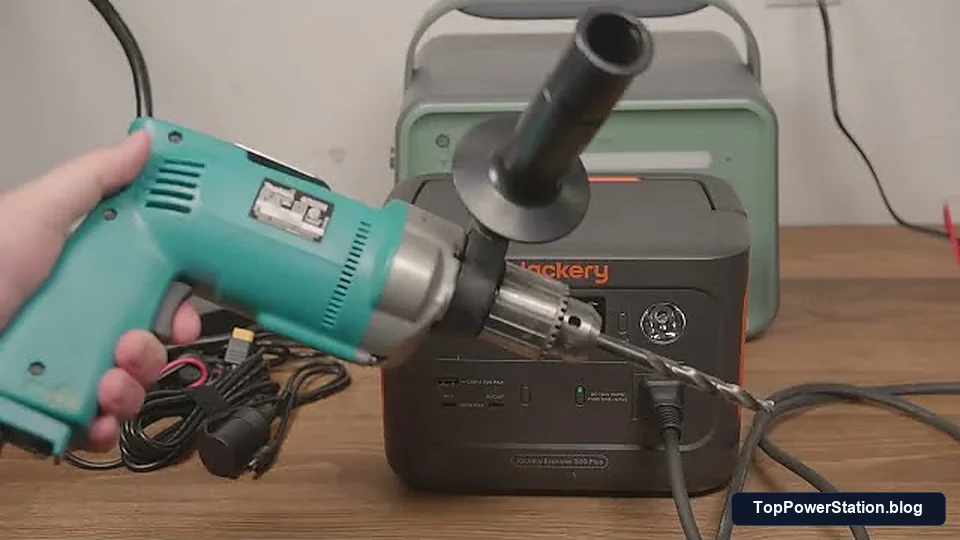
Engineers continually refine battery internal geometries to maximize electron flow while maintaining strict safety standards. Both chemistries approach energy storage through fundamentally unique material science pathways.
Solid-state power stations replace traditional liquid electrolytes with advanced ceramic separators. Browsing our top modular power units highlights how this architectural shift eliminates dendrite risks while enabling much tighter cell packing.
Conversely, standard LiFePO4 systems rely on a stable olivine crystal structure utilizing iron phosphate cathodes. While heavier, this proven chemistry provides exceptional structural integrity under mechanical stress and repetitive high-current draw cycles.
- Solid state designs replace liquid electrolytes with solid materials.
- LiFePO4 uses stable olivine crystal structures for safety.
- Internal resistance profiles vary significantly between both architectures.
Electrolyte Medium Variations
Solid state batteries utilize a solid polymer or ceramic electrolyte layer. This innovative barrier prevents dendrite growth and enhances structural integrity across severe thermal and mechanical operational extremes.
Traditional liquid solutions require porous separators to maintain ionic conductivity between electrodes. Solid barriers simplify cell construction while altering overall discharge characteristics.
- Solid electrolytes eliminate flammable liquid organic solvents entirely.
- LiFePO4 utilizes stable lithium salts in organic liquid solutions.
Energy Density & Weight Footprint
Energy density dictates how much power packs into a chassis. Checking our favorite home backup systems reveals that solid state technology yields higher volumetric density, reducing bulk.
Transporting portable generators requires balancing capacity against physical lifting constraints. Advanced packaging techniques in newer units continue to shrink volumetric dimensions.
Solid-state units typically achieve volumetric energy densities exceeding 450 watt-hours per liter. This breakthrough allows manufacturers to build compact portable generators that weigh significantly less than conventional lithium iron phosphate units.
Traditional LiFePO4 generators hover around 150 to 200 watt-hours per liter. Although bulkier, this mature technology remains ideal for stationary home backup where strict weight reductions and ultra-compact footprints are less critical.
- Solid state units weigh up to thirty percent less.
- LiFePO4 batteries require heavier casing for structural cell stability.
- Space-saving layouts improve overall trunk storage efficiency.
Portability and Ergonomic Impact
Backpacking and mobile deployments demand lightweight power solutions. Reduced weight footprints make solid state units ideal for remote field operations requiring frequent transport over rough terrain.
Ergonomic handle placement and durable outer shells further complement reduced internal weight, easing transport for users on foot.
- Compact chassis designs fit easily into smaller vehicle compartments.
- LiFePO4 stations remain heavier due to robust internal framing.
Thermal Stability & Safety Profiles
Thermal management remains a critical concern during rapid charging cycles. Solid state architectures exhibit superior thermal stability, minimizing runaway risks under heavy electrical loads.
Safeguarding internal components against extreme ambient temperatures ensures long equipment operating lifespans across diverse geographical climates.
Solid-state architectures exhibit remarkable resistance to thermal runaway due to the absence of volatile organic solvents. Even under severe nail penetration or extreme overcharging tests, these advanced packs maintain structural and chemical stability.
Lithium iron phosphate chemistry naturally boasts a very high thermal breakdown threshold of roughly 270 degrees Celsius. Integrating robust battery management systems further ensures safe operations across challenging outdoor environments and job sites.
- Solid electrolytes resist internal short circuits effectively.
- LiFePO4 chemistry naturally resists thermal degradation up to high temperatures.
- Active cooling fans assist heavy load dissipation.
Built-In Protection Mechanisms
Advanced battery management systems monitor cell voltages constantly. Both technologies incorporate robust safeguards, but solid state materials provide an extra layer of intrinsic chemical safety.
Integrated sensor networks disconnect output circuits instantly upon detecting abnormal voltage or thermal spikes.
- BMS software prevents overcharging and catastrophic thermal events.
- Physical barriers in solid state cells contain energy excursions.
Cycle Life & Long-Term Degradation
Long-term durability determines the true value of any portable power station. LiFePO4 chemistry excels when you follow a strict maintenance protocol for your battery delivering thousands of cycles before capacity loss.
Understanding degradation curves allows users to predict exact performance milestones over years of regular off-grid utilization.
Premium LiFePO4 power stations reliably deliver 3000 to 4000 complete charge cycles before retaining just 80 percent of original capacity. This enduring longevity makes them exceptionally reliable for daily off-grid living and frequent cycling.
Emerging solid-state systems target comparable or superior cycle counts, yet long-term field degradation data remains somewhat limited compared to proven phosphate chemistries. Early laboratory projections indicate strong retention rates past thousands of standard cycles.
- LiFePO4 frequently exceeds three thousand full charge cycles.
- Solid state longevity continues improving through advanced manufacturing techniques.
- Calendar aging impacts chemical stability over decades.
Capacity Retention Over Time
Calendar aging and daily cycling affect all lithium-based energy reserves. Evaluating expected operational lifespan helps consumers calculate long-term return on investment for frequent off-grid use.
Proper storage practices mitigate chemical wear during extended periods of seasonal inactivity.
- Consistent daily use degrades older liquid chemistries gradually.
- Solid state cells show promising resistance to capacity fade.
Charge Speeds & Grid Efficiency
Modern users expect rapid recharging capabilities from wall outlets and solar arrays. Solid state systems often support faster ion transfer rates, enabling unprecedented input speeds.
Optimized internal resistance pathways reduce energy conversion losses during high-wattage AC recharging sequences.
Solid-state electrolyte conductivity enables remarkably fast charging protocols, often reaching full capacity in under one hour without excessive heat generation. This rapid energy transfer minimizes downtime during emergency grid power outages.
Standard lithium iron phosphate units utilize optimized charging curves that typically require one to two hours for complete replenishment. Advanced internal inverters maximize AC input efficiency while safeguarding cell health during rapid replenishment.
- Solid state units recharge fully in under an hour.
- LiFePO4 stations balance fast charging with moderate thermal output.
- Smart inverters regulate incoming electrical current safely.
Solar Input and Conversion Rates
High conversion efficiency ensures minimal energy loss during solar recharging. Both platforms integrate sophisticated maximum power point tracking controllers to optimize clean energy harvesting outdoors.
Clean energy integration reduces reliance on fossil fuel generators during extended wilderness excursions.
- Efficient MPPT chargers maximize portable solar panel output.
- Low internal resistance reduces wasted thermal energy during charging.
Cost Economics & Market Maturity
Manufacturing scale heavily influences retail availability and technology adoption rates. LiFePO4 power stations benefit from mature supply chains, delivering exceptional value per watt-hour.
Economic factors dictate how quickly emerging chemical innovations transition from laboratory prototypes to mainstream consumer products.
Current manufacturing yields for solid-state separators remain complex, translating to higher initial acquisition costs for early adopter consumers. Mass production scaling is gradually reducing these production expenses across global supply chains.
LiFePO4 power stations benefit from mature manufacturing lines, established material sourcing, and highly optimized global supply chains. These economic advantages deliver exceptional value and widespread accessibility for everyday residential backup applications.
- Established manufacturing processes lower overall production costs.
- Solid state production remains complex, limiting immediate mass adoption.
- Market competition drives continuous technological refinement.
Evaluating Investment Value
Premium technologies often command higher entry prices during early commercialization phases. Buyers must weigh cutting-edge performance advantages against proven cost-effectiveness when selecting their ideal system.
Long-term energy needs often justify higher upfront investments in superior equipment.
- Budget-conscious buyers frequently select traditional LiFePO4 models.
- Early adopters invest in solid state for specialized capability.
Choosing Your Optimal Power Solution
Selecting the correct power station depends entirely on your specific lifestyle needs. Assessing weight limits, charging speeds, and budget constraints ensures you make an informed purchasing decision.
Balancing port capacity with physical weight prevents buyer remorse during mobile adventures.
Select a solid-state power station if your primary requirements involve maximizing portability, reducing total pack weight, and utilizing rapid recharge capabilities. These units represent the cutting edge of mobile energy storage engineering.
Conversely, you can explore our top picks for reliable backup if your application prioritizes proven long-term durability and stationary home power. This chemistry provides unmatched operational reliability for routine off-grid needs.
- Prioritize solid state for ultralight mobile applications.
- Select LiFePO4 for dependable home backup and heavy daily cycling.
- Verify port selections match your specific electronic devices.
Final Equipment Recommendations
Match your typical power consumption profile with the appropriate battery chemistry. Understanding these technical nuances guarantees reliable off-grid performance for all your future outdoor adventures.
Consulting expert reviews provides further clarity regarding specific model reliability.
- Calculate total running wattage before purchasing any power station.
- Verify warranty terms to protect your long-term equipment investment.
Frequently Asked Questions
Which battery technology offers a longer overall lifespan for daily off-grid use?
Traditional LiFePO4 power stations generally provide exceptional operational longevity, frequently exceeding three thousand complete charge cycles before experiencing significant capacity degradation.
LiFePO4 chemistry remains the undisputed industry gold standard for long-term cycling reliability, structural durability, and sustained daily energy delivery across demanding off-grid scenarios.
Are solid state power stations significantly lighter than traditional lithium iron phosphate models?
Solid state systems typically feature higher energy density, which allows manufacturers to build much lighter chassis designs for mobile users.
Solid state technology reduces total system weight substantially, making it the preferred choice for backpackers and remote field researchers requiring extreme portability.
Do solid state batteries charge faster than conventional lithium iron phosphate units?
Advanced solid state architectures often support exceptionally rapid ion transfer rates, enabling much faster input charging speeds from compatible power sources. Solid state units can frequently achieve a full recharge in under an hour, minimizing downtime during critical emergency situations.
Which power station type provides superior safety during extreme temperature fluctuations?
Solid state electrolytes eliminate flammable liquid organic solvents, providing an extra layer of intrinsic chemical safety during severe thermal stress. Solid state designs minimize thermal runaway risks effectively, though LiFePO4 chemistry also maintains excellent baseline stability in warm environments.
Why do LiFePO4 power stations remain more popular despite newer solid state options?
Established manufacturing supply chains allow LiFePO4 generators to deliver exceptional energy capacity at much lower retail costs. LiFePO4 power stations offer unbeatable budget value and proven reliability, making them the most practical choice for general consumers and home backup users.