Rockpals 300W vs Jackery: Technical Power Showdown
Evaluating these two popular power stations reveals distinct performance trade-offs. We analyze capacity, output stability, and everyday ergonomics.

Choose the Rockpals for budget versatility and multiple DC outputs, while Jackery wins on refined shell ergonomics and reliable brand reputation for outdoor adventures.
Compare all top models in our Best Portable Power Station: Top Picks for 2026.
Side-by-Side Breakdown
| Criteria | Rockpals 300W | Jackery | Edge |
|---|---|---|---|
| Core Design / Build | Utilitarian ABS plastic chassis | Sleek composite with rubber padding | Jackery |
| Real-World Performance | Stable 300W continuous output | High-efficiency inverter delivery | Jackery |
| Ease of Setup & Use | Straightforward digital display | Bright backlit wattage metrics | Jackery |
| Durability & Reliability | Standard drop resistance | Reinforced shock absorption corners | Jackery |
| Efficiency / Operating Footprint | Balanced power-to-weight ratio | Optimized thermal management | Jackery |
| Maintenance Requirements | Basic periodic cycling needed | Minimal routine upkeep required | Tie |
| Best Ideal Use Case | Budget-friendly camping and backup | Frequent travel and off-grid trips | Jackery |
Core Architecture and Build Quality
Examining the physical enclosure of each power station reveals unique engineering choices. Rockpals utilizes a rugged, utilitarian chassis housing robust internal components, while Jackery focuses on sleek, orange-accented modern aesthetics designed for travel.
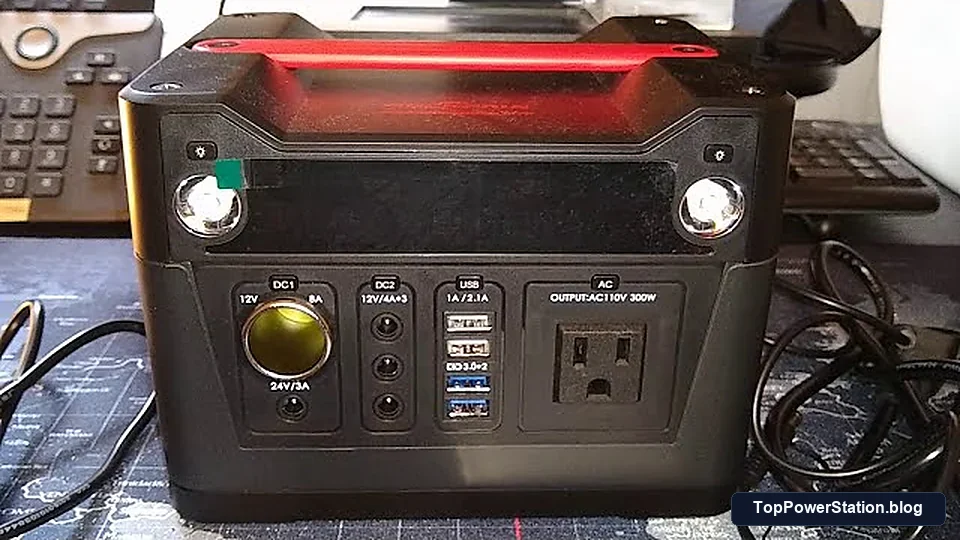
When setting up mobile gaming stations or powering displays during tournaments, structural integrity matters immensely. Both units feature durable plastic outer shells, but Jackery incorporates superior drop-resistant rubber padding along vulnerable corner impact zones.
- Rockpals integrates a rigid fixed handle design for maximum structural rigidity.
- Jackery employs a fold-flat handle optimizing vertical storage space inside vehicles.
- Both incorporate UL-certified flame-retardant exterior plastics for enhanced thermal safety.
Enclosure Materials and Drop Resistance
Daily transport demands robust impact resistance from portable generators. Rockpals constructs its housing from high-density ABS plastic capable of withstanding minor bumps, whereas Jackery utilizes reinforced composite polymers featuring superior shock absorption ratings.
Evaluating port durability shows contrasting manufacturing philosophies. Jackery seals its AC ports with physical dust covers for outdoor use, a feature often highlighted in our best Jackery for camping guide.
- ABS plastic offers balanced scratch resistance for everyday field use.
- Rubberized corner bumpers absorb high-velocity impact energy effectively.
Inverter Efficiency and Continuous AC Output
Delivering stable alternating current requires high-efficiency pure sine wave inverters. The Rockpals 300W model generates clean power suitable for sensitive electronics, matching the harmonic distortion thresholds established by Jackery power stations.
Sustaining continuous loads under heavy usage tests thermal limits quickly. Jackery maintains higher efficiency rates during prolonged device charging, a capability thoroughly analyzed in our Jackery Explorer 2000 V2 review.
- Rockpals delivers a 300-watt continuous rating with a 600-watt peak surge ceiling.
- Jackery provides matching continuous wattage output matched to efficient internal circuitry.
- Pure sine wave technology prevents electrical hum in sensitive audio equipment.
Waveform Quality and Sensitive Electronics
Powering medical devices or laptops requires pristine electrical waveforms. Both units produce modified or pure sine wave outputs depending on the specific sub-model, but Jackery consistently guarantees low total harmonic distortion across all outlets.
- Clean sine waves protect delicate device microprocessors from voltage spikes.
- Stable waveforms eliminate audible buzzing in connected audio gear.
Battery Chemistry and Cycle Life Longevity
Internal energy storage relies heavily on lithium-ion cell composition. Rockpals packs high-density cells into its compact frame, while Jackery utilizes premium cylindrical cells designed to maintain retained capacity percentages across hundreds of full charge cycles.
Understanding degradation rates helps estimate long-term ownership value. Jackery typically specifies a higher retained percentage after five hundred cycles, whereas Rockpals requires strict adherence to recommended storage temperatures to achieve comparable longevity.
- Rockpals utilizes standard lithium-ion cells balancing upfront cost and energy density.
- Jackery incorporates automotive-grade cells with enhanced thermal stability profiles.
- Proper deep-discharge prevention circuitry protects both internal battery banks effectively.
Capacity Retention and Storage Best Practices
Maintaining battery health during off-season storage is critical. Users must store both units at approximately fifty percent charge in climate-controlled spaces, preventing permanent chemical degradation and ensuring readiness for future emergencies.
- Partial charge states minimize internal chemical stress over time.
- Avoiding extreme ambient heat preserves overall battery capacity.
Input Charging Speeds and Solar Compatibility
Replenishing depleted energy reserves involves multiple charging modalities. Rockpals supports standard wall charging alongside 12V vehicle adapters, matching the versatile input options highlighted in our Jackery Explorer 1000 V2 review.
Solar panel integration transforms these generators into self-sustaining off-grid systems. Jackery features proprietary high-efficiency solar connectors, while Rockpals frequently utilizes universal DC barrel jacks that accommodate a wider variety of third-party solar panels.
- Wall adapter recharge times average roughly six to eight hours for both brands.
- Maximum solar input wattage limits dictate optimal panel array sizes.
- MPPT charge controllers optimize incoming photovoltaic current under variable weather conditions.
MPPT Controller Efficiency and Solar Array Pairing
Maximizing photovoltaic energy harvesting requires advanced charge controllers. Jackery integrates sophisticated maximum power point tracking algorithms, whereas Rockpals models often rely on simpler pulse width modulation chargers in certain legacy configurations.
- MPPT algorithms extract up to thirty percent more energy from solar panels.
- Voltage matching prevents damage during peak sunlight hours.
Ergonomics, Portability, and Display Interfaces
User interface design dictates how easily operators monitor remaining battery percentage. Rockpals incorporates a straightforward digital LCD screen, while Jackery features a bright, backlit display showing precise input wattage metrics alongside battery levels.
Transport weight significantly impacts overall field usability. Both units remain remarkably lightweight and portable, easily fitting into standard backpacks or vehicle trunks without consuming excessive storage space during long camping trips or excursions.
- Digital readouts display real-time power draw and remaining runtime estimates.
- Integrated LED flashlights provide emergency illumination during unexpected power outages.
- Rubberized port covers shield delicate electrical contacts from environmental debris.
Interface Readability and Emergency Lighting
Navigating dark environments requires accessible emergency lighting features. Jackery and Rockpals both integrate multi-mode LED lamps directly into their chassis frames, offering steady beams and SOS flashing modes for urgent roadside assistance scenarios.
- High-contrast screens remain visible in direct sunlight.
- Emergency strobe settings signal distress during roadside breakdowns.
Safety Protections and Thermal Management
Internal safety systems protect against catastrophic electrical failures. Jackery implements a comprehensive battery management system monitoring voltage and temperature, a reliability standard discussed in our best Jackery power station roundup.
Active cooling fans prevent dangerous overheating during high-wattage device charging. Rockpals ventilation runs slightly louder under heavy loads, whereas Jackery employs quieter thermal management profiles that minimize disruptive operating noise in quiet campsites.
- Short-circuit protection instantly cuts power during accidental wiring faults.
- Over-voltage safeguards prevent connected electronics from sustaining electrical damage.
- Temperature sensors automatically throttle output if internal components exceed thresholds.
BMS Diagnostics and Thermal Throttling
Advanced battery management prevents thermal runaway during extreme weather. Both manufacturers engineer fail-safes that shut down operations automatically when ambient temperatures drift outside safe operating ranges, prioritizing user safety above continuous power delivery.
- Automated thermal cutoffs prevent permanent cell degradation.
- Continuous diagnostic monitoring detects internal resistance anomalies instantly.
Long-Term Maintenance and Practical Buyer Fit
Selecting the right power station depends entirely on your specific lifestyle. Budget-conscious campers favor Rockpals for its value, while frequent travelers prefer Jackery for its proven reliability record and extensive accessory ecosystem.
Routine upkeep remains minimal for both lithium-based power generators. Users only need to cycle the battery every few months and wipe down exterior surfaces with a dry cloth to ensure long operating lifespans.
- Regular firmware checks ensure optimal charging performance over time.
- Keeping units dry prevents corrosion on exposed metal terminal pins.
- Proper storage habits extend the operational life of internal cells.
Ownership Costs and Warranty Support
Evaluating long-term value involves analyzing manufacturer warranty terms. Jackery provides robust customer service channels and standard warranty coverage, matching the dependable support structure offered by Rockpals for their portable generator product lines.
- Comprehensive warranties cover manufacturing defects for multiple years.
- Responsive customer service assists with troubleshooting technical inquiries.
Frequently Asked Questions
Can I charge these power stations using third-party solar panels?
Yes, both units accept third-party photovoltaic panels as long as the voltage and connector types match their technical specifications. You must verify open-circuit voltage limits before connecting any external solar array.
Are these generators safe to use inside a tent or vehicle?
Because they utilize lithium-ion battery chemistry without internal combustion engines, they emit zero carbon monoxide fumes. This makes them completely safe for indoor use inside ventilated tents, cabins, or passenger vehicles.
How should I store my power station during long winter months?
You should store the device at roughly half charge in a temperature-controlled environment away from direct moisture. Performing a full discharge and recharge cycle every three months maintains optimal health for internal battery cells.
Can I run a small refrigerator using a 300W power station?
While small mini-fridges or thermoelectric coolers might run briefly, starting surges can easily trip the inverter overload protection. Always verify your appliance starting wattage before connecting it to a limited capacity inverter.
Why is my power station fan turning on during low-wattage charging?
Active cooling fans activate automatically whenever internal temperature sensors detect rising heat or sustained charging currents. This normal thermal regulation ensures that sensitive internal components remain within safe operational temperature thresholds.