Regulated vs Unregulated 12V Ports
Understanding 12V outputs helps protect your sensitive electronics. Choosing the right port ensures stable camping power without unexpected equipment failures.

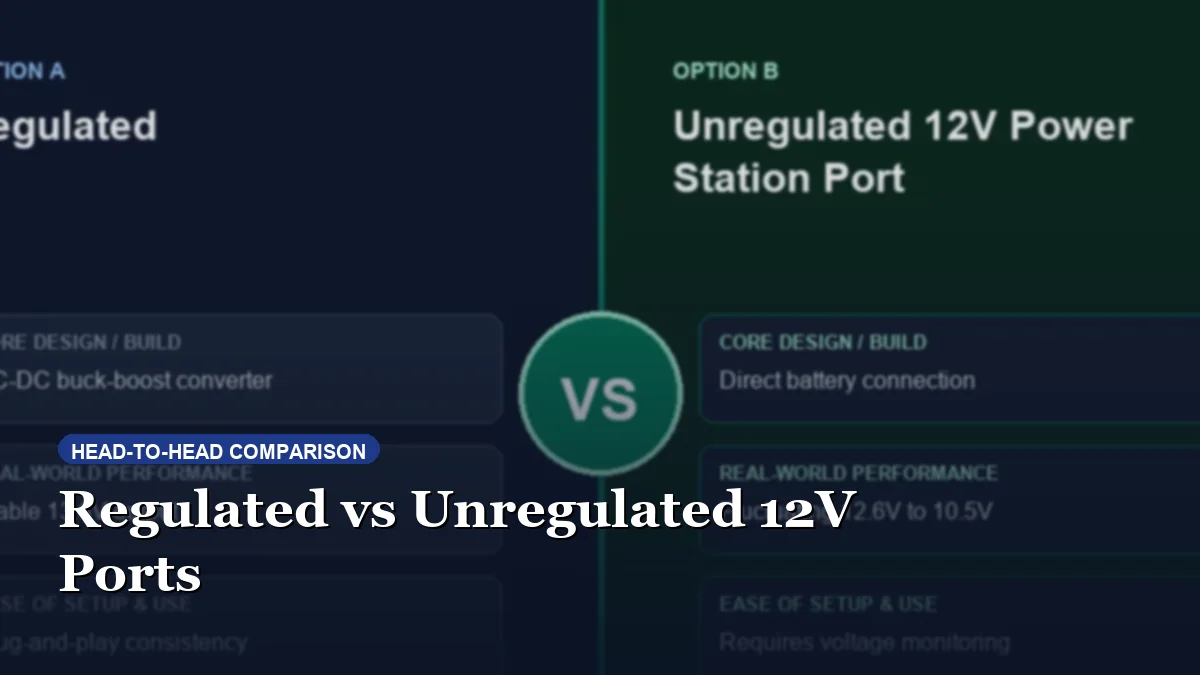
Choose regulated ports for sensitive medical and computing gear needing steady voltage. Select unregulated ports for rugged automotive accessories like high-draw 12V compressors.
Compare all top models in our Best Portable Power Station: Top Picks for 2026.
Side-by-Side Breakdown
| Criteria | Regulated | Unregulated 12V Power Station Port | Edge |
|---|---|---|---|
| Core Design / Build | DC-DC buck-boost converter | Direct battery connection | Regulated |
| Real-World Performance | Stable 13.6V output | Fluctuating 12.6V to 10.5V | Regulated |
| Ease of Setup & Use | Plug-and-play consistency | Requires voltage monitoring | Regulated |
| Durability & Reliability | Contains sensitive microchips | Simple wiring harness | Unregulated |
| Efficiency / Operating Footprint | Minor conversion losses | Near-zero conversion overhead | Unregulated |
| Maintenance Requirements | Professional board repair | Basic glass fuse checks | Unregulated |
| Best Ideal Use Case | CPAP machines and laptops | Air compressors and fridges | Split |
Core Design Architecture and Voltage Delivery
Regulated 12V ports utilize internal DC-DC buck-boost converter circuits. These maintain a steady 13.6V or 12.0V output regardless of internal battery chemistry charge levels.
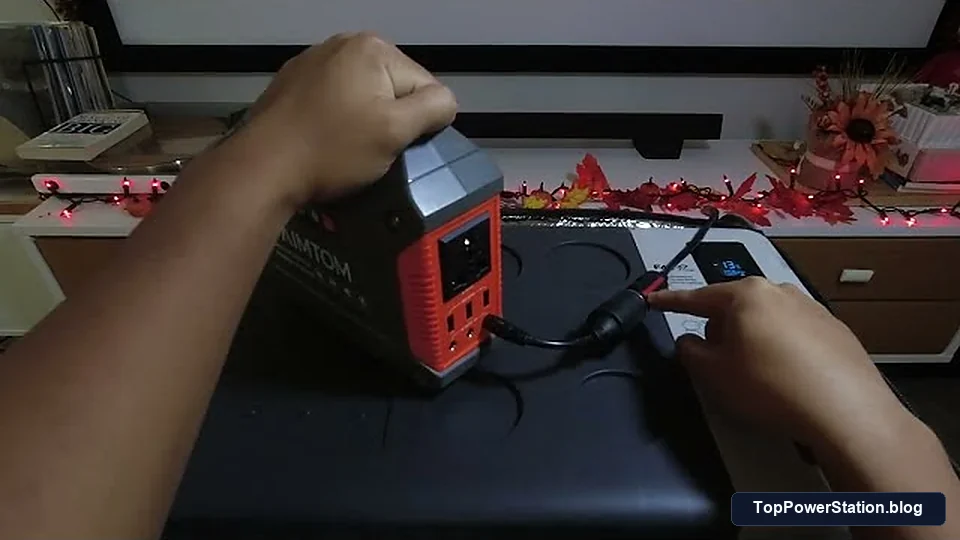
Unregulated 12V cigarette lighter ports connect directly to battery terminals. Their output fluctuates directly from 12.6V down to 10.5V as the internal lithium cells deplete.
Selecting options featured in our best portable power station lineup ensures your DC devices receive steady voltage regardless of internal lithium cell depletion levels or chemistry shifts.
Conversely, unregulated ports route raw battery voltage directly to the cigarette lighter socket, meaning your attached equipment receives fluctuating electrical pressure that tracks the exact state of charge of the cells.
- Regulated circuits feature active voltage stabilization microchips.
- Unregulated ports pass raw battery voltage straight through.
Understanding Internal Circuitry Components
Modern power stations integrate complex silicon boards for regulation. This adds slight thermal overhead but guarantees predictable power delivery for sensitive camping electronics.
Direct wiring in unregulated designs reduces component failure points. Fewer parts mean lower internal resistance and higher peak current handling for motor-driven gear.
- Silicon boards stabilize output at a cost of efficiency.
- Direct copper wiring maximizes raw current capacity.
Real-World Performance and Voltage Stability
When running a portable fridge highlighted in our best portable power station for camping reviews, regulated outputs prevent low-voltage error codes and improve cooling efficiency.
Unregulated lines cause variable motor speeds as batteries drain overnight. Sensitive devices may shut down prematurely when voltage drops below safe operating thresholds.
When running sensitive communication gear, a regulated output prevents unexpected reboots by locking the delivery at an exact nominal voltage threshold throughout the entire discharge cycle of the internal pack.
Unregulated alternatives drop steadily from roughly 13.5 volts down to 10.5 volts, which can cause motor-driven appliances like pumps to experience noticeable performance drops before the battery system finally cuts out.
- Constant voltage prevents unexpected appliance thermal shutdowns.
- Sagging voltage reduces heating and pumping performance speeds.
Appliance Compatibility and Load Behavior
Sensitive communications gear demands strict voltage tolerances to prevent internal logic errors. Regulated connections provide the clean electrical current required for delicate radios.
Heavy-duty 12V heating blankets often perform better on unregulated direct lines. They draw maximum available wattage when batteries are fully charged and fresh.
- Radios and medical devices require constant voltage parameters.
- Resistive heating elements thrive on high raw wattage.
Efficiency and Power Conversion Losses
Units featured in our best budget power station guide often use DC-DC conversion boards that introduce minor energy losses during voltage transformation for precise control.
Unregulated outputs boast near-zero conversion overhead because electricity flows unimpeded. This maximizes runtime for simple resistive loads that tolerate voltage drops.
Active voltage regulation introduces inherent thermal losses because the internal electronic switching components dissipate energy as heat while continuously adjusting the incoming electrical current to match your specified output target.
Unregulated ports achieve maximum raw transfer efficiency since power flows directly through copper traces, avoiding the parasitic draw associated with running secondary conversion circuits during standard low-power operations.
- Conversion circuits consume parasitic standby power continuously.
- Direct connections maximize raw energy transfer efficiency.
Thermal Footprint and Passive Cooling
Voltage regulators generate heat under heavy, sustained electrical loads. Power stations must dissipate this thermal energy through aluminum heat sinks.
Unregulated ports run remarkably cool because no active step-down components exist. This minimizes internal stress during extended summer camping adventures.
- Regulators require effective thermal dissipation engineering.
- Unregulated wiring stays cool under maximum amperage.
Durability, Safety, and Circuit Protection
Regulated outputs typically include sophisticated over-current and short-circuit safeguards. These internal trip switches protect connected gadgets from dangerous power surges.
Unregulated ports rely heavily on external inline fuses for safety. Users must verify fuse ratings manually to prevent catastrophic wiring damage.
Integrated over-current protection on regulated ports typically features fast-acting digital fuses that safeguard attached loads against catastrophic short circuits without requiring physical fuse replacements inside the unit chassis.
Unregulated connections often rely on traditional glass or blade fuses mounted inline, demanding manual inspection and user intervention if a high-draw appliance causes an overload fault event.
- Built-in electronic trip switches reset automatically after faults.
- External glass fuses require manual physical replacement procedures.
Long-Term Component Wear and Tear
Complex microchips face higher risks of premature component degradation over time. Thermal cycling stresses solder joints near voltage regulation integrated circuits.
Simple copper wiring harnesses in unregulated designs offer exceptional longevity. They withstand harsh vibrations during rugged overlanding expeditions without failure.
- Microchips experience stress from thermal cycling.
- Simple wiring handles extreme mechanical vibrations well.
Setup Ergonomics and Everyday Usability
Operating regulated ports requires zero calculations regarding battery state. Devices simply function identically from full charge to empty.
Unregulated ports demand vigilance regarding remaining battery percentage levels. Users must monitor state-of-charge displays to avoid deep discharging sensitive items.
Operating equipment via regulated sockets eliminates guesswork regarding battery state, allowing users to plug in precision electronics safely without calculating the current operating voltage of the main pack.
Field setups utilizing unregulated terminals require careful attention to equipment specifications, ensuring your 12V loads tolerate the wider voltage window found during initial peak charging cycles.
- Plug-and-play operation simplifies complex camping equipment setups.
- Voltage monitoring requires constant user attention during trips.
Cable Management and Connector Compatibility
Standardized output pins make connecting diverse electronic accessories straightforward. Most modern camping gear expects stable 12-volt supplies out of the box.
Direct battery ports accommodate high-amperage specialty plugs seamlessly. Heavy-gauge wiring handles massive surges without melting plastic housing components.
- Standard plugs match modern regulated power station sockets.
- Heavy-duty terminals support high-draw specialty adapters.
Maintenance, Servicing, and Field Repairs
Servicing regulated internal power boards requires professional electronics repair knowledge. End users cannot easily solder microscopic surface-mount components during remote field emergencies.
Troubleshooting unregulated port failures often involves basic fuse checks. Replacing a blown glass fuse takes seconds with standard spare parts.
Troubleshooting a failing regulated port usually involves checking internal firmware error logs or resetting the central microprocessor since the complex hardware circuitry lacks user-serviceable modular components.
Unregulated ports offer straightforward field servicing opportunities, permitting technicians to easily solder loose wiring connections or replace physical sockets using basic automotive repair tools.
- Board-level failures necessitate factory warranty service interventions.
- Basic fuse replacements restore function instantly on trails.
Preventive Care and Connection Maintenance
Keeping contact points clean prevents oxidation and voltage drop issues. Regular inspections ensure reliable electrical contact across all connected devices.
Moisture intrusion poses higher risks to active circuit boards than bare wires. Protective port covers are essential for outdoor longevity.
- Contact cleaning prevents unexpected intermittent connection failures.
- Rubber port covers shield electronics from rain and dust.
Ideal Buyer Profiles and Scenario Matching
Photographers and digital nomads benefit immensely from regulated 12V outputs. Charging camera batteries and laptops safely requires consistent electrical parameters.
Off-grid homesteaders running heavy compressors and tire inflators prefer unregulated power. These heavy-duty applications thrive on raw, unconstrained current.
Campers powering medical CPAP machines or sensitive camera drone batteries should exclusively select regulated stations to guarantee safe, consistent power delivery throughout the overnight sleeping hours.
Overland travelers running heavy-duty air compressors or resistive heating blankets often benefit from unregulated ports, maximizing total battery runtime without risking unnecessary electronic component wear.
- Tech travelers need stable voltage for sensitive USB adapters.
- Vehicle campers demand robust surge handling for compressors.
Making Your Final Hardware Selection
Before investing in a system from our best portable power station for home backup selection, evaluate your primary equipment roster to ensure matching port characteristics.
Balancing efficiency with protection ensures optimal performance in the field. Choose the architecture that aligns with your specific off-grid lifestyle.
- Audit your appliance voltage sensitivity beforehand.
- Match power station outputs to your specific recreational activities.
Frequently Asked Questions
What is the main difference between regulated and unregulated ports?
Regulated ports maintain steady voltage regardless of battery charge levels. Unregulated ports drop in voltage as power depletes, providing raw direct current without internal conversion circuitry.
Can I run a portable fridge on an unregulated port?
Portable refrigerators run fine on unregulated ports until battery voltage drops. Regulated ports prevent early low-voltage error codes and ensure your food stays cold.
Do regulated ports drain the power station faster?
Conversion circuits consume a tiny amount of parasitic power during operation. This minor loss is negligible compared to safety benefits for sensitive electronics.
Which port type is better for high-draw air compressors?
Unregulated ports excel at handling massive surge currents demanded by heavy motors. They offer lower internal resistance and deliver maximum raw power safely.
Are unregulated ports dangerous for smartphones?
Direct charging without adapters can be risky as battery voltage fluctuates. Always use quality USB adapters featuring built-in voltage regulation for safety.