Portable Power Station vs Marine Battery Bank
Choosing off-grid power requires balancing plug-and-play simplicity with deep-cycle modularity. This technical guide evaluates both systems against modern energy demands.

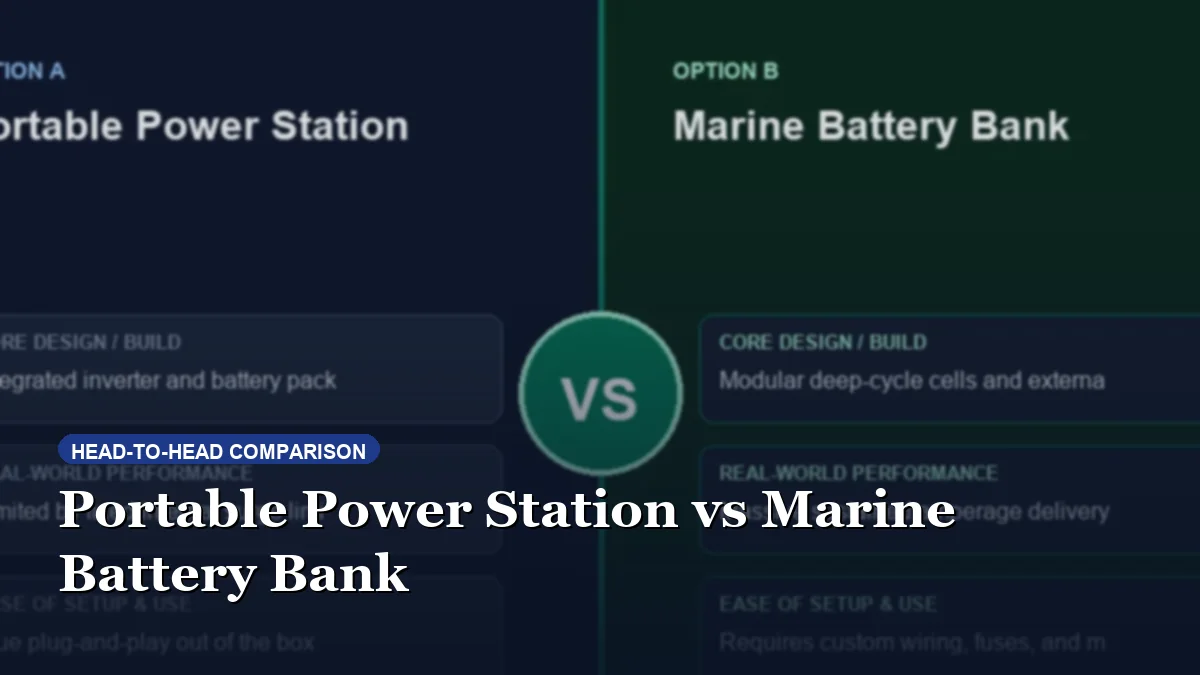
Choose a portable power station for immediate all-in-one convenience and zero assembly. Select a marine battery bank for scalable capacity and permanent custom installations.
Compare all top models in our Best Portable Power Station: Top Picks for 2026.
Side-by-Side Breakdown
| Criteria | Portable Power Station | Marine Battery Bank | Edge |
|---|---|---|---|
| Core Design / Build | Integrated inverter and battery pack | Modular deep-cycle cells and external inverter | Portable Power Station |
| Real-World Performance | Limited by fixed internal surge limits | Massive sustained amperage delivery | Marine Battery Bank |
| Ease of Setup & Use | True plug-and-play out of the box | Requires custom wiring, fuses, and mounting | Portable Power Station |
| Durability & Reliability | Sensitive electronic management boards | Ruggedized physical chemical resilience | Marine Battery Bank |
| Efficiency / Operating Footprint | Compact footprint with high conversion loss | Larger multi-component system layout | Portable Power Station |
| Maintenance Requirements | Zero user-serviceable internal components | Periodic terminal cleaning and electrolyte checks | Portable Power Station |
| Best Ideal Use Case | Mobile camping, emergency backup, and tailgating | Off-grid cabins, boats, and large RVs | Marine Battery Bank |
Architectural Design and Core Components
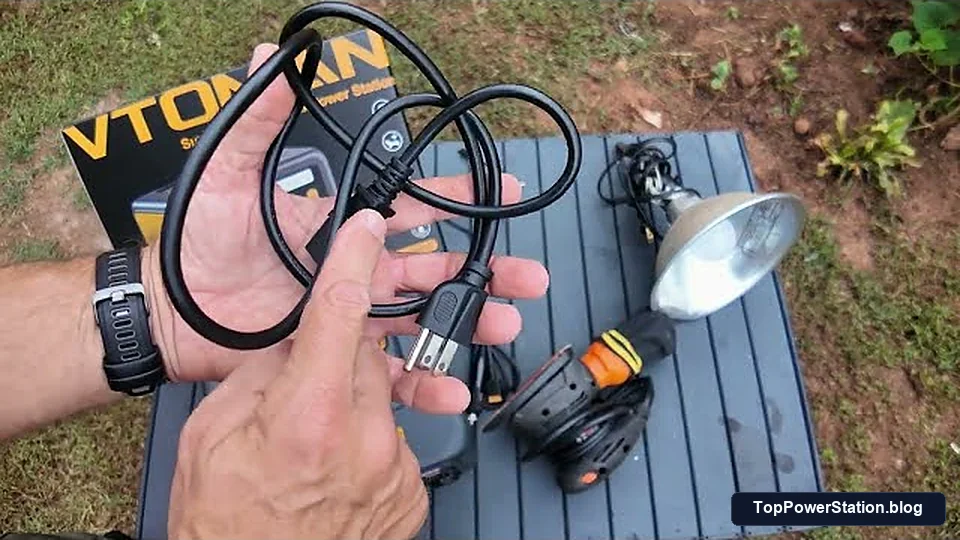
Modern power stations integrate inverters, charge controllers, and lithium cells into a single unified chassis. This design eliminates loose cabling and protects sensitive internal electronics from external environmental elements during transport.
Conversely, marine battery banks utilize discrete components connected via heavy-duty copper cables. Users must source separate inverters, battery management systems, and fusing blocks to build a functional off-grid energy storage network.
Understanding these distinct architectural philosophies helps technicians select appropriate gear for specific mobile applications without risking equipment failure from mismatched voltage parameters or inadequate thermal management envelopes.
- Integrated units feature internal lithium-ion or lithium iron phosphate chemistries.
- Discrete banks allow mixing specific battery capacities with standalone inverter units.
- All-in-one chassis designs prioritize physical space-saving over custom component upgrades.
Internal Inverter and Conversion Stages
Power stations rely on built-in pure sine wave inverters optimized for efficiency. These internal circuits convert low-voltage DC stored in the cells directly into standard household AC voltage safely.
Marine setups typically feature standalone inverter-chargers mounted separately near the battery bank. This separation allows technicians to upgrade AC output ratings independently without replacing the primary energy storage cells.
- Built-in inverters reduce total system footprint and installation labor.
- External inverters offer massive continuous surge wattage for heavy motor loads.
Enclosure and Environmental Protection
Factory-sealed portable units offer moderate dust and splash resistance within molded plastic shells. Users must still shield these units from direct rain and extreme ambient operating temperatures.
Marine battery enclosures prioritize corrosion resistance and secure physical mounting to withstand constant vessel motion. Heavy-duty battery boxes protect terminals from accidental short circuits caused by stray metallic tools.
- Molded plastics provide lightweight portability for recreational camping trips.
- Marine-grade housing resists saltwater corrosion and high humidity environments.
System Architecture Management
Effective power management requires continuous monitoring of voltage drop and internal resistance. Using the best portable power station automates this entirely through proprietary firmware displayed on digital screens.
Custom bank builders rely on external battery monitors and shunt-based meters to track state of charge accurately across multiple wired battery nodes.
- Automated firmware protects lithium cells from over-discharge scenarios.
- External shunts provide granular data for complex off-grid power systems.
Installation Complexity and System Integration
Deploying a portable generator requires zero technical wiring expertise or specialized tools. Users simply unpack the unit, plug in appliances, and monitor output via digital indicator panels.
Building a marine battery bank demands rigorous planning, precise cable sizing, and strict adherence to electrical safety standards. Installers must calculate amperage draws to select appropriate wire gauges and fuse ratings.
Neglecting proper installation protocols in custom setups can lead to dangerous thermal runaway events or catastrophic electrical fires within confined spaces.
- Plug-and-play units eliminate the learning curve associated with DC wiring.
- Custom banks require professional-grade crimpers, terminal lugs, and fuses.
- Proper ventilation planning remains critical for flooded lead-acid marine options.
Wiring Harness and Fuse Requirements
Portable units house internal fusing and short-circuit protection behind sealed panels. End users never touch high-current DC busbars during standard operation or routine device charging cycles.
Marine configurations demand robust Class T fuses and manual disconnect switches placed near terminals. These protective measures prevent catastrophic wire melting during a sudden high-amperage short circuit.
- Internal fuses protect users from accidental electrical shock hazards.
- External safety disconnects allow instant power interruption during emergencies.
Mounting and Physical Security
Portable generators sit freely on flat surfaces thanks to rubber dampening feet. Their moderate weight allows quick relocation between vehicles, tents, or emergency indoor spaces.
Marine systems require bolted down battery trays and secure strap restraints. This permanent mounting prevents heavy energy storage blocks from shifting during violent wave impacts.
- Rubber feet absorb mild vibrations during transport in rough terrain.
- Heavy-duty hold-down straps keep marine cells anchored to vessel hulls.
System Configuration Support
Troubleshooting portable units often involves consulting manufacturer help databases and customer service channels. Digital error codes guide users directly to specific firmware or hardware faults.
Custom bank maintenance relies on direct multimeter diagnostics and physical inspection of mechanical cable connections by the end user or a certified marine electrician.
- Manufacturer support portals simplify basic troubleshooting steps.
- Electrical diagnostics require physical multimeters and hand tools.
Energy Capacity, Voltage, and Output Limits
Portable units offer fixed energy capacities measured in watt-hours that cannot be expanded easily. Users must live within the physical constraints of the built-in lithium pack configuration.
Marine battery banks provide virtually limitless scalability through parallel and series wiring. Technicians can link multiple deep-cycle batteries together to match massive daily amp-hour consumption targets.
Evaluating peak surge capabilities ensures appliances like air conditioners or refrigerators start reliably without triggering overload protection mechanisms.
- Fixed watt-hour ratings limit long-term expansion potential for growing needs.
- Parallel wiring increases total amp-hours for extended runtimes.
- Series configurations boost system voltage to support twenty-four volt appliances.
Voltage Compatibility and Standards
Most consumer power stations output standard twelve-volt DC alongside household AC electricity. Higher-end models utilize higher internal voltages to maximize inverter conversion efficiency.
Marine systems typically operate on twelve-volt or twenty-four-volt direct current networks designed for vessel electronics and heavy trolling motors.
- Consumer units feature standardized USB ports and AC outlets.
- Marine networks support dedicated DC accessories and specialized equipment.
Surge Amperage Delivery
Internal protection circuits shut down power stations immediately when loads exceed surge ratings. This safeguards sensitive microprocessors within the unit from permanent electrical damage.
Lead-acid and high-discharge lithium marine banks can deliver massive short-term amperage spikes. This raw power successfully kicks over large compressor motors without tripping breakers.
- Strict current limits protect portable inverter boards from overloads.
- Unrestricted surge delivery handles heavy motorized appliance startup draws.
Capacity Scalability Limits
Some advanced power stations accept proprietary expansion batteries via specialized high-current communication cables. However, mixing third-party batteries remains strictly impossible due to communication protocols.
Marine banks accept virtually any brand of deep-cycle battery sharing similar chemical characteristics and voltage profiles, offering superior long-term versatility.
- Proprietary expansion ports limit choices to brand-specific accessories.
- Universal battery compatibility enables budget-friendly capacity upgrades.
Operational Efficiency and Safety Management
Power stations utilize sophisticated battery management systems to monitor cell temperature and balancing. These automated safeguards prevent thermal runaway and extend overall chemical lifespan.
Marine setups require external battery management modules to monitor individual cell voltages, especially when utilizing lithium iron phosphate chemistries in damp environments.
Balancing power conversion efficiency with physical safety dictates how effectively each system transforms stored chemical energy into usable electricity.
- Integrated BMS units actively balance cell voltages during every charge cycle.
- External monitoring requires separate hardware purchases and configuration.
- Thermal sensors prevent charging in freezing ambient temperature conditions.
Thermal Management and Ventilation
Portable generators rely on internal cooling fans that activate during heavy loads. Users must keep intake vents unobstructed to prevent premature thermal throttling and shutdown.
Marine battery installations depend on compartment airflow to dissipate heat generated during high-rate charging sessions from powerful engine alternators.
- Internal cooling fans manage heat buildup during rapid charging.
- Ventilated battery compartments prevent hazardous gas accumulation.
Inverter Conversion Losses
Converting DC battery power to AC household voltage incurs energy loss. Choosing the best portable battery power station for home usage helps minimize conversion overhead through advanced high-frequency switching technology.
Standalone marine inverters experience similar conversion overhead, though larger systems often achieve better peak efficiency ratios under heavy continuous loads.
- High-frequency inverters maximize energy transfer efficiency.
- Conversion losses generate waste heat inside the enclosure.
Environmental Resilience
Consumer power stations struggle in harsh, dusty, or wet outdoor conditions. Their sensitive digital interfaces require careful shelter away from moisture.
Marine battery banks thrive in demanding environments when housed in sealed, corrosion-resistant enclosures designed for saltwater exposure.
- Digital screens require protection from direct rain and splashes.
- Marine enclosures withstand salt spray and high humidity.
Maintenance Protocols and System Longevity
Portable power stations require virtually no routine user maintenance beyond firmware updates and occasional surface cleaning. Their sealed design prevents access to internal chemical components.
Marine battery banks demand regular inspection of terminal connections, electrolyte levels in flooded variants, and voltage equalization cycles to prevent sulfation.
Proper upkeep directly determines how many years of reliable service an energy storage system delivers before requiring complete replacement.
- Sealed lithium power stations eliminate the need for fluid checks.
- Flooded lead-acid marine batteries require periodic distilled water top-offs.
- Terminal corrosion cleaning prevents high-resistance electrical bottlenecks.
Terminal Inspection and Cleaning
Power station ports feature gold-plated contacts that resist oxidation over years of normal plug insertion and removal cycles.
Marine battery posts accumulate corrosive white sulfate buildup rapidly. Technicians must clean terminals regularly with wire brushes and apply protective anti-corrosion spray.
- Plated ports maintain low contact resistance without manual scrubbing.
- Battery posts require chemical cleaning to ensure reliable power flow.
Storage and Self-Discharge Rates
Lithium power stations exhibit very low self-discharge rates when stored in standby mode. Users should store them at roughly fifty percent charge for optimal longevity.
Lead-acid marine batteries discharge rapidly on shelves and require trickle charging every few months to prevent permanent chemical sulfation and capacity loss.
- Low self-discharge preserves energy during long storage periods.
- Lead-acid cells demand constant maintenance charging to survive.
Component Replacement Cycles
When standard lithium units degrade past their useful cycle life, recycling the whole chassis is typical. Selecting the best portable power station with replaceable battery avoids total device replacement expenses.
Marine setups allow individual battery replacement without discarding expensive inverters, chargers, or heavy copper wiring harnesses.
- All-in-one units mean replacing the entire device upon cell failure.
- Modular banks allow swapping single worn-out batteries easily.
Cost Efficiency and Scalable Expansion
Upfront costs for portable power stations reflect the engineering required for all-in-one integration. They offer a predictable turnkey investment with no hidden component expenses.
Marine battery banks often appear cheaper initially per watt-hour when using lead-acid chemistry, but hidden costs for cables, fusing, and inverters add up quickly.
Evaluating long-term value requires balancing initial purchase expenses against expected lifespan, expansion flexibility, and ongoing maintenance labor.
- Turnkey units bundle all necessary electronics into one transparent price tag.
- Custom systems incur extra expenses for wiring, fuses, and mounting hardware.
- Long-term value depends heavily on daily usage frequency and maintenance.
Initial Investment Breakdown
Purchasing an all-in-one unit bundles the inverter, charge controller, and internal cells. Following a proper lifepo4 portable power station maintenance protocol significantly extends overall service life.
Building a custom marine bank forces buyers to purchase individual components separately. This demands careful research to ensure electrical compatibility across brands.
- Single-purchase convenience eliminates component sourcing headaches.
- Component shopping requires deep technical knowledge of electrical specs.
Long-Term Value Retention
Portable units hold strong resale value due to their universal appeal among campers and emergency preppers. Their enclosed nature makes ownership transfer straightforward.
Custom marine systems rarely transfer well because installations are tailored specifically to unique hull shapes or vehicle compartments.
- Turnkey generators appeal to a broad secondary consumer market.
- Custom wiring configurations remain specific to individual vehicle builds.
Future Upgrade Flexibility
Expanding energy storage in a portable ecosystem requires buying expensive brand-specific expansion packs. Users cannot mix third-party batteries safely.
Marine networks welcome future upgrades by simply adding another parallel deep-cycle battery of matching voltage and chemistry.
- Brand lock-in restricts future battery expansion choices.
- Universal chemistry compatibility ensures endless upgrade possibilities.
Frequently Asked Questions
Can I charge a portable power station with marine solar panels?
Yes, as long as the open-circuit voltage matches the station controller limits. Always verify solar panel specifications before connecting.
Are marine batteries safer than lithium portable power stations?
Both are safe when properly installed and maintained according to manufacturer guidelines. Lithium units feature automated internal management systems.
Why do marine battery banks require external inverters?
They store raw DC electricity that must be converted to AC household power. Standalone inverters handle this high-wattage conversion process separately.
Can I leave a portable power station outside in the rain?
No, standard units lack sufficient weatherproofing for direct water exposure. Protect them inside shelters or weather-resistant enclosures during storms.
Which system offers better value for long-term off-grid living?
Marine battery banks provide superior long-term scalability and lower replacement costs. Portable stations excel in temporary mobile setups and emergency backups.