LiFePO4 vs NMC Power Station: Technical Comparison
Choosing the right portable power station chemistry requires balancing strict cycle life demands against strict weight limits. This technical guide evaluates LiFePO4 and NMC architectures.

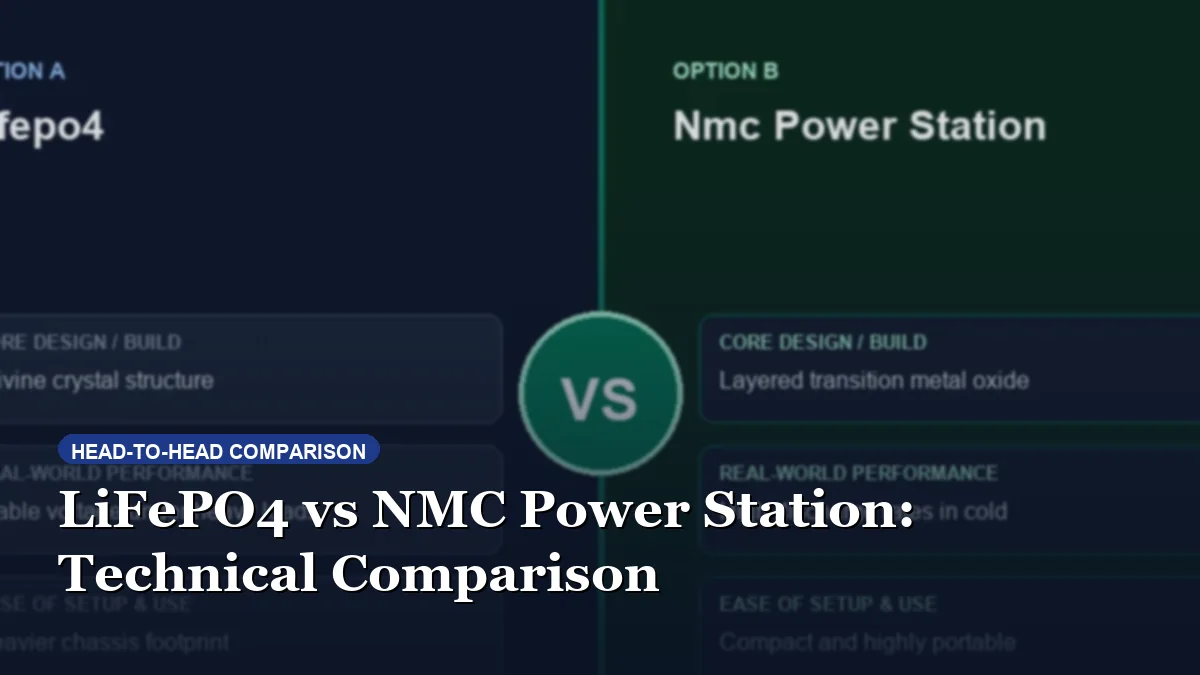
Choose LiFePO4 for maximum stationary longevity and safety, or pick NMC if ultra-lightweight portability is your top priority.
Compare all top models in our Best Portable Power Station: Top Picks for 2026.
Side-by-Side Breakdown
| Criteria | Lifepo4 | Nmc Power Station | Edge |
|---|---|---|---|
| Core Design / Build | Olivine crystal structure | Layered transition metal oxide | Lifepo4 |
| Real-World Performance | Stable voltage under heavy loads | High discharge rates in cold | Nmc Power Station |
| Ease of Setup & Use | Heavier chassis footprint | Compact and highly portable | Nmc Power Station |
| Durability & Reliability | Exceeds 3000 cycles easily | Typically rated for 500 cycles | Lifepo4 |
| Efficiency / Operating Footprint | Lower volumetric energy density | Superior energy packing density | Nmc Power Station |
| Maintenance Requirements | Minimal battery management stress | Strict state of charge care | Lifepo4 |
| Best Ideal Use Case | Off-grid cabins and RV backup | Backcountry hiking and mobile work | Lifepo4 |
Core Design and Engineering Differences
Lithium iron phosphate and nickel manganese cobalt chemistries utilize completely different internal compositions. Understanding these molecular structures helps explain their distinct electrical properties.
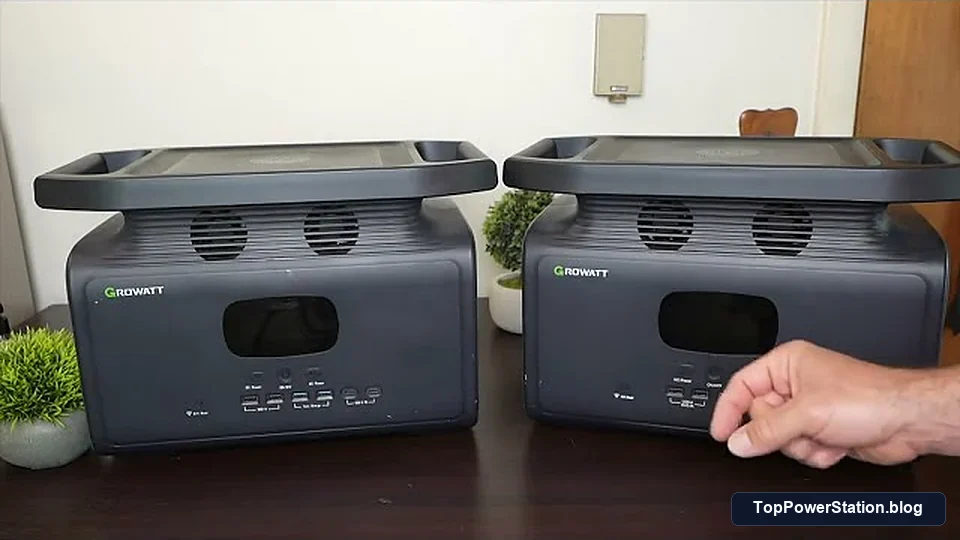
Engineers build LiFePO4 cells using a robust olivine crystal framework. This design resists thermal degradation during high continuous amp draws.
Conversely, NMC architecture relies on a layered oxide matrix containing cobalt and nickel. This configuration packs more watt-hours into a smaller physical volume.
Lithium iron phosphate chemistry utilizes olivine crystal structures, offering superior structural stability and detailed metrics explained within our lifepo4 power station lifespan guide compared to layered transition metal oxides.
Engineers design NMC cells with high-density layered lattices, packing more active materials into constrained footprints while requiring exceptionally strict voltage thresholds to prevent internal degradation during rapid charge cycles.
The fundamental cathode architecture directly dictates how internal current flows, influencing terminal resistance, internal heat dissipation rates, and the required complexity of the battery management system monitoring hardware.
- LiFePO4 features stable iron-oxygen covalent bonding networks.
- NMC delivers higher nominal voltage per individual cell stack.
- Crystal stability dictates overall calendar aging characteristics.
Chemical Stability and Molecular Bonds
Molecular bonding strength directly influences how well a battery handles thermal stress. Stronger bonds reduce the risk of catastrophic cell failure.
The iron-phosphate bond resists oxygen release during extreme heating events. This inherent safety property minimizes internal short-circuit hazards.
- Phosphate bonds prevent runaway thermal propagation effectively.
- Layered nickel structures require aggressive battery management systems.
Real-World Performance Comparison
Field performance depends heavily on how each chemistry handles continuous inverter loads and ambient temperature shifts. Voltage sag under load varies significantly between units.
LiFePO4 power stations maintain a flat discharge curve throughout their operating cycle, which you can optimize by following our lifepo4 battery maintenance protocol to ensure steady voltage right until depletion.
NMC power stations provide higher instantaneous discharge current relative to total weight. This makes them exceptional for high-surge appliance startup.
Under heavy continuous loads, LiFePO4 generators maintain stable output voltage curves longer, preventing sensitive electronics from experiencing brownouts while drawing high alternating current inverter wattages during field use.
Conversely, NMC chemistry excels in rapid energy delivery and peak surge capacity, making these units ideal for powering heavy inductive loads like motorized tools with high starting surge requirements.
Voltage sag under load remains significantly lower in nickel-based systems, though iron-phosphate alternatives compensate through flat discharge profiles that ensure consistent performance down to zero percent state of charge.
- Flat voltage curves improve DC appliance operating efficiency.
- High surge output accommodates heavy compressor motor startups.
- Temperature extremes impact both chemistries in unique ways.
Voltage Stability and Surge Handling
Maintaining stable voltage prevents sensitive electronics from experiencing brownout conditions during high-draw tasks. Inverter circuitry handles steady input with minimal thermal loss.
Surge capability allows users to power heavy motor loads without triggering immediate overload protections.
- Consistent voltage output protects internal DC-DC buck converters.
- Surge multipliers reach up to double the rated wattage.
Maintenance, Efficiency and Longevity
Long-term ownership costs are tied directly to cycle durability and calendar aging rates. Proper storage protocols extend operational lifespan across both options.
LiFePO4 units routinely deliver over three thousand cycles before dropping below eighty percent original capacity. This makes them ideal for daily residential backup.
NMC variants typically max out near five hundred cycles under similar cycling conditions. Users must manage storage states carefully to prevent capacity fade.
Standard cycle life metrics reveal a massive operational divergence, with modern LFP modules easily delivering over 3000 complete cycles before dropping below eighty percent of original capacity ratings.
Traditional NMC generators typically achieve five hundred to eight hundred cycles under identical laboratory test conditions, necessitating earlier replacement schedules for users demanding daily off-grid power station utilization.
Coulombic efficiency favors iron-phosphate formulations slightly, reducing internal parasitic energy loss during the conversion process and generating less waste heat during standard alternating current charging operations.
- High cycle counts eliminate frequent hardware replacement costs.
- Calendar aging accelerates when NMC units sit fully charged.
- BMS algorithms balance individual cells to maximize overall health.
Cycle Life and Degradation Metrics
Tracking capacity retention helps users predict exact replacement timelines for critical infrastructure setups. Degradation curves flatten out significantly after initial break-in.
Chemical wear is accelerated by high operating temperatures and aggressive fast-charging protocols.
- Eighty percent capacity threshold defines standard battery end-of-life.
- Active cooling fans mitigate damaging heat buildup during charging.
Thermal Management and Safety Profiles
Thermal runaway represents the primary safety hazard associated with modern lithium-based energy storage systems. Internal sensors monitor cell temperatures continuously.
LiFePO4 chemistry has a much higher thermal runaway threshold than cobalt counterparts. This makes unattended garage storage significantly safer.
NMC power stations require sophisticated multi-layered cooling systems and heavy casing insulation to manage heat dissipation safely during fast recharges.
Thermal runaway thresholds differ drastically between these two chemistries, as the strong covalent bonds in iron-phosphate molecules resist oxygen release at elevated temperatures far better than layered oxides.
Nickel manganese cobalt systems demand aggressive active cooling solutions, including multi-speed fans and aluminum heat sinks, to mitigate internal hot spots during high-amperage rapid charging protocols.
Safety certifications and internal circuit protections must be exceptionally robust for NMC units to prevent catastrophic failure, whereas LFP variants offer inherent chemical stability that reduces reliance on redundant safeguards.
- High thermal thresholds prevent fires during severe electrical faults.
- Active cooling mechanisms maintain safe operating temperature bands.
- Internal fuses isolate damaged cell groups instantly.
Active Cooling and Fault Protection
Advanced battery management firmware constantly evaluates thermal metrics to prevent localized hotspots. Fans engage automatically when high wattage inputs are detected.
Emergency cutoff switches disconnect power inputs if thermal anomalies breach safe limits.
- Microprocessor sensors monitor individual cell temperatures.
- Hardware disconnects prevent catastrophic thermal propagation.
Portability and Energy Density Factors
Physical dimensions and total unit weight dictate how easily a power station travels into remote environments. Energy density directly influences physical footprint.
NMC power stations pack massive watt-hour capacities into remarkably lightweight chassis housings. Backpackers and mobile workers favor this space-saving design.
LiFePO4 units weigh considerably more due to the denser iron matrix inside each cell block. RV owners and van lifers accept this weight penalty gladly.
Gravimetric energy density strongly favors NMC technology, packing roughly double the watt-hours per kilogram compared to standard LFP cells, which significantly reduces the physical weight of mobile power units.
Backpacking and mobile photography professionals often prefer nickel-based generators because their superior volumetric efficiency minimizes physical bulk, freeing up valuable cargo space inside transit vehicles.
Conversely, home backup and RV installations prioritize longevity over lightweight construction, making the heavier iron-phosphate systems acceptable trade-offs for users who value stationary capacity retention.
- High energy density reduces overall shipping and carrying weight.
- Heavy chassis require sturdy mounting brackets in vehicle setups.
- Compact footprints fit easily inside crowded trunk compartments.
Weight Ratios and Footprint Optimization
Minimizing weight without sacrificing usable watt-hours remains a primary engineering challenge for portable generator designers.
Optimizing internal layout ensures efficient airflow around heavy inverter transformers and capacitor banks.
- Lightweight frames reduce physical strain during transit.
- Dense internal packing maximizes storage capacity per cubic inch.
Total Cost and Lifecycle Value Analysis
Evaluating total ownership value requires calculating cost per delivered kilowatt-hour across the entire operational lifespan of the equipment.
Although LiFePO4 stations feature higher upfront acquisition costs, their extended cycle longevity drastically lowers long-term operational expenses, especially when paired with our long term power station storage guide.
NMC systems offer lower initial purchase barriers but demand earlier replacement cycles if utilized heavily for daily off-grid living.
Calculating long-term economic value requires dividing the upfront purchase expense by the total lifetime kilowatt-hours delivered, revealing how LFP chemistry dramatically lowers the cost per cycle.
While nickel-based units often feature lower initial retail investments, their restricted operational lifespan means frequent replacements offset initial savings for frequent users operating off-grid energy systems.
Commercial operators and emergency responders quickly amortize the higher baseline investment of iron-phosphate generators due to reduced maintenance interventions and extended operating windows across harsh environmental conditions.
- Low cost-per-cycle favors long-term LiFePO4 deployments.
- Upfront savings make NMC attractive for occasional recreational users.
- Resale value remains higher for durable chemistry models.
Amortized Value and Replacement Timelines
Calculating long-term value helps buyers justify investing in premium energy storage hardware for mission-critical applications.
Frequent users save money over time by avoiding premature hardware upgrades.
- Amortized daily costs drop significantly with high cycle counts.
- Replacement intervals dictate total long-term infrastructure budgets.
Which Option Fits Your Setup
Selecting the correct power station depends entirely on your specific mobility needs, charging habits, and installation environment.
When browsing our best lifepo4 power station guides, choose these units if you need permanent home backup, daily off-grid solar storage, or heavy-duty workshop power for tools.
Opt for an NMC unit if you hike into remote areas, need quick grab-and-go emergency power, or require maximum capacity.
Selecting the appropriate power station chemistry depends entirely on your specific mobility needs, frequency of utilization, and environmental operating parameters encountered during typical field deployments.
Choose lithium iron phosphate if you require a stationary backup solution that delivers decades of reliable service without degrading under routine daily cycling and heavy appliance loads.
Opt for nickel manganese cobalt variants when minimizing physical footprint and total travel weight outweighs long-term cycle durability considerations for your specific outdoor lifestyle.
- Match chemistry longevity directly to your expected usage frequency.
- Evaluate weight limits based on your primary transport method.
- Consider ambient climate conditions before finalizing your purchase decision.
Tailoring Your Choice to Specific Applications
Matching equipment specifications to real-world tasks ensures optimal performance and prevents premature hardware degradation.
Assess your daily watt-hour consumption carefully before selecting a battery chemistry.
- Stationary applications benefit from robust cycle durability.
- Mobile fieldwork demands lightweight energy storage solutions.
Frequently Asked Questions
Which battery chemistry lasts longer over time?
LiFePO4 units easily exceed three thousand cycles before significant degradation occurs. This makes them ideal for daily stationary use.
Are NMC power stations unsafe to store indoors?
NMC units are completely safe when manufactured with robust management systems. However, they possess a lower thermal threshold than iron-based alternatives.
Why do LiFePO4 power stations weigh much more?
The heavy iron-phosphate crystal matrix adds significant physical mass. This trade-off yields superior cycle durability over time.
Can I leave my power station plugged into solar daily?
Modern battery management systems regulate input currents automatically to protect internal cells. Advanced firmware prevents overcharging hazards effectively.
Which option performs better in freezing temperatures?
Both chemistries struggle with cold-weather charging without internal heaters. Integrated warming pads are crucial winter accessories for reliable operation.