LFP vs Lead Acid Power Station: Comprehensive Technical Comparison
Lithium iron phosphate and lead acid technologies offer fundamentally different off-grid capabilities. Understanding their technical limits ensures optimal energy reliability for your specific power needs.

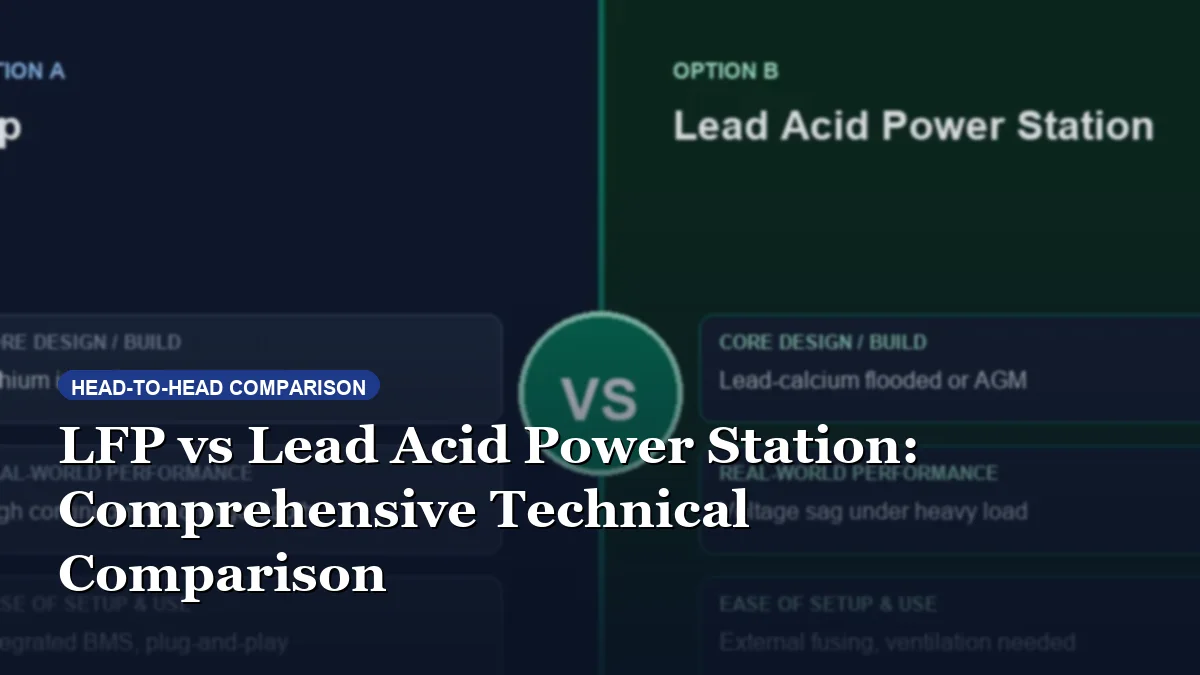
Choose LFP for lightweight, high-cycle performance in modern electronics. Select lead acid only for budget-constrained, stationary backup applications requiring heavy ballast.
Compare all top models in our Best Portable Power Station: Top Picks for 2026.
Side-by-Side Breakdown
| Criteria | Lfp | Lead Acid Power Station | Edge |
|---|---|---|---|
| Core Design / Build | Lithium iron phosphate chemistry | Lead-calcium flooded or AGM | Lfp |
| Real-World Performance | High continuous discharge depth | Voltage sag under heavy load | Lfp |
| Ease of Setup & Use | Integrated BMS, plug-and-play | External fusing, ventilation needed | Lfp |
| Durability & Reliability | 3000+ deep cycles, robust | 300-500 shallow cycles | Lfp |
| Efficiency / Operating Footprint | 95-99% round-trip efficiency | 70-85% round-trip efficiency | Lfp |
| Maintenance Requirements | Zero active maintenance | Water top-ups, terminal cleaning | Lfp |
| Best Ideal Use Case | Mobile camping and emergency backup | Stationary shed solar systems | Lfp |
Core Chemistry and Engineering Foundations
Lithium iron phosphate cells utilize a stable olivine crystal structure that resists thermal runaway. This advanced chemistry provides exceptional structural stability compared to legacy flooded designs.
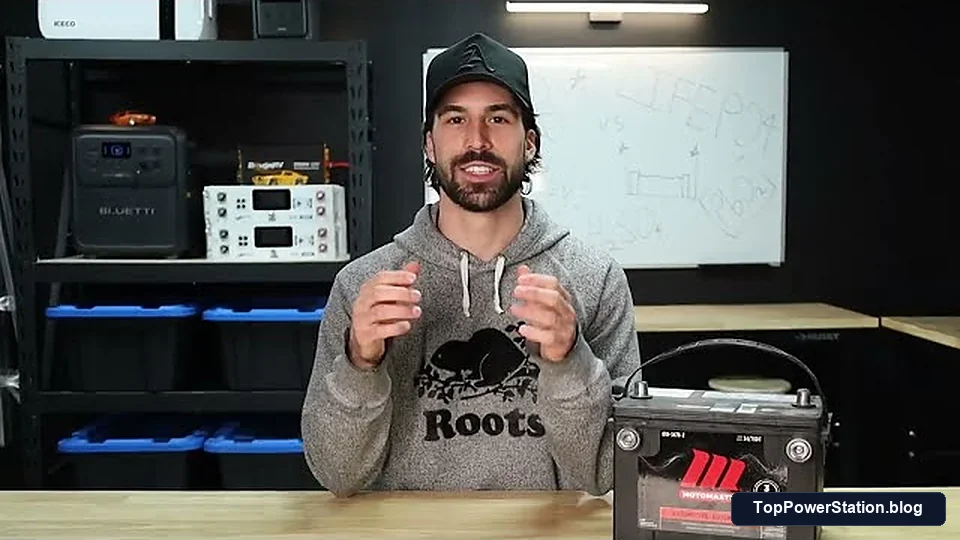
Traditional lead acid units rely on lead plates submerged in sulfuric acid electrolytes. This mature technology requires robust casing to handle internal chemical reactions and heavy structural weight.
Lithium iron phosphate cells utilize a structured olivine crystal framework that provides exceptional structural stability during heavy ion exchange cycles, preventing catastrophic thermal runaway events under severe electrical stress conditions.
Traditional lead acid units rely on porous lead plates submerged in a corrosive sulfuric acid electrolyte solution, which inevitably triggers permanent plate sulfation and gradual capacity loss over extended operational timeframes.
- Olivine crystal framework prevents dangerous internal short circuits.
- Sulfuric acid liquid requires strict vertical orientation during use.
- Integrated battery management systems protect modern chemistry automatically.
Electrochemical Architecture Differences
LFP internal resistance remains exceptionally low throughout discharge cycles. This ensures stable voltage output even when running demanding household appliances simultaneously.
Lead acid chemistry suffers from elevated internal electrical resistance, causing rapid voltage drop under heavy loads. This inherently limits sustained power delivery significantly.
- Low resistance yields superior energy transfer efficiency.
- High resistance generates waste heat during high discharges.
Real-World Power Delivery and Voltage Behavior
Modern portable power stations require steady voltage under varying loads to protect sensitive electronics. Choosing the right best portable power station ensures LFP units maintain a flat discharge curve near twelve point eight volts.
Conversely, lead acid systems experience a continuous voltage decline as energy depletes. Devices relying on strict input voltages may malfunction well before the battery reaches empty status.
Advanced LFP power stations maintain a remarkably flat discharge curve throughout eighty percent of their operational capacity, ensuring consistent appliance performance without voltage sag under heavy continuous inverter loads.
Sealed lead acid systems suffer from severe Peukert effect penalties, meaning high current draws rapidly deplete total usable amp hours and cause sharp terminal voltage drops during heavy motor startup surges.
- Flat voltage profiles ensure consistent inverter performance until depletion.
- Sagging voltage triggers premature low-voltage cutoffs on sensitive loads.
Usable Capacity and Depth of Discharge
You can safely discharge lithium iron phosphate batteries down to ten percent capacity regularly. This provides immense usable energy from a physically compact and lightweight hardware footprint.
Lead acid units must not drop below fifty percent depth of discharge without severe lifespan penalties. Exceeding this threshold permanently damages internal plates and reduces overall capacity.
- High discharge depth maximizes available runtime per charge.
- Shallow discharge limits shorten usable daily energy yield.
Longevity, Cycle Life, and Degradation Factors
Investing in off-grid power requires evaluating long-term durability metrics thoroughly. Choosing a dedicated camping power station ensures lithium units routinely deliver three thousand cycles before capacity drops.
Standard flooded or AGM lead acid alternatives typically offer only three to five hundred cycles under ideal conditions. Frequent deep discharges shorten this operational lifespan drastically.
Modern lithium iron phosphate batteries routinely deliver three thousand cycles to eighty percent retained capacity, dwarfing the typical three hundred to five hundred cycles offered by standard deep cycle lead alternatives.
Lead acid chemistry requires strict depth of discharge limitations to prevent premature chemical fatigue, whereas LFP configurations easily handle deep daily cycling without inducing accelerated molecular degradation or internal resistance spikes.
- High cycle durability drastically lowers long-term replacement costs.
- Sulfation ruins inactive lead plates if left uncharged.
Calendar Aging and Storage Resilience
Lithium chemistry tolerates partial state of charge storage with minimal degradation over extended periods. Self-discharge rates remain extremely low during seasonal off-season equipment storage phases.
Lead acid batteries demand continuous trickle charging to prevent permanent sulfation damage while sitting idle. Neglecting this crucial maintenance leads to irreversible capacity loss within months.
- Low self-discharge preserves energy during long storage periods.
- Neglected lead batteries suffer permanent chemical degradation.
Weight, Ergonomics, and Portability Metrics
Portability remains a primary purchase driver for outdoor enthusiasts and emergency responders alike. Lithium iron phosphate stations weigh roughly a third of traditional equivalent capacity units.
The dense lead plates required for chemical reactions make lead acid generators excessively heavy. Transporting them requires dedicated carts or permanent installation inside a vehicle.
Engineering high density energy storage allows lithium systems to slash dead weight significantly, offering an impressive energy density featured within every leading home backup power station built for reliable field deployment.
Heavy lead acid generators demand awkward dual handle lifting mechanics due to their dense lead grid construction, making them poorly suited for frequent mobile transport or remote hiking expeditions away from vehicles.
- Lightweight construction enables easy one-handed carry for camping trips.
- Heavy ballast requires reinforced mounting brackets for mobile setups.
Physical Footprint and Space Optimization
Compact dimensions allow lithium stations to fit neatly inside tight vehicle storage compartments. Their high energy density maximizes available cargo room for other essential gear.
Bulky casings demand substantial floor space, complicating layout planning in compact camper vans or emergency kits. Ventilation clearances further increase their required operational footprint significantly.
- Small physical footprint preserves valuable vehicle cargo space.
- Large enclosures demand dedicated clearance for safety and airflow.
Charging Efficiency and Thermal Management
Energy capture efficiency dictates how much solar power converts into usable stored electricity. Selecting a quality budget power station boasts ninety-five percent round-trip efficiency, minimizing wasted solar input during charging.
Legacy lead acid alternatives waste significant energy as heat during the absorption phase, achieving only seventy-five percent efficiency. This demands larger solar arrays to compensate losses.
Lithium power stations achieve up to ninety five percent round trip energy efficiency, translating solar input directly into stored electrical energy with minimal heat dissipation losses during rapid high amperage recharging phases.
Lead acid batteries experience severe internal resistance heating during the final absorption charging stage, wasting substantial electrical input as thermal energy and requiring meticulous temperature compensation to avoid electrolyte boiling hazards.
- High efficiency speeds up total recharge times significantly.
- Energy losses generate unwanted heat inside closed compartments.
Temperature Tolerance and Cold Weather Limits
Cold weather charging requires internal heating blankets for lithium cells to prevent permanent lithium plating damage. BMS safeguards automatically halt charging when temperatures drop below freezing.
Lead acid chemistry handles sub-zero temperatures better during discharge but suffers severely reduced capacity. Electrolyte freezing risks expand if the battery is left in depleted states.
- Automated cold protection prevents catastrophic internal cell damage.
- Electrolyte freezing destroys lead acid structural integrity.
Maintenance Protocols and Safety Standards
Modern off-grid equipment should minimize tedious upkeep tasks for the end user. Lithium iron phosphate stations are entirely sealed units requiring zero user intervention over time.
Flooded lead acid variants demand regular distilled water top-ups, terminal corrosion cleaning, and specific gravity testing. Neglecting these chores quickly ruins the entire battery bank.
Integrated battery management systems inside LFP units continuously monitor cell voltages and temperature thresholds, providing automatic fault protection that removes any requirement for manual electrolyte level checks or terminal cleaning.
Flooded and AGM lead acid variants demand rigorous maintenance routines, including periodic water replenishment and equalization charges to prevent destructive stratification, strictly complying with OSHA ventilation standards in enclosed operational spaces.
- Sealed enclosures eliminate hazardous acid spill risks completely.
- Off-gassing requires dedicated ventilation to prevent explosive hydrogen accumulation.
Regulatory Compliance and Inverter Integration
Advanced lithium units feature sophisticated digital monitoring systems communicating directly with built-in pure sine wave inverters. This ensures optimal safety shutdowns during abnormal electrical faults.
Older technology relies on external fuses and manual breaker panels to mitigate dangerous short-circuit events. Users must manually calculate proper wire gauges and fusing specifications.
- Digital monitoring prevents overloads and short circuits automatically.
- Manual systems demand strict user adherence to electrical codes.
Determining the Ideal Setup for Your Needs
Choosing the correct technology depends strictly on your mobility requirements and budget constraints. Recreational users and emergency preppers benefit immensely from lightweight, maintenance-free lithium chemistry.
Stationary workshop setups or budget-restricted shed solar installations can still utilize lead acid effectively. However, long-term replacement frequency often offsets initial financial savings completely.
Selecting the correct portable generator chemistry requires balancing upfront acquisition budgets against long term operational costs, prioritizing lightweight portability for mobile applications while reserving lead acid for stationary backup roles.
Evaluating your specific daily watt hour requirements, ambient temperature ranges, and recharge frequency will clarify whether maintenance free lithium technology or traditional lead storage provides the most reliable technical performance.
- Select lithium for mobile, high-frequency, maintenance-free off-grid applications.
- Choose lead acid strictly for stationary, low-budget, heavy-ballast backups.
Return on Investment Analysis
Initial purchase costs for lithium power stations remain higher than legacy lead acid alternatives. Yet their extended lifespan yields a significantly lower cost per delivered cycle.
Cheap lead acid units require frequent replacements every few years, increasing total lifetime ownership expenses. Smart buyers evaluate multi-year operating costs rather than just initial purchase tags.
- Low lifecycle cost makes lithium economical over time.
- Frequent replacements make cheap lead acid expensive long-term.
Frequently Asked Questions
Can I replace an old lead acid battery with an LFP drop-in replacement?
Yes, provided your charging profile matches lithium parameters and your inverter cutout thresholds align correctly with the new chemistry.
Why are lithium iron phosphate power stations so much lighter than lead acid?
Higher energy density allows lithium chemistry to store substantially more watt-hours per pound of physical hardware weight.
Do lead acid power stations require specialized ventilation during indoor operation?
Flooded variants emit explosive hydrogen gas during charging cycles, requiring well-ventilated spaces to prevent dangerous pressure and spark hazards.
What causes lead acid batteries to lose capacity prematurely during storage?
Sulfation occurs when lead plates sit uncharged for extended periods, hardening crystals that permanently block active chemical energy reactions.
How do sub-zero temperatures affect LFP charging performance compared to lead acid?
Lithium batteries freeze permanently if charged below freezing without internal heaters, whereas lead acid handles cold better but loses capacity.