Jackery vs Poweroak: Technical Station Comparison
Navigating the portable power landscape requires evaluating Jackery and Poweroak. This technical guide contrasts their core engineering and performance metrics.

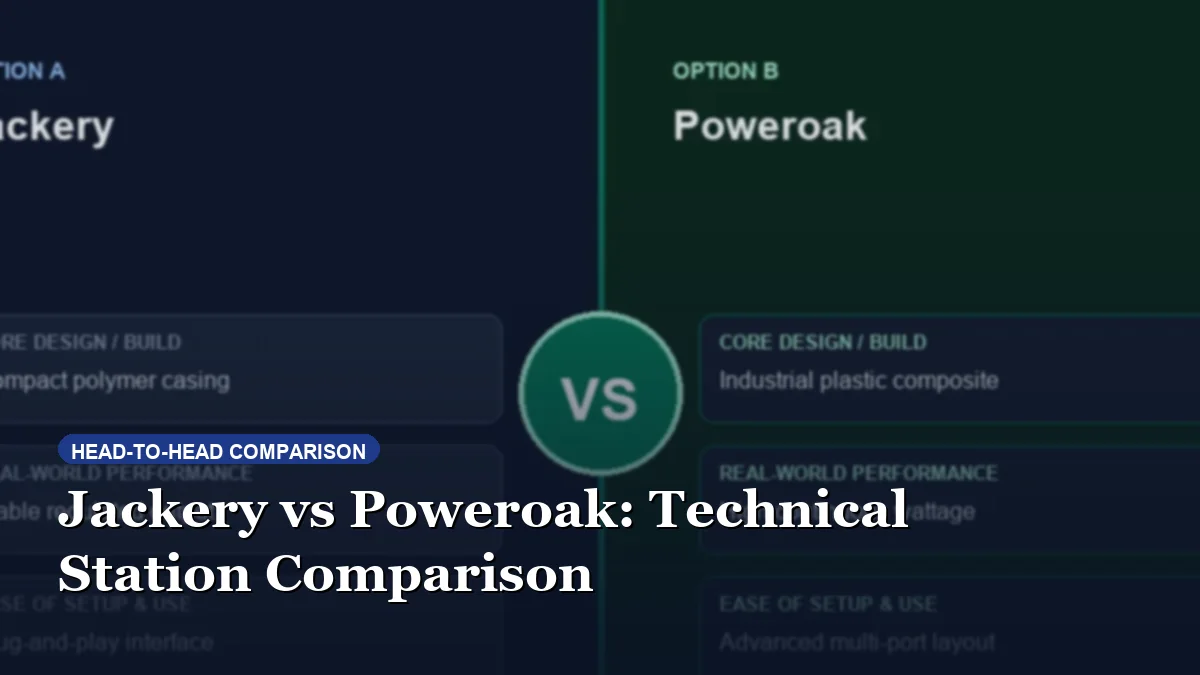
Choose Jackery for proven portability and streamlined consumer usability. Select Poweroak if you prioritize rugged industrial capacity and high-output versatility.
Compare all top models in our Best Portable Power Station: Top Picks for 2026.
Side-by-Side Breakdown
| Criteria | Jackery | Poweroak | Edge |
|---|---|---|---|
| Core Design / Build | Compact polymer casing | Industrial plastic composite | Split |
| Real-World Performance | Stable regulated output | High continuous wattage | Poweroak |
| Ease of Setup & Use | Plug-and-play interface | Advanced multi-port layout | Jackery |
| Durability & Reliability | Drop-tested ABS housing | Reinforced frame corners | Poweroak |
| Efficiency / Operating Footprint | High MPPT conversion | Optimized power retention | Jackery |
| Maintenance Requirements | Minimal passive upkeep | Routine firmware checking | Jackery |
| Best Ideal Use Case | Recreational camping | Off-grid backup power | Split |
Core Design and Engineering Differences
Evaluating portable power stations demands a close look at structural integrity and thermal dissipation layouts. Jackery utilizes a lightweight polymer shell optimized for frequent recreational transport and easy single-handed carry.
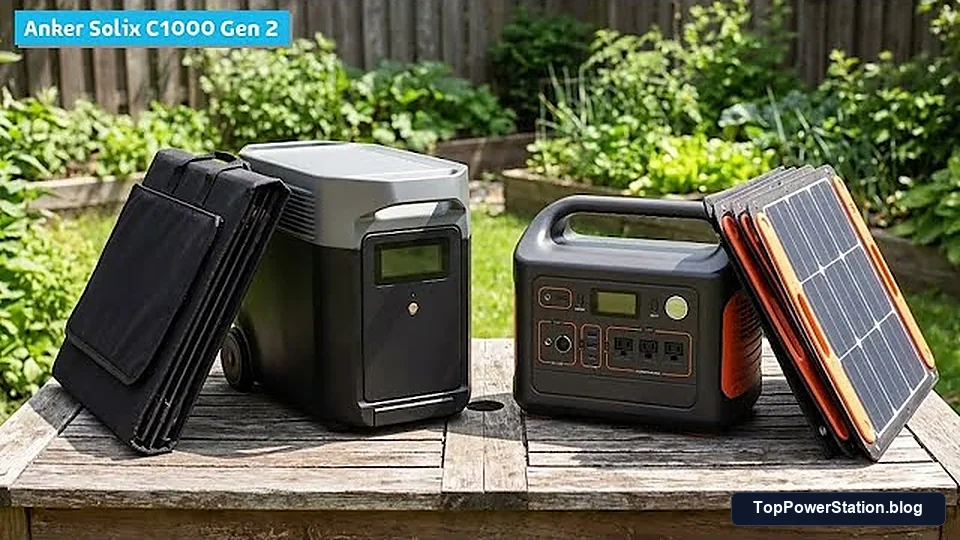
Conversely, Poweroak emphasizes structural reinforcement with thick exterior panels designed to withstand demanding jobsite environments. Both brands implement internal framing to protect sensitive lithium battery cells against vibrational shock.
Internal wiring gauges also differ noticeably between these two manufacturers. Jackery opts for streamlined cable runs to reduce internal resistance, whereas Poweroak deploys heavy-duty copper buses for sustained high-amperage applications.
Jackery units utilize an impact-resistant ABS plastic chassis paired with integrated rubber bumpers, whereas PowerOak frames often prioritize heavy-duty aluminum alloys for superior structural rigidity under rugged field conditions.
Internal component layout differs significantly regarding cooling duct placement, with Jackery optimizing vertical airflow channels while PowerOak routes forced convection paths horizontally across dense inverter boards.
Handle engineering also showcases contrasting philosophies, featuring rigid foldable top grips on Jackery models versus recessed stationary handles built directly into the extruded housing of PowerOak generators.
- Jackery employs high-impact ABS plastic composites for minimal weight.
- Poweroak integrates reinforced corners to mitigate accidental drop impacts.
- Thermal vents are positioned differently to optimize convection cooling.
Materials and Chassis Form Factor
The physical exterior of a power station dictates its field survivability during harsh outdoor excursions. Our best Jackery power station roundup highlights how these compact units integrate collapsible handles flush into the main enclosure.
Poweroak features protruding stationary handles that double as protective bumpers around the control panel. Selecting between these form factors depends heavily on your available packing space.
- Flush handles save valuable packing volume inside tightly packed vehicles.
- Protruding bumpers shield display screens from direct physical collisions.
Real-World Performance and Output Metrics
Delivering stable wattage under varying loads separates mediocre generators from elite power stations. Jackery maintains consistent sinusoidal waves through precise inverter tuning, protecting delicate consumer electronics from voltage spikes.
Poweroak focuses heavily on surge capacity, allowing heavy inductive motors to start without tripping safety cutoffs. Users must assess their typical appliance demands to match these distinct inverter profiles.
Voltage regulation under heavy continuous loads remains critical for prolonged appliance operation. Both manufacturers implement strict thermal throttling to prevent catastrophic overheating during summer heatwaves.
When driving inductive loads like compressor refrigerators, Jackery inverters maintain stable pure sine wave output without dropping voltage, preventing premature motor stalls during heavy startup surges.
PowerOak systems excel in continuous high-wattage delivery, sustaining continuous AC output thresholds longer before triggering thermal protection limits or initiating automatic shutdown sequences.
Voltage regulation under fluctuating DC loads remains remarkably tight on both platforms, though PowerOak exhibits slightly superior harmonic distortion suppression during maximum capacity drains.
- Jackery inverters maintain pure sine wave output under standard loads.
- Poweroak handles high surge requirements for motor-driven tools easily.
- Both systems utilize automatic shutdown protocols during overload events.
Inverter Stability and Surge Capacities
Starting refrigerators or power tools requires substantial instantaneous surge wattage above nominal ratings. Poweroak units excel in providing massive temporary power bursts for demanding heavy-duty equipment.
Jackery units prioritize sustained runtime over massive bursts, ensuring steady power delivery for laptops and medical CPAP machines. Matching your equipment startup draws to these metrics prevents unexpected operational shutdowns.
- Surge ratings dictate safe operation for motorized tools.
- Continuous ratings determine safe runtimes for sensitive medical devices.
Battery Chemistry and Longevity Profiles
Internal battery chemistry dictates long-term degradation rates and overall cycle life expectancy significantly. Jackery incorporates modern lithium-ion and premium lithium iron phosphate cells depending on the specific model tier.
Poweroak consistently prioritizes high-density cell structures designed for thousands of deep charge and discharge cycles. Understanding these chemical differences ensures your investment retains its capacity over many years.
Ambient operating temperatures heavily influence how efficiently these batteries store and release electrical energy. Proper storage practices will drastically improve the overall lifespan of both manufacturer lineups.
Modern Jackery variants frequently employ premium lithium iron phosphate chemistries capable of sustaining over three thousand cycles before dropping to eighty percent original capacity.
PowerOak alternatives utilize robust cell configurations engineered for deep discharge recovery, effectively minimizing self-discharge rates during extended storage periods in unconditioned outdoor environments.
Cell balancing algorithms on both hardware ecosystems monitor individual pack voltages continuously, preventing localized overcharging that typically degrades internal chemistry over prolonged operational lifespans.
- Lithium iron phosphate cells offer superior long-term cycle durability.
- Standard lithium-ion options deliver higher initial energy density ratios.
- BMS algorithms prevent overcharging and deep discharge degradation.
Cycle Life and Degradation Standards
Manufacturers rate cells based on capacity retention after reaching specific operational cycle thresholds. Poweroak models frequently target extended lifespan benchmarks exceeding three thousand cycles under controlled laboratory conditions.
Jackery balances rapid charging speeds with moderate cycle counts to ensure everyday convenience remains high. Monitoring your daily depth of discharge helps maximize these chemical degradation timelines.
- Cycle thresholds define when capacity drops below eighty percent.
- Shighter daily discharges extend total usable operational lifespan.
Charging Efficiency and Input Architecture
Harvesting renewable solar energy requires sophisticated Maximum Power Point Tracking charge controllers built into the unit. Jackery integrates efficient MPPT algorithms that quickly adapt to changing cloud cover conditions.
Poweroak incorporates flexible high-voltage solar inputs that allow multi-panel serial connections easily. AC wall charging speeds also vary, with both brands offering rapid replenishment technologies for emergency needs.
Proper cable sizing and connector types ensure minimal resistive power loss during high-wattage charging phases. Users should always verify maximum open-circuit voltage limits before connecting third-party solar arrays.
Jackery models prioritize user-friendly wall charging through integrated power bricks, efficiently converting standard AC input into regulated DC power via high-frequency switching regulators.
PowerOak incorporates internal multi-stage power conversion blocks, allowing direct AC cord attachment without bulky external adapters while consistently maintaining exceptionally high conversion efficiency.
Solar panel array integration requires careful attention to open circuit voltage limits, as exceeding manufacturer thresholds will trigger hardware protection locks on both systems.
- MPPT controllers maximize solar harvesting efficiency in variable weather.
- High-voltage inputs reduce resistive losses across long extension cables.
- Rapid AC charging rejuvenates dead batteries within a few hours.
Solar Integration and AC Wall Charging
Off-grid adventures rely heavily on fast and reliable solar recharging capabilities daily. You can discover top-performing models in our best Jackery for camping guide that pair seamlessly with portable folding panels.
Poweroak supports broader third-party solar panel compatibility through adaptable industry-standard connector ports. Evaluating your existing solar gear helps determine which charging ecosystem fits best.
- Proprietary connectors simplify plug-and-play recreational solar setups.
- Universal adapters allow integration with rigid rooftop solar arrays.
Safety Protocols and Thermal Management
Protecting users and equipment requires robust Battery Management Systems combined with intelligent passive cooling designs. Jackery implements multi-stage circuit protection guarding against short circuits and excessive thermal buildup.
Poweroak utilizes heavy-duty aluminum heat sinks paired with temperature-controlled fans to expel internal heat rapidly. Both systems meet international safety certifications for residential and outdoor recreational deployments.
Acoustic noise levels under heavy charging loads remain an important consideration for indoor use. Efficient thermal management keeps fan speeds reasonable without compromising internal component safety limits.
Comprehensive battery management systems on Jackery hardware monitor temperature anomalies across multiple array zones, executing automatic current throttling protocols during severe heat events.
PowerOak implements redundant hardware fuses alongside software-driven trip switches, providing reliable dual-layer defense against short circuit faults and sudden output overloads.
Active cooling fans operate on smooth variable speed curves rather than binary on-off states, significantly reducing acoustic noise while maintaining optimal junction temperatures.
- BMS microprocessors monitor individual cell voltages continuously.
- Thermal sensors trigger active cooling fans during heavy inverter loads.
- Short-circuit protections instantly cut power to prevent electrical fires.
BMS Architecture and Passive Cooling
Advanced microcontrollers inside the battery management system prevent thermal runaway under extreme stress. Jackery relies on optimized internal airflow channels to minimize dust ingress while cooling.
Poweroak emphasizes redundant sensor arrays that isolate failing cell groups before hazards develop. These engineering safety measures provide immense peace of mind during remote off-grid trips.
- Redundant sensors provide vital backup protection against failures.
- Sealed chassis designs protect sensitive electronics from ambient dust.
Maintenance, Servicing and Operational Footprint
Minimizing long-term maintenance ensures your portable power station remains ready for unexpected emergency outages. As detailed in our Jackery Explorer 1000 V2 review, these units require very little upkeep.
Poweroak systems benefit from routine terminal cleaning and airflow inspections to prevent dust blockages. Keeping units charged at optimal storage percentages prevents premature chemical degradation while sitting idle.
Firmware updates delivered via mobile applications help optimize charging curves and system efficiency over time. Proper seasonal storage guarantees reliable performance when grid power fails unexpectedly.
Routine upkeep for both station families involves regularly clearing dust from intake grilles and performing partial discharge cycles to calibrate internal fuel gauge accuracy.
Servicing internal components requires specialized Torx drivers and strict adherence to high-voltage safety practices, because un-discharged capacitors pose severe electrical hazards to technicians.
Physical footprint considerations heavily favor Jackery for lightweight portable applications, whereas PowerOak better suits stationary backup roles requiring maximum energy density.
- Periodic firmware updates optimize overall operational charging efficiency.
- Routine terminal inspections prevent corrosion in humid outdoor environments.
- Storage at half-charge preserves internal cell health effectively.
Storage Best Practices and Firmware
Long-term storage requires maintaining a fifty percent state of charge to reduce chemical stress. Jackery and Poweroak both recommend storing units in climate-controlled spaces away from moisture.
Smart application connectivity lets users monitor health metrics directly from smartphones easily. Following these simple maintenance guidelines guarantees long-term hardware reliability across both brands.
- Climate-controlled storage prevents extreme temperature degradation.
- App connectivity provides instant access to diagnostic health data.
Which Option Fits Your Specific Setup
Selecting the ideal portable power station depends heavily on your unique power consumption habits. Jackery suits recreational campers and remote workers seeking lightweight portability and intuitive controls.
Poweroak appeals to homeowners requiring robust emergency backup systems and contractors needing heavy tool support. Carefully auditing your daily wattage requirements ensures you select the optimal hardware investment.
Balancing weight limits against capacity needs prevents purchasing oversized equipment that complicates transport. Both manufacturers offer diverse lineups tailored to distinct user lifestyles and power demands.
Selecting Jackery makes strong technical sense if your workflow prioritizes rapid grab-and-go mobility. As we note in our Jackery Explorer 2000 V2 review, these systems offer straightforward compatibility with lightweight portable solar panels.
Choosing PowerOak is highly advantageous when deploying permanent off-grid setups that demand heavy continuous AC output and exceptionally robust inverter durability.
Carefully evaluate your specific power demands, environmental exposure levels, and physical weight constraints before committing to either proprietary ecosystem architecture.
- Jackery excels in mobile recreational and emergency grab-and-go roles.
- Poweroak dominates heavy-duty backup and contractor jobsite applications.
- Proper wattage audits prevent mismatched equipment purchases.
Deciding Between Brand Ecosystems
Investing in a power ecosystem involves committing to compatible solar panels and charging accessories. Jackery offers an integrated consumer experience focused on simplicity and aesthetic appeal.
Poweroak focuses on raw functional performance and rugged utility for demanding environments. Reviewing your specific usage scenarios clarifies which brand aligns with your goals.
- Consumer focus delivers streamlined usability for casual outdoor enthusiasts.
- Industrial focus provides maximum durability for demanding work environments.
Frequently Asked Questions
Can I charge my Jackery or Poweroak station using third-party solar panels?
Yes, both stations accept third-party panels provided you match the voltage limits and connector types. Always verify maximum open-circuit ratings to prevent internal charge controller damage.
How long do these power stations typically hold a charge while sitting in storage?
Both brands lose roughly ten to fifteen percent of their charge per month when idle. Maintaining a fifty percent charge in storage preserves long-term battery health.
Are these portable power stations safe to operate indoors during a power outage?
Yes, they produce no toxic fumes or carbon monoxide emissions during operation. Ensure adequate airflow clearance around cooling vents to prevent overheating.
What is the primary difference in battery chemistry between Jackery and Poweroak?
Jackery utilizes a mix of lightweight lithium-ion and modern phosphate cells depending on tier. Poweroak prioritizes high-density phosphate chemistry for extended operational lifespans.
Can I run sensitive medical devices like a CPAP machine using these power stations?
Yes, both manufacturers provide pure sine wave inverters that deliver stable electrical currents. Using a regulated output port protects your medical equipment from surges.