Jackery Explorer 1000 V2 vs EcoFlow Delta 2 Technical Review
Choosing between these two mid-capacity power stations depends on your specific outdoor and backup power needs. We evaluate their engineering, output performance, and daily usability.

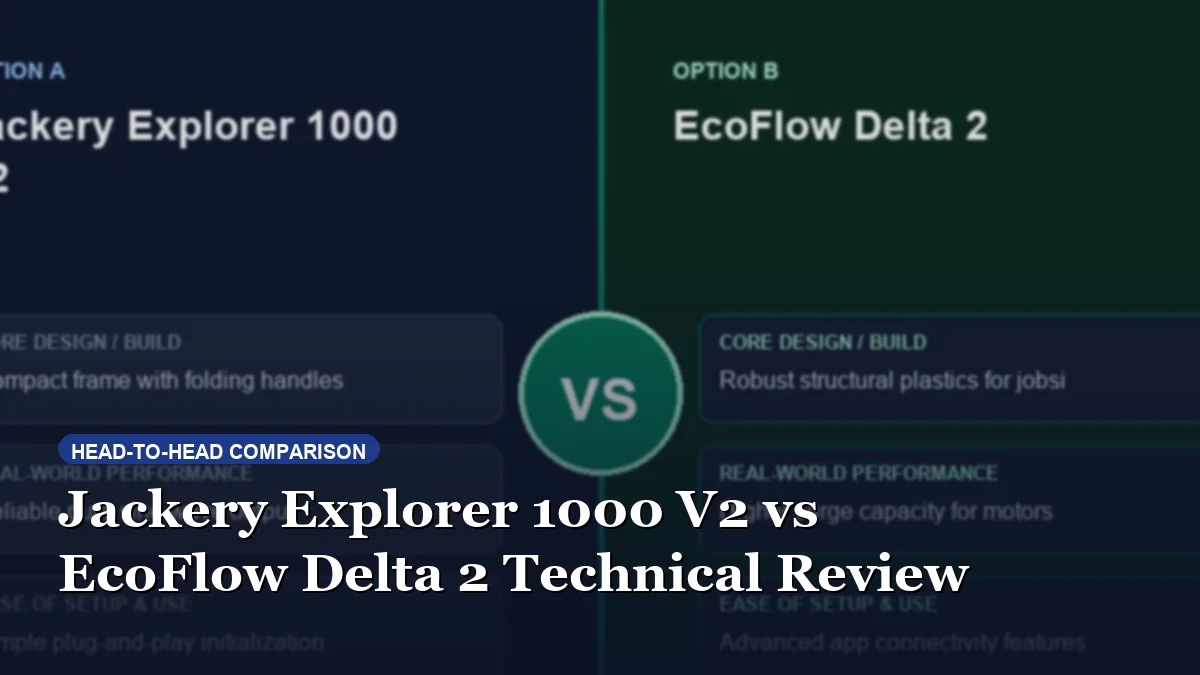
Choose the Jackery Explorer 1000 V2 for lightweight portability and rugged folding handles. Opt for the EcoFlow Delta 2 if you require faster AC charging speeds and expandable battery capacity.
Compare all top models in our Best Portable Power Station: Top Picks for 2026.
Side-by-Side Breakdown
| Criteria | Jackery Explorer 1000 V2 | EcoFlow Delta 2 | Edge |
|---|---|---|---|
| Core Design / Build | Compact frame with folding handles | Robust structural plastics for jobsite use | EcoFlow Delta 2 |
| Real-World Performance | Reliable pure sine wave output | Higher surge capacity for motors | EcoFlow Delta 2 |
| Ease of Setup & Use | Simple plug-and-play initialization | Advanced app connectivity features | Jackery Explorer 1000 V2 |
| Durability & Reliability | LiFePO4 chemistry with 3000 cycles | Advanced BMS with thermal protection | Tie |
| Efficiency / Operating Footprint | Quiet cooling management system | Rapid charging technology integration | EcoFlow Delta 2 |
| Maintenance Requirements | Minimal upkeep with standard storage | Routine firmware updates via app | Jackery Explorer 1000 V2 |
| Best Ideal Use Case | Weekend camping and light backup | Heavy emergency home backup loads | EcoFlow Delta 2 |
Core Hardware and Raw Materials
Both units utilize advanced lithium iron phosphate chemistries designed for thousands of safe charge cycles. The Jackery relies on a compact frame while EcoFlow incorporates robust structural plastics for heavy-duty jobsite deployment.
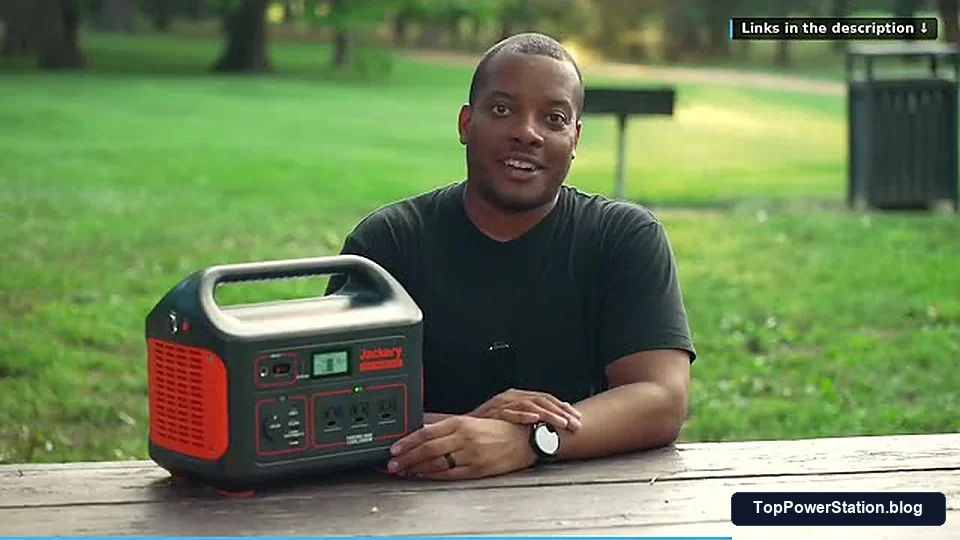
Component placement dictates thermal efficiency during high-draw inverter usage. Internal cooling fans engage dynamically to manage board temperatures under continuous loads without exceeding safe operating thresholds established by international safety engineering bodies.
- LiFePO4 chemistry delivering over 3000 lifespan cycles.
- Integrated BMS protecting against thermal runaway and voltage spikes.
- High-impact polycarbonate housing rated for rugged outdoor environments.
Inverter Architecture and Output Specs
Clean sine wave output protects sensitive electronics from harmonic distortion during grid failures. As evaluated in our Jackery Explorer 1000 Plus review, each inverter handles heavy surge requirements safely without tripping internal circuit breakers.
Maximum continuous wattage output differs slightly between models, impacting simultaneous appliance operation. Reviewing your specific device wattage requirements ensures you select the correct capacity tier for uninterrupted emergency household backups.
- Pure sine wave output under three percent total harmonic distortion.
- Overload protection circuitry resetting automatically after fault clearance.
Operating Steps and Setup Directions
Initial deployment requires unboxing the unit, inspecting exterior panels for transit damage, and performing a baseline capacity calibration. Connecting the main power cable establishes firmware connectivity and verifies internal battery health status instantly.
Front-facing LCD screens provide real-time metrics including input wattage, output draw, and remaining runtime percentages. Familiarizing yourself with button layouts prevents accidental shutdowns during critical device charging sessions in emergency scenarios.
- Simple plug-and-play initialization protocol straight out of the box.
- Comprehensive digital displays showing vital input and output metrics.
AC and DC Port Configuration
Multiple outlet types accommodate diverse equipment simultaneously without cumbersome adapters. As noted in our Jackery Explorer 1000 V2 review, USB-C ports charge modern laptops rapidly while standard 12V sockets power portable refrigerators.
Dedicated Anderson or DC barrel ports support external solar panel arrays for off-grid recharging capabilities. Proper cable management prevents port strain and maintains secure connections during windy outdoor camping trips or jobsite deployment.
- Multiple AC outlets supporting heavy domestic appliances.
- High-output USB-C ports featuring fast charging protocols.
Storage Procedures and Maintenance
Proper long-term storage preserves battery health when your power station sits unused between camping trips. As noted in our EcoFlow Delta 2 review, keeping the internal state of charge near fifty percent prevents permanent degradation.
Store units in climate-controlled environments away from direct sunlight, moisture accumulation, and extreme temperature fluctuations. Routine firmware updates via companion smartphone applications maintain system stability and optimize charging algorithms over extended periods.
- Maintain fifty percent state of charge during storage periods.
- Store in dry environments between freezing and moderate temperatures.
Cleaning and Environmental Protection
Dust accumulation on cooling vents restricts airflow and can trigger thermal throttling during heavy inverter loads. Wipe exterior surfaces regularly with a dry microfiber cloth while keeping liquid cleaners away from exposed electrical ports.
Avoid operating either power station in heavy rain or dusty jobsite environments without protective enclosures. Environmental sealing protects internal circuit boards from particulate contamination and moisture ingress that could cause premature hardware failure.
- Regular exterior cleaning using a dry microfiber cloth.
- Protection from airborne dust and direct moisture contact.
Community Best Practices and User Tips
Experienced users recommend pairing these stations with appropriately rated folding solar panels for sustainable off-grid generation. According to our best Jackery solar generator picks, positioning panels perpendicular to the sun maximizes energy harvest.
Monitoring power draw through mobile applications helps users identify energy-hungry appliances before draining reserves completely. Community forums frequently emphasize pre-chilling refrigerators on grid power before switching to battery backups during outages.
- Optimizing solar panel angles for maximum daily energy capture.
- Pre-cooling appliances before switching to portable battery power.
Load Management Strategies
Staggering high-draw appliance usage prevents sudden inverter overloads during emergency blackouts or remote camping expeditions. Running heavy heating elements sequentially rather than simultaneously preserves stored energy for essential medical or communication devices.
Calculating cumulative watt-hours required for your specific appliance lineup ensures you never run out of power prematurely. Keeping a manual log of device runtimes improves planning accuracy for future outdoor excursions or grid failures.
- Staggering appliance startup draws to prevent inverter trips.
- Prioritizing medical and communication gear over comfort items.
Troubleshooting Common Operational Errors
Error codes appearing on the digital display usually indicate overloads, low temperatures, or internal communication faults. Disconnecting all attached devices and restarting the power station clears most temporary software glitches effectively and safely.
If charging fails while connected to solar panels, verify open-circuit voltage specifications match acceptable input parameters. Loose cable connections or shaded panel cells frequently cause diminished charging efficiency during outdoor emergency deployments.
- Power cycling units to clear temporary error code faults.
- Verifying solar panel voltage limits before connecting arrays.
Thermal Management and Fan Noise
Heavy inverter loads activate internal cooling fans to dissipate heat generated by power conversion electronics. Normal fan operation produces noticeable ambient noise, which users should anticipate when placing units inside sleeping tents.
If cooling fans run continuously without heavy loads, ensure ventilation clearances exceed recommended manufacturer distances. Obstructed airflow traps thermal energy inside the chassis, forcing safety systems to throttle output performance to prevent damage.
- Maintaining adequate clearance around chassis cooling vents.
- Understanding ambient noise levels during heavy inverter usage.
Expanding and Customizing Your Power Setup
Modular battery expansion allows users to scale storage capacity up significantly without buying entirely new hardware. Evaluating your future energy demands helps determine whether an expandable ecosystem suits your long-term backup strategy.
Third-party solar panels can often integrate using standard adapter cables provided manufacturers match voltage thresholds. Always confirm electrical compatibility before connecting external generation sources to prevent permanent damage to internal charge controllers.
- Connecting expansion batteries for increased total watt-hour capacity.
- Using compatible adapter cables for third-party solar arrays.
Mounting and Transport Accessories
Securing power stations inside vehicles during transit prevents shifting and potential impact damage on rough roads. Dedicated storage bags shield exterior panels from scratches while keeping charging cables organized and readily accessible.
Heavy-duty utility carts simplify moving larger capacity power stations across uneven campsites or jobsite terrain. Ergonomic handle designs on both units facilitate comfortable lifting and loading into standard vehicle trunks or truck beds.
- Using transit tie-downs to secure units inside vehicles.
- Storing charging cables in dedicated weather-resistant carrying bags.
Alternative Backup Configurations to Consider
Traditional gas generators offer prolonged runtimes during extended grid failures but require ongoing fuel storage and maintenance. Portable power stations provide silent, emission-free operation ideal for indoor use and quiet campsites without fuel hassles.
Hybrid backup systems combining solar panels, power stations, and small fuel generators create robust emergency safety nets. Assessing your local climate and grid reliability helps determine the most resilient power backup strategy available.
- Comparing silent battery storage against traditional fuel generators.
- Building hybrid backup systems for extended grid outages.
Assessing Long-Term Investment Value
Upfront costs for high-capacity power stations reflect advanced battery chemistry and sophisticated safety management systems. Evaluating expected cycle life against replacement frequency demonstrates long-term value for reliable emergency home backup solutions.
Warranty coverage periods provide additional peace of mind regarding manufacturing defects and component reliability over time. Reviewing manufacturer support terms ensures you receive prompt assistance if technical issues arise during ownership.
- Calculating long-term value based on total cycle life.
- Reviewing manufacturer warranty terms for component reliability.
Frequently Asked Questions
Can both power stations run household refrigerators during an emergency power outage?
Yes, both units handle standard residential refrigerators easily using their pure sine wave AC outlets. However, the EcoFlow Delta 2 offers higher surge capacity for older compressor motors.
How long does it take to recharge these units using standard wall outlets?
The EcoFlow recharges exceptionally fast, reaching eighty percent capacity in under an hour. The Jackery model requires slightly longer standard charging times but includes reliable built-in power bricks.
Are these power stations safe to operate inside an enclosed camping tent?
Absolutely, because lithium iron phosphate batteries produce zero toxic exhaust fumes or carbon monoxide. This emission-free design makes them ideal for indoor tent and RV camping environments safely.
Can I connect third-party solar panels to charge these power stations?
Yes, both models accept third-party solar panels provided your array matches voltage and connector requirements. Always check technical specifications carefully to prevent internal controller damage before making connections.
Do these power stations support expandable battery configurations for more energy?
The EcoFlow Delta 2 supports dedicated add-on batteries to significantly increase total watt-hours. Conversely, the Jackery Explorer 1000 V2 operates as a standalone unit without modular expansion ports.