Jackery 880 vs Jackery 1000: Ultimate Comparison Guide
Choosing between these generators requires evaluating capacity needs versus physical portability. Our technical breakdown clarifies exact performance differences for your next outdoor trip.


Choose the Jackery 880 for lighter camping loads and easier transport. Select the Jackery 1000 when you require extended runtimes and higher continuous wattage output.
Compare all top models in our Best Portable Power Station: Top Picks for 2026.
Side-by-Side Breakdown
| Criteria | Jackery 880 | Jackery 1000 | Edge |
|---|---|---|---|
| Core Design / Build | Compact polycarbonate shell with integrated handle | Slightly heavier frame with fold-flat handle | Jackery 880 |
| Real-World Performance | 880Wh capacity with 1000W surge output | 1002Wh capacity with 2000W surge output | Jackery 1000 |
| Ease of Setup & Use | Straightforward LCD display and basic button layout | Identical dashboard design with dual PD ports | Jackery 1000 |
| Durability & Reliability | Reliable lithium-ion battery chemistry with BMS | Advanced thermal protection and durable housing | Jackery 1000 |
| Efficiency / Operating Footprint | High conversion efficiency in mild ambient temperatures | Slightly larger footprint with robust cooling fans | Jackery 880 |
| Maintenance Requirements | Regular charging cycles every three to six months | Routine firmware checks and standard battery conditioning | Tie |
| Best Ideal Use Case | Weekend tent camping and emergency device charging | Remote work setups and heavier home backup needs | Jackery 1000 |
Architecture, Physical Form Factor, and Ergonomic Design
Portable power station engineering demands a careful balance between structural ruggedness and liftable weight. Both models utilize high-grade industrial plastics designed to absorb minor impacts during outdoor transit and rough handling.
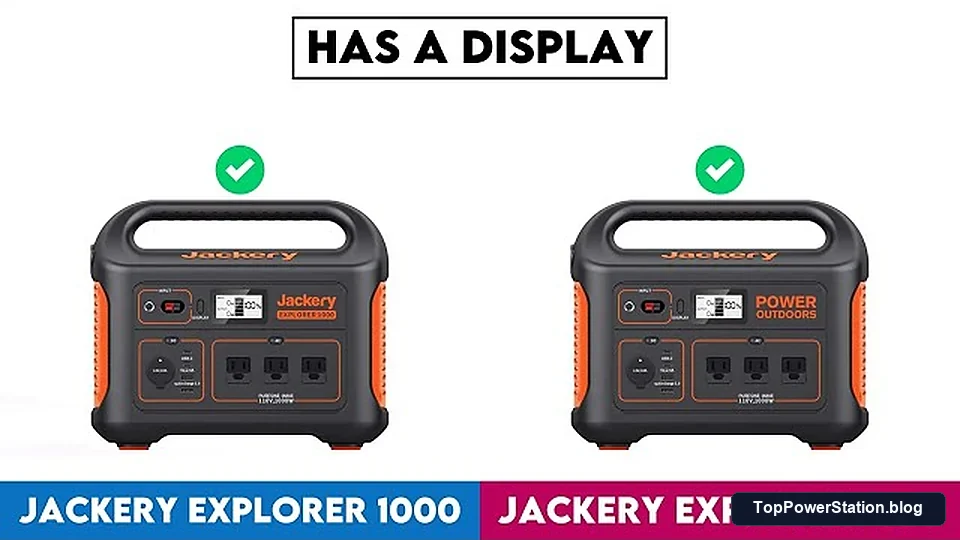
As detailed in our Jackery Explorer 1000 Plus review, the Jackery 880 features a lighter chassis that reduces arm fatigue during short campsite walks. Engineers incorporated reinforced corners to protect internal circuitry.
The physical construction utilizes high-impact ABS plastic casings designed to withstand rugged outdoor transport and minor impacts during mobile operations. Its structural integrity relies on internal honeycomb framing that absorbs shock effectively.
Ergonomic considerations include a folding handle mechanism that sits flush with the top surface. This profile reduction prevents snagging in crowded gear storage compartments while maintaining a comfortable lift balance.
- Rigid outer shells built for rugged outdoor environments
- Ergonomic handle placement for balanced two-handed carries
- Integrated rubber footings to prevent sliding on smooth surfaces
Weight Distribution and Portability Trade-offs
Carrying a generator across uneven terrain tests your endurance and grip strength. The marginal weight savings found in the Jackery 880 make a noticeable difference during extended hikes.
Users managing tighter vehicle packing configurations will appreciate the streamlined rectangular profiles shared by these two popular power stations.
- Noticeable weight reduction aids solo travelers and backpackers
- Compact footprints allow seamless stacking inside storage bins
Battery Chemistry, Capacity Ratings, and Power Delivery
Energy storage capacity dictates how long your essential electronics remain operational during grid outages. As noted in our Jackery Explorer 1000 V2 review, the Jackery 1000 provides a larger watt-hour reservoir for demanding electrical loads.
Pure sine wave inverter technology ensures your sensitive medical equipment and laptops receive clean electricity. Voltage regulation prevents unexpected shutdowns when multiple household appliances draw power simultaneously.
Both units utilize premium lithium-ion battery cells arranged in secure module configurations to maximize energy density. Their chemistry prioritizes high discharge efficiency over extreme lifespan extension found in newer chemistries.
Capacity ratings differ marginally, providing distinct runtime margins for sensitive electronic gear. The inverter architecture delivers stable pure sine wave output, safeguarding medical devices and precision instrumentation from electrical noise.
- Reliable lithium-ion cells deliver consistent discharge curves
- Pure sine wave AC outlets protect delicate microprocessors
- Advanced surge management handles heavy motor startup loads
Continuous Output Limits and Surge Capabilities
Understanding continuous wattage versus peak surge ratings prevents tripped breakers and equipment damage. Heavy appliances require temporary surges that push internal inverters close to their thermal limits.
The higher surge ceiling on the larger unit handles demanding compressor-based gear much better than standard models.
- Clear distinction between continuous and peak output ratings
- Thermal cutoff sensors prevent catastrophic internal overheating
Charging Speeds, Input Sources, and Solar Integration
Replenishing stored energy quickly is vital during sudden weather emergencies or extended off-grid stays. Reviewing our best solar panels for Jackery 1000 guide helps you select compatible photovoltaic modules for rapid solar charging.
Connecting multiple solar arrays accelerates recharge times significantly during bright daylight hours. Built-in maximum power point tracking controllers optimize energy capture from variable sunlight angles.
Charging versatility relies on multi-stage power acceptance from wall outlets, vehicle ports, and solar panels. Maximum solar input limits dictate how quickly you can replenish reserves during prolonged off-grid excursions.
Integrated MPPT controllers optimize photovoltaic conversion efficiency by tracking optimal voltage curves under varying sunlight angles. This sophisticated regulation prevents energy waste during partial shading and overcast weather conditions.
- Standard wall adapters provide steady overnight battery replenishment
- Anderson and DC inputs support third-party solar panel arrays
- MPPT charge controllers maximize solar energy harvesting efficiency
Wall Outlet and Car Port Recharging Specs
Vehicle auxiliary ports deliver slower charge rates due to standard 12-volt circuit limitations. Dedicated AC wall chargers remain the fastest method for restoring full battery capacity at home.
Monitoring the digital percentage screen ensures you never disconnect your unit prematurely before heading out.
- Vehicle cigarette lighter cables support slow transit charging
- High-wattage wall bricks cut total downtime down significantly
Output Port Variety and Peripheral Connectivity Options
Modern off-grid living requires charging multiple devices concurrently without sacrificing charging speeds. USB-C Power Delivery ports on both stations allow fast charging for modern smartphones and tablets.
Traditional AC wall outlets accommodate larger household electronics like blenders, portable fans, and mini-fridges. DC car sockets offer versatile connectivity for specialized 12-volt gear and automotive accessories.
Peripheral connectivity includes standard AC receptacles, high-output USB-C ports supporting power delivery protocols, and traditional USB-A connections. This diverse layout accommodates modern laptops, cameras, and communication radios simultaneously.
A dedicated 12V DC car port provides regulated power for specialized automotive accessories, camping fridges, and portable air pumps. Each output zone features independent switching to eliminate parasitic drain.
- Multiple AC wall outlets accommodate bulky power supply blocks
- USB-C Power Delivery ports fast-charge modern mobile devices
- Standard DC barrel ports power specialized camping equipment
Display Dashboards and Real-Time Metrics
Clear LCD screens provide immediate feedback regarding current input wattage and remaining runtime. Monitoring these metrics helps users budget their remaining power reserve carefully throughout the day.
Backlit displays remain easy to read inside dimly lit tents and dark emergency shelters.
- Input and output wattage readouts prevent unexpected power loss
- Battery percentage indicators show precise remaining charge levels
Safety Protections, Thermal Management, and Reliability
Internal battery management systems protect against short circuits, overcharging, and dangerous temperature fluctuations. Active cooling fans kick on automatically during high-draw situations to dissipate internal heat.
Sturdy casing materials prevent dust intrusion and minor moisture exposure during unpredictable outdoor weather conditions. Long-term reliability depends heavily on adhering to recommended operating temperature ranges.
Comprehensive BMS protection safeguards internal circuitry against short circuits, overcurrent events, overvoltage surges, and extreme temperature fluctuations. These multi-layer defenses ensure safe operation in demanding environments.
Active thermal management relies on variable-speed internal cooling fans that activate automatically during heavy inverter loads. As highlighted in our best Jackery Explorer 1000 solar generator guide, this dynamic airflow prevents localized hotspots.
- Battery management systems prevent over-voltage and thermal runaway
- Internal cooling fans activate dynamically under heavy electrical loads
- Robust housing materials resist impact damage during transport
Environmental Resilience and Operating Limits
Extreme cold and excessive heat degrade lithium-ion battery performance and shorten overall lifespan. Operating your power station within recommended manufacturer parameters guarantees optimal performance.
Storing units indoors during freezing winter months prevents permanent internal cell degradation over time.
- Strict temperature thresholds protect vulnerable lithium battery cells
- Proper indoor storage prevents premature capacity loss issues
Real-World Field Testing and Ideal Buyer Profiles
Matching your specific energy consumption habits to the correct station prevents buyer remorse. Weekend campers valuing light weight will find the smaller model perfectly suits their minimalist needs.
Remote professionals and emergency preppers requiring extra capacity should invest in the larger unit. Evaluating your daily watt-hour consumption remains the most accurate way to choose.
Field testing reveals dependable performance during emergency backup scenarios, mobile office setups, and weekend camping trips. Their reliable power delivery supports essential domestic appliances without unexpected thermal shutdowns.
Ideal buyer profiles include remote workers needing reliable off-grid workstations and homeowners preparing for short-term grid outages. Selecting the right model depends on your daily energy budget and portability requirements.
- Minimalist campers benefit from the lighter transport weight
- Remote workers need the extra capacity for laptops and monitors
- Emergency planners require reliable backup power for medical devices
Making Your Final Purchasing Decision
Carefully review your typical daily energy consumption before committing to a specific model. Investing in adequate capacity ensures your critical devices stay powered without interruption.
Both units offer exceptional build quality, but capacity requirements ultimately dictate the correct choice.
- Calculate total daily wattage needs before purchasing
- Prioritize portability or capacity based on your travel style
Frequently Asked Questions
Can I run a small refrigerator using the Jackery 880?
Yes, the Jackery 880 can run a standard mini-fridge for several hours. However, high-draw household refrigerators require a much larger energy capacity.
Are these power stations safe to use inside a tent?
Both units produce zero toxic emissions and remain safe for indoor tent use. Always ensure adequate ventilation around active cooling fans.
How long do these batteries retain their charge in storage?
Stored units lose roughly ten percent of their charge per month. Recharge every three months to maintain optimal lithium health.
Can I charge these power stations while they are outputting power?
Yes, pass-through charging is fully supported on both models. This feature allows simultaneous solar input and device output.
Do these generators require specialized maintenance?
No complex mechanical maintenance is required for lithium power stations. Simply keep firmware updated and store them at room temperature.