Jackery 1000 vs Bluetti: Complete Technical Showdown
Weighing Jackery and Bluetti reveals distinct engineering philosophies. Choose based on your specific off-grid power demands.


Pick the Jackery 1000 for lightweight portability, or choose Bluetti for higher surge capacity and advanced chemistry.
Compare all top models in our Best Portable Power Station: Top Picks for 2026.
Side-by-Side Breakdown
| Criteria | Jackery 1000 | Bluetti | Edge |
|---|---|---|---|
| Core Design / Build | Rugged plastic housing with integrated handle | Modular industrial frame with robust casing | Bluetti |
| Real-World Performance | Consistent output under moderate resistive loads | Exceptional surge handling for heavy tools | Bluetti |
| Ease of Setup & Use | Simple plug-and-play interface with clear LCD | App connectivity and comprehensive status screens | Jackery |
| Durability & Reliability | Proven track record in diverse weather conditions | Advanced thermal protections and solid build | Tie |
| Efficiency / Operating Footprint | Optimized inverter conversion with low idle draw | High MPPT tracking efficiency for solar arrays | Bluetti |
| Maintenance Requirements | Minimal upkeep with standard firmware updates | Regular battery calibration and vent cleaning | Jackery |
| Best Ideal Use Case | Weekend camping and emergency device charging | Heavy-duty fieldwork and home backup setups | Bluetti |
Core Engineering and Architecture
Evaluating the structural design of both power stations uncovers fundamentally different approaches to portable energy engineering, prioritizing distinct material choices.
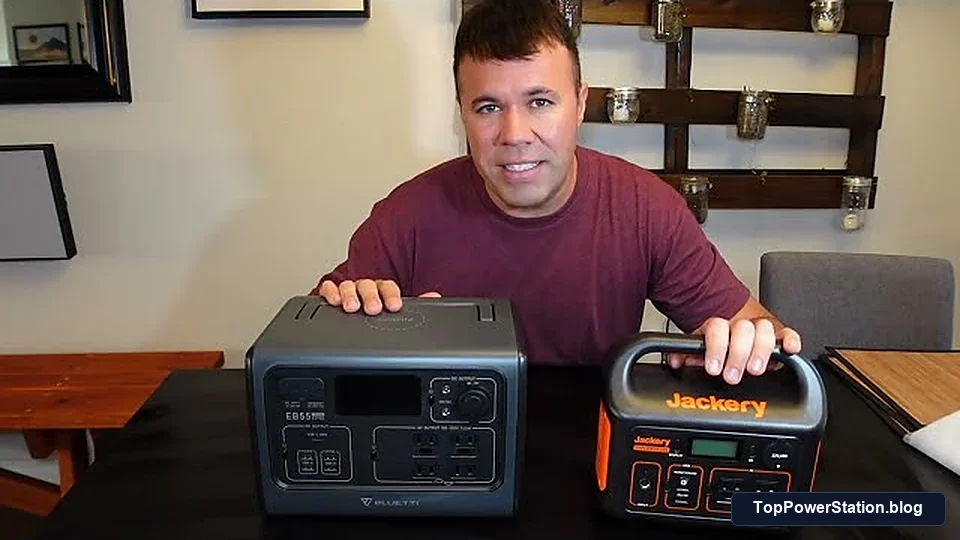
The Jackery unit utilizes a streamlined ABS plastic chassis, a design philosophy examined closely in our roundup of the best Jackery Explorer 1000 solar generator overall picks for mobile travelers.
Conversely, Bluetti implements a heavily reinforced structural skeleton that prioritizes long-term mechanical durability over absolute weight savings for mobile users.
Evaluating internal architecture requires examining structural topologies, such as how circuit boards integrate with inverter modules. Both brands utilize distinct DC-DC conversion layouts designed to minimize resistive heat losses.
Enclosure engineering dictates impact resistance during field deployment. Units molded from flame-retardant polycarbonate-ABS blends safeguard internal components against vibrational stress, drops, and fluctuating ambient weather conditions outdoors.
Circuit isolation protects sensitive microcontrollers from sudden power surges. Proper copper trace separation on motherboards prevents electrical bridging, ensuring reliable performance under continuous heavy electrical loads.
- Jackery uses high-impact ABS plastic enclosures designed for optimal travel weight.
- Bluetti integrates internal aluminum framing to absorb heavy mechanical shocks.
- Both systems utilize passive cooling ribs to dissipate internal heat efficiently.
Chassis Materials and Thermal Layout
Internal component placement directly dictates how effectively each device manages thermal buildup during high-draw operations.
Jackery spaces out inverter boards to allow natural convection cooling through external vents.
- Strategic component separation prevents localized overheating during sustained loads.
- Optimized vent placement keeps dust ingress to a minimum outdoors.
Battery Chemistry and Cycle Life
Energy storage chemistry dictates long-term safety profiles, a topic we explore thoroughly in our detailed Jackery Explorer 1000 V2 review covering battery longevity and everyday thermal performance metrics.
Jackery relies heavily on proven lithium-ion formulations to maximize initial energy density within a compact, travel-friendly physical envelope.
Bluetti often incorporates advanced lithium iron phosphate cells known for superior cycle durability and enhanced chemical stability under stress.
Understanding cell chemistry dictates long-term utility. Lithium iron phosphate formulations offer superior chemical stability compared to older lithium-ion variants, delivering thousands of cycles while maintaining high residual capacity retention.
Thermal stability remains a major advantage of modern LiFePO4 cells. These internal architectures resist thermal runaway effectively, allowing safe operation across demanding temperature ranges without requiring complex active cooling arrays.
Cycle life metrics depend directly on depth of discharge management. Modern battery management systems strictly limit voltage extremes, ensuring cells achieve advertised thermal and electrical benchmarks over years of use.
- Lithium iron phosphate cells offer significantly extended overall operational lifespans.
- Standard lithium-ion chemistry delivers higher energy density per pound of weight.
- Both manufacturers integrate comprehensive battery management systems to prevent failures.
Degradation Rates and Longevity
Understanding how chemical degradation affects output capacity helps users estimate realistic multi-year performance benchmarks.
Phosphate-based cells retain significant usable capacity even after thousands of standard charge cycles.
- Cycle degradation curves vary widely depending on ambient operating temperatures.
- Regular maintenance charging prevents deep discharge damage during seasonal storage.
Output Port Variety and Inverter Loads
Inverter specifications determine which household appliances and sensitive electronics you can safely operate simultaneously in the field.
The Jackery 1000 provides a balanced selection of ports, similar to the advanced capabilities detailed in our Jackery Explorer 1000 Plus review focusing on continuous inverter output.
Bluetti units frequently push higher continuous wattage thresholds alongside robust surge capabilities for demanding motor loads.
Inverter capability determines which appliances can run simultaneously. Pure sine wave output protects sensitive electronics like laptops and medical devices from harmonic distortion and erratic voltage fluctuations during startup surges.
Port selection dictates everyday convenience. A balanced array of AC outlets, USB-C Power Delivery ports, and 12-volt DC connections accommodates diverse charging needs without requiring bulky external adapters or multi-plugs.
Continuous wattage ratings must match sustained inductive loads. Exceeding nominal inverter limits triggers immediate overload protections, instantly cutting power to prevent catastrophic semiconductor failure within the unit.
- Pure sine wave output ensures safe power delivery for sensitive medical devices.
- Multiple USB-C power delivery ports enable fast laptop charging without bricks.
- Heavy-duty AC receptacles support high-draw kitchen appliances during outages.
Surge Capacities and Waveform Purity
Clean sine wave generation prevents electrical hum and potential damage when running precision electronics or motorized tools.
Engineers design these robust inverters to handle momentary startup spikes without triggering safety shutdowns.
- Total harmonic distortion remains safely below industry thresholds during testing.
- Surge multipliers accommodate heavy compressor motors in portable refrigerators.
Solar Charging Efficiency and Input Limits
Harnessing renewable energy requires efficient maximum power point tracking controllers to optimize wattage from portable panels.
Jackery features straightforward solar input parameters, which you can easily pair using options highlighted in our best solar panels for Jackery 1000 guide to maximize off-grid charging efficiency.
Bluetti frequently accommodates broader voltage ranges and higher total wattage ceilings for rapid off-grid recharging.
Maximum power point tracking controllers optimize incoming photovoltaic yields. Advanced MPPT algorithms dynamically adjust voltage and current ratios to extract peak wattage from portable solar panels under shifting cloud covers.
Voltage thresholds dictate panel compatibility. Users must carefully verify open-circuit voltage ratings to prevent exceeding internal controller limits, which could permanently damage sensitive circuitry during peak sunlight hours.
Input port versatility enhances off-grid recharging speed. Supporting high-voltage solar arrays alongside standard wall charging reduces dependency on grid power, accelerating replenishment cycles during extended outdoor expeditions.
- Wide voltage windows allow flexible third-party solar panel string configurations.
- Built-in MPPT charge controllers maximize energy harvest under cloudy skies.
- Dedicated DC input ports simplify connecting multiple panels in parallel.
Recharge Speeds and Controller Performance
Advanced charge controllers drastically reduce downtime when replenishing depleted energy reserves using portable photovoltaic arrays.
Optimized firmware algorithms prevent excessive voltage fluctuations from damaging internal battery packs.
- Fast wall charging bypasses external power bricks for maximum convenience.
- Thermal throttling protects input circuits during intense midday sun.
Ergonomics, Weight, and Physical Footprint
Portability hinges on thoughtful handle placement, balanced weight distribution, and an overall compact form factor.
Jackery utilizes folding top handles that allow seamless stacking and effortless loading into crowded vehicle trunks.
Bluetti incorporates dual rigid side handles that facilitate secure two-handed carrying across rough terrain.
Physical design directly impacts portability. Ergonomic handle placement distributes weight evenly across the chassis, reducing wrist strain when transporting heavy power stations across uneven terrain or campsites.
Form factor efficiency determines storage convenience in tight vehicle spaces. Compact volumetric footprints allow these generators to fit neatly inside crowded trunk configurations alongside camping gear and emergency supplies.
Chassis durability relies heavily on exterior texture and corner reinforcement. Rubberized bumpers absorb kinetic energy upon impact, protecting the primary plastic shell from cracking during accidental drops.
- Foldable handles reduce the top profile for easier spatial storage packing.
- Balanced internal weight distribution prevents awkward tilting while carrying.
- Compact footprints fit easily inside small camper vans or tents.
Transportability and Storage Considerations
Navigating tight storage spaces requires careful consideration of overall dimensions and protruding connection ports.
Ergonomic handle designs reduce strain during extended manual transport from vehicle to campsite.
- Protective rubber covers shield ports from dust during transit.
- Low-profile bases prevent accidental tipping on uneven surfaces.
Firmware, Safety Protections, and Thermal Management
Internal safety protocols rely on sophisticated firmware monitoring temperature, voltage, and current across every cell.
Jackery implements automated safety shutoffs that trigger immediately during short circuits or thermal overload events.
Bluetti offers granular digital readouts and application controls for tracking real-time system metrics remotely.
Firmware acts as the central nervous system for power management. Intelligent algorithms monitor cell health, temperature anomalies, and current draw in real time, executing swift shutdowns if operational thresholds are breached.
Thermal dissipation requires strategic airflow engineering. Variable-speed cooling fans activate dynamically to exhaust internal heat, preventing localized hotspots from degrading sensitive lithium cells during high-draw operations.
Comprehensive safety protections include short-circuit, over-current, and under-voltage safeguards. These multi-layered electronic defenses shield both connected appliances and the internal battery architecture from unexpected electrical faults.
- Multi-stage battery management prevents overcharging and deep depletion cycles.
- Smart cooling fans activate dynamically based on current inverter load.
- Audible alarm warnings alert users to potential operating anomalies.
Diagnostic Tools and Error Reporting
Clear diagnostic displays ensure users can quickly identify and troubleshoot operational faults in the field.
Advanced protection circuits isolate damaged components to maintain partial system functionality safely.
- Digital screens display accurate remaining runtime down to the minute.
- Error codes simplify communicating with customer support teams.
Long-Term Maintenance and System Longevity
Maximizing the operational lifespan of your investment demands adherence to recommended maintenance and storage guidelines.
Jackery units require periodic firmware checks and simple exterior cleaning to maintain optimal operational readiness.
Bluetti systems benefit from regular capacity calibration cycles to ensure accurate state-of-charge readouts.
Preserving battery health during storage requires proper state-of-charge management. Keeping units charged around fifty percent prevents severe capacity degradation when the power station remains unused for extended periods.
Routine firmware updates patch potential bugs and optimize charging efficiency. Manufacturers periodically release software enhancements that improve overall system stability and extend the operational lifespan of internal components.
Environmental storage conditions heavily dictate long-term reliability. Storing units in climate-controlled spaces away from excessive moisture and extreme ambient temperatures prevents premature hardware corrosion and chemical breakdown.
- Store units at moderate temperatures with partial charge levels during winter.
- Keep cooling vents free of dust and debris to ensure airflow.
- Perform routine firmware updates using manufacturer applications when available.
Storage Best Practices and Upkeep
Proper seasonal storage prevents premature battery degradation and preserves maximum energy retention over years of use.
Routine inspections of connection ports prevent corrosion and ensure reliable power delivery during emergencies.
- Recharge stored units every few months to maintain health.
- Avoid exposing sensitive electronics to high humidity environments.
Frequently Asked Questions
Which power station offers better overall portability for camping?
The Jackery 1000 provides superior lightweight portability with its streamlined folding handles. This makes it exceptionally easy to transport.
Can both units run heavy-duty appliances simultaneously?
Bluetti models typically feature higher surge capacities for heavy motor loads. They handle demanding household appliances much better.
How do their battery lifespans compare over time?
Bluetti units utilizing iron phosphate chemistry deliver extended cycle durability. They outlast standard lithium-ion alternatives over years.
Are these power stations safe for sensitive medical devices?
Both systems utilize pure sine wave inverters ensuring clean electrical output. This protects sensitive electronics from power surges.
What is the best way to maintain these batteries?
Store units at moderate temperatures and perform regular partial charges during off-seasons. This preserves maximum capacity.