Golabs vs Jackery: Portable Power Station Showdown
Comparing Golabs and Jackery reveals distinct trade-offs in battery chemistry, rugged chassis design, and everyday inverter efficiency for off-grid users.

Choose Golabs for budget-friendly LiFePO4 chemistry and high surge capacity, or select Jackery for refined ergonomics and industry-leading solar input speeds.
Compare all top models in our Best Portable Power Station: Top Picks for 2026.
Side-by-Side Breakdown
| Criteria | Golabs | Jackery | Edge |
|---|---|---|---|
| Core Design / Build | Compact, utilitarian polymer housings | Sleek, orange-accented molded ABS shells | Jackery |
| Real-World Performance | High peak surges with stable output | Consistent pure sine wave delivery | Tie |
| Ease of Setup & Use | Straightforward plug-and-play interface layout | Intuitive LCD screen and quick connectors | Jackery |
| Durability & Reliability | Ruggedized frames built for rough transit | Drop-tested housings with enhanced thermal cooling | Golabs |
| Efficiency / Operating Footprint | Moderate idle draw with standard inverters | Optimized power conversion and low standby drain | Jackery |
| Maintenance Requirements | Minimal upkeep with robust BMS safeguards | Routine firmware checks and terminal cleaning | Golabs |
| Best Ideal Use Case | Budget-conscious campers needing long cycle life | Travelers prioritizing lightweight portability and speed | Jackery |
Core Design and Engineering Differences
Examining the underlying engineering of both brands reveals contrasting priorities in structural layout, thermal management, and raw material selection for modern off-grid power units.
Golabs focuses heavily on delivering maximum value by utilizing utilitarian plastics, reinforced internal frames, and practical port placements tailored for rugged outdoor excursion setups.
GoLabs often utilizes traditional lithium-ion cells housed in rugged shells for harsh environments, whereas Jackery incorporates refined LiFePO4 chemistry, as detailed in our Jackery Explorer 2000 V2 review.
Circuit board layout inside GoLabs units prioritizes direct, high-amp pathways for emergency applications. Meanwhile, Jackery engineering focuses on optimized inverter efficiency and thermal dissipation to support continuous, quiet operation under moderate loads.
- Golabs uses utilitarian polymer shells designed for rugged field conditions.
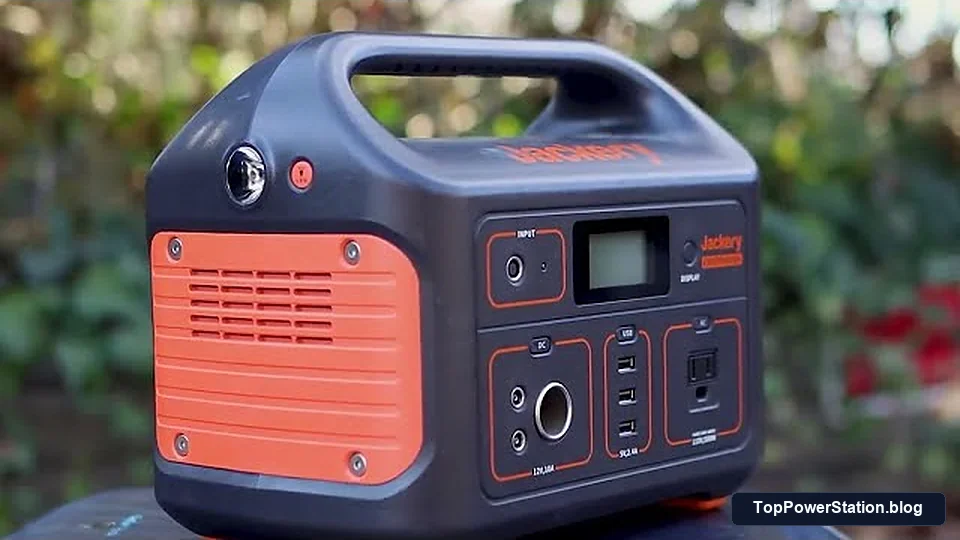
- Jackery incorporates sleek, signature orange ABS enclosures focused on lightweight travel.
- Internal layout optimization differs significantly across thermal cooling zones.
Chassis Construction and Materials
Manufacturer choices regarding outer shell materials directly influence drop resistance, heat dissipation rates, and overall unit weight during transport.
Jackery relies on impact-resistant blends that minimize total mass while maintaining structural integrity during frequent vehicle loading and unloading cycles.
- Impact-resistant polymer blends protect internal printed circuit boards.
- Optimized ventilation channels prevent localized thermal hot spots.
Real-World Performance Comparison
Evaluating real-world output involves testing continuous wattage limits, peak surge tolerances, and voltage stability under heavy inductive loads like mini-fridges or small power tools.
Both competitors claim impressive metrics on paper, but actual runtime efficiency depends heavily on inverter conversion losses and internal battery management system parameters.
When powering inductive loads like small refrigerators, GoLabs stations deliver steady surge wattage through robust internal capacitors. Jackery units manage these same surges smoothly by utilizing advanced BMS algorithms that prevent premature overload shutdowns.
Under heavy continuous draw, internal temperature sensors regulate fan speeds differently across both brands. GoLabs tends to trigger active cooling sooner, while Jackery prioritizes silent thermal management until internal thresholds reach critical levels.
- Golabs units often feature higher surge headroom for motor-driven appliances.
- Jackery models maintain strict voltage regulation under fluctuating continuous loads.
- Actual AC conversion efficiency hovers between eighty-five and ninety percent.
Surge Capacities and Inverter Behavior
Handling inductive startup currents requires robust pure sine wave inverters capable of instantaneous output spikes without triggering overload protection mechanisms.
Golabs frequently delivers superior momentary surge performance, whereas Jackery prioritizes stable, clean wave outputs for sensitive medical and computing hardware.
- Pure sine wave output protects sensitive consumer electronics safely.
- Overload sensors prevent catastrophic circuit board component failures.
Maintenance, Efficiency and Longevity
Long-term ownership costs depend largely on battery chemistry choices, cycle life ratings, and parasitic drain rates, key metrics highlighted in our best Jackery power station roundup.-
Understanding how each system manages thermal throttling and state-of-charge degradation helps users maximize their investment over years of regular camping and emergency use.
Maintaining these generators requires regular firmware checks and periodic full discharge cycles to calibrate the state-of-charge indicator. Storing them at optimal room temperature prevents accelerated capacity loss during prolonged periods of seasonal inactivity.
Efficiency losses during AC to DC conversion vary based on the integrated inverter topology. Units featuring high-grade transformers achieve superior wattage retention rates, translating to more usable energy for your critical medical or communication devices.
- LiFePO4 cells in modern Golabs units offer extended cycle counts.
- Jackery historically champions lithium-ion options alongside newer green chemistry lines.
- Idle self-discharge rates remain low across both manufacturer lineups.
Battery Chemistry and Degradation
Lithium iron phosphate cells provide thousands of cycles before dropping below eighty percent capacity, contrasting sharply with traditional ternary lithium chemistry formulations.
Regular maintenance involves keeping units at optimal storage charges and avoiding extreme ambient temperatures during high-draw inverter operations in the field.
- Advanced BMS software prevents overcharging and deep discharge events.
- Temperature sensors halt charging if internal cells get too cold.
Which Option Fits Your Setup
Selecting the right portable power station requires matching your specific power profile and budget to the correct hardware tier, as analyzed in our Jackery Explorer 1000 V2 review.
Casual weekend campers have very different requirements than remote digital nomads or emergency preparedness planners needing reliable multi-day backup capabilities at home.
Choosing the right ecosystem depends heavily on whether you prioritize raw emergency output or polished user experience. Campers and casual outdoor enthusiasts often benefit from the streamlined interface found on popular recreational models.
Home backup scenarios require heavy-duty port configurations that can withstand frequent plugging and unplugging. Users managing stationary power hubs should evaluate total watt-hour capacity alongside available DC output ports for maximum versatility.
- Analyze your total daily watt-hour consumption before buying hardware.
- Consider solar panel compatibility and maximum input wattage limits.
- Factor in physical weight if you plan on frequent hiking trips.
Tailoring Your Choice to Specific Scenarios
If your primary goal is affordable backup power with maximum battery lifespan, Golabs offers compelling advantages through its durable cell configurations.
Users seeking refined user interfaces, lightweight portability, and seamless ecosystem expansion will find Jackery suits their travel workflow significantly better.
- Match output port varieties to your specific device charging needs.
- Verify solar panel connector types for cross-brand charging setups.
Charging Speeds and Solar Integration
Harnessing renewable energy via portable solar panels is a core requirement for extended off-grid expeditions, which is why many outdoor enthusiasts consult our best Jackery for camping guide before buying.
Both brands support wall charging, car charging, and photovoltaic input, but maximum solar wattage limits and MPPT controller efficiency vary considerably.
Solar recharging speeds depend heavily on the maximum open-circuit voltage rating accepted by the built-in charge controller. Utilizing matched monocrystalline solar panels ensures optimal energy transfer without exceeding safe voltage limits during peak sunlight hours.
Wall charging times are dictated by internal power brick ratings or built-in AC adapter specifications. Fast-charging implementations reduce grid replenishment times significantly, though monitoring battery cell temperatures during rapid input phases remains a vital safety practice.
- MPPT charge controllers maximize solar harvest efficiency significantly.
- Wall charging speeds depend on built-in power supply wattage ratings.
- Proprietary connectors on some models require adapter cables.
Maximizing Photovoltaic Input Efficiency
Efficient maximum power point tracking ensures your panels deliver optimal current to the internal battery pack even under hazy or partially shaded sky conditions.
Reviewing manufacturer input voltage windows prevents accidental damage while daisy-chaining multiple portable solar panels together for faster midday recharging cycles.
- Always check open-circuit voltage specifications before connecting panels.
- Position panels perpendicular to direct sunlight for peak generation.
Portability, Ergonomics and Usability
Physical dimensions, handle designs, and display clarity dictate how easily you can transport and operate your power station during stressful outdoor scenarios.
A well-balanced chassis with a folding handle saves valuable trunk space and reduces physical strain when moving heavy capacity units across campsites.
Ergonomic handle placement determines how comfortably you can transport these dense power units across rugged terrain. Foldable handles save vertical space during vehicle packing, whereas rigid molded handles offer maximum lifting leverage for heavy chassis designs.
Control panel layout and screen readability under direct sunlight directly impact daily operational usability in the field. Backlit LCD screens with high contrast ratios provide clear visibility of input wattage metrics even during bright midday outdoor conditions.
- Ergonomic folding handles streamline packing inside vehicle trunks.
- Clear LCD screens display real-time input and output metrics instantly.
- Backlit buttons improve nighttime operation in pitch-black tents.
Interface Layout and Display Readouts
Clear informational displays help users monitor remaining battery percentage, active output ports, and estimated runtime without guessing.
Simplified control panels reduce user error when connecting multiple high-draw appliances during unexpected grid power outages at home.
- Digital screens show precise percentage metrics rather than crude bars.
- Dedicated power buttons for each port section prevent accidental drainage.
Frequently Asked Questions
Which brand offers better long-term battery lifespan for daily off-grid use?
Golabs generally provides superior cycle longevity by heavily integrating LiFePO4 chemistry across their newer portable power station lineup. This advanced cell technology easily delivers thousands of charge cycles before experiencing noticeable capacity degradation.
Can I use third-party solar panels to recharge these power stations?
Yes, you can successfully connect third-party solar panels as long as their open-circuit voltage and connector types match the unit specifications. Always verify adapter requirements to avoid damaging the internal MPPT charge controller.
Are Jackery power stations safer for sensitive electronic devices like laptops?
Jackery units feature clean pure sine wave inverters that deliver stable electrical currents safely matching household wall outlets. This advanced filtering protects sensitive computing hardware and medical devices from harmful voltage spikes.
How do I properly maintain my power station during off-season storage?
Store your unit in a cool, dry environment with an internal charge level hovering around fifty percent. Periodically check the battery status every few months to prevent deep self-discharge damage.
Which manufacturer provides better portability for frequent hiking and camping trips?
Jackery typically excels in lightweight physical ergonomics and compact space utilization for mobile travelers. Their molded housing designs make them exceptionally easy to pack inside crowded vehicle trunks.