Goal Zero Yeti 1000X vs Ecoflow Delta 2
Choosing between these power stations requires weighing chemistry longevity against rapid charging speeds. Understanding their engineering core helps match your specific off-grid power demands.

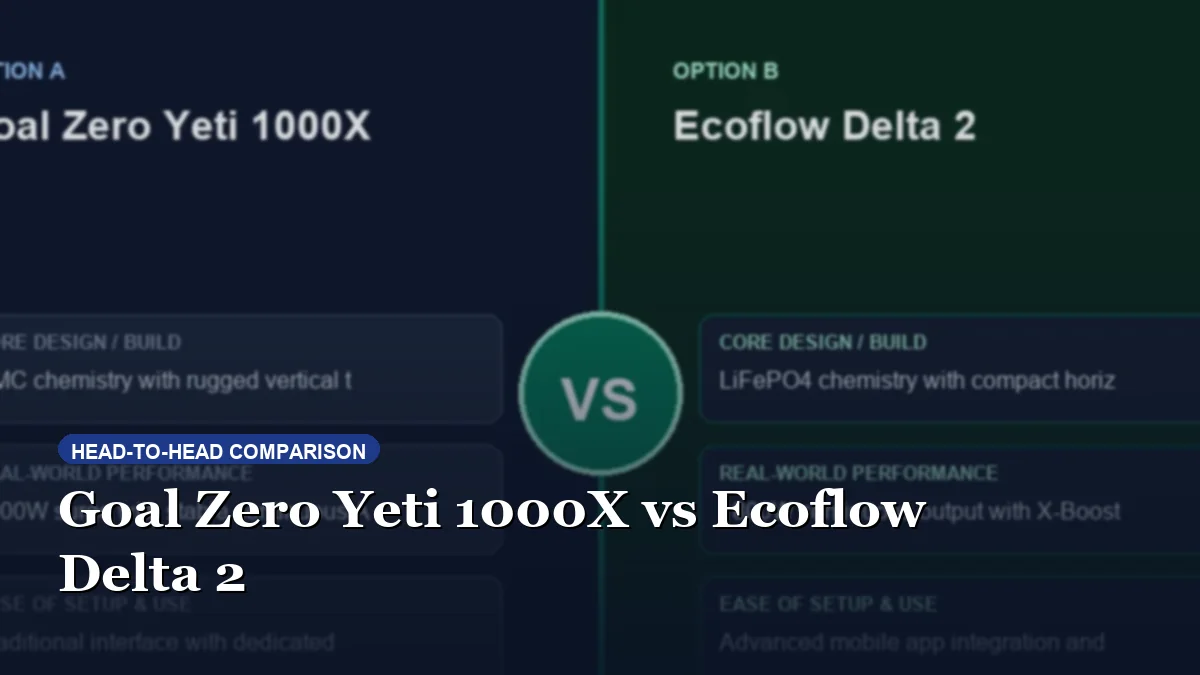
Choose the Goal Zero Yeti 1000X for rugged build quality and expansion potential. Select the Ecoflow Delta 2 for rapid LiFePO4 cycle life and high-speed AC recharging.
Compare all top models in our Best Portable Power Station: Top Picks for 2026.
Side-by-Side Breakdown
| Criteria | Goal Zero Yeti 1000X | Ecoflow Delta 2 | Edge |
|---|---|---|---|
| Core Design / Build | NMC chemistry with rugged vertical tower architecture | LiFePO4 chemistry with compact horizontal layout | Ecoflow Delta 2 |
| Real-World Performance | 1500W surge with stable continuous AC output | 1800W continuous output with X-Boost technology | Ecoflow Delta 2 |
| Ease of Setup & Use | Traditional interface with dedicated expansion ports | Advanced mobile app integration and clear LCD display | Ecoflow Delta 2 |
| Durability & Reliability | Heavy-duty outer shell designed for frequent transport | Solid internal framing with modular battery upgrade options | Goal Zero Yeti 1000X |
| Efficiency / Operating Footprint | Moderate idle draw with traditional inverter topology | High energy conversion efficiency and compact footprint | Ecoflow Delta 2 |
| Maintenance Requirements | Standard firmware updates and periodic capacity calibration cycles | Minimal maintenance thanks to stable lithium iron phosphate cells | Ecoflow Delta 2 |
| Best Ideal Use Case | Extended off-grid cabin setups and heavy solar arrays | Emergency home backup and rapid mobile power needs | Ecoflow Delta 2 |
Core Architecture and Battery Chemistry
Internal battery chemistry forms the foundational heartbeat of any power station. Our comprehensive goal zero yeti 1000x review details how traditional nickel manganese cobalt cells maximize energy density within a vertical tower footprint.
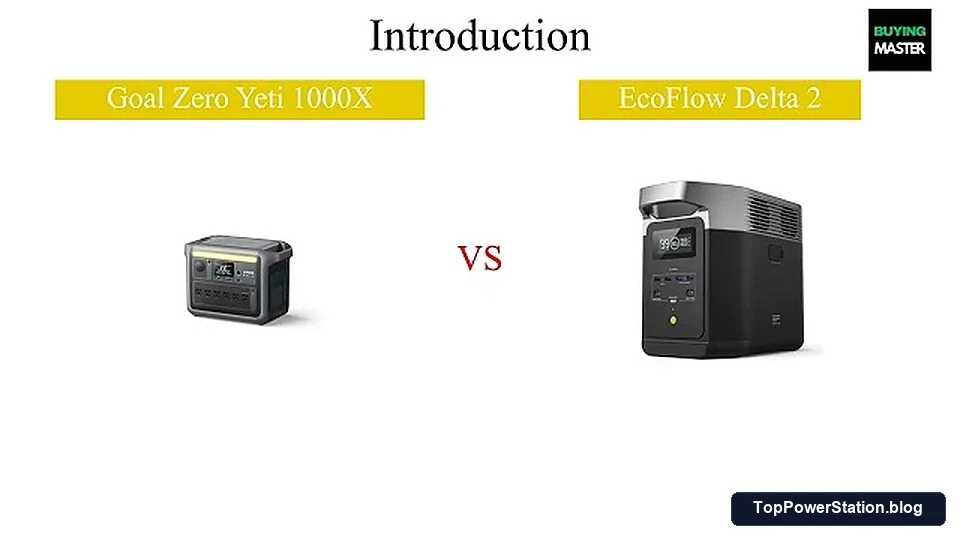
Conversely, the rival system utilizes lithium iron phosphate chemistry designed for extreme longevity. This architectural shift dictates overall unit weight, lifespan capacity, and safety margins during high-draw operational phases in the field.
Engineering teams optimized these distinct chemistries for specific user demographics ranging from weekend campers to emergency preppers. Evaluating your duty cycle prevents premature capacity degradation during heavy everyday usage.
- NMC cells provide higher energy density per pound.
- LiFePO4 chemistry offers vastly superior total cycle life.
- Vertical tower layout saves valuable floor space inside tents.
- Horizontal footprint improves overall physical stability on rough terrain.
Energy Density and Physical Footprint
Balancing physical dimensions against stored watt-hours challenges modern engineering teams. The Goal Zero unit manages a compact vertical profile that slides easily into narrow vehicle storage compartments.
Meanwhile, the competitor prioritizes a wide, stable base that resists tipping during high-vibration mobile deployments. Both designs meet rigorous safety standards but target vastly different user ergonomic preferences.
- Vertical configurations reduce the required horizontal surface area.
- Wide bases prevent accidental tipping inside moving utility vehicles.
Thermal Thresholds and Safety Engineering
Internal thermal management dictates how hard these units can push their respective inverters. Advanced monitoring sensors constantly track cell temperatures to prevent dangerous overheating during rapid charging sessions.
Users must maintain adequate clearance around cooling vents to ensure optimal heat dissipation during peak summer ambient temperatures. Neglecting airflow can trigger automatic thermal shutdowns to protect sensitive electronics.
- Multiple internal sensors monitor individual cell temperatures continuously.
- Automated safety protocols prevent catastrophic thermal runaway events.
Inverter Performance and Load Capacity
Delivering clean sine wave AC power is essential for running sensitive electronics without interference. Much like our tested goal zero yeti 700 review unit, this model features a robust inverter capable of handling demanding startup loads.
The rival system counters with advanced software-driven output algorithms designed to stretch wattage limits safely. Understanding continuous versus surge wattage prevents unexpected power interruptions during critical appliance operation.
Testing these units under heavy resistive loads reveals distinct operational characteristics under sustained electrical stress. Proper load matching guarantees long-term inverter health and prevents nuisance tripping in remote locations.
- Clean sine wave output protects microprocessors in modern appliances.
- Surge capacity handles refrigerator compressors without voltage sag.
- Advanced output algorithms expand running limits for resistive heaters.
- Overload protection safeguards internal switching transistors from damage.
Continuous Output vs Surge Limits
Rated continuous output determines which household appliances you can run simultaneously. Exceeding these engineering thresholds forces the unit into a protective lockout state to prevent internal damage.
Surge ratings provide temporary headroom for motor-driven tools that require extra startup amperage. Knowing your specific tool requirements ensures seamless operation in the field.
- Continuous wattage dictates concurrent appliance limitations.
- Surge headroom accommodates initial motor startup spikes safely.
Total Harmonic Distortion and Clean Power
Low total harmonic distortion ensures that medical devices and audio equipment operate cleanly. Poor inverter quality introduces electrical noise that can overheat sensitive transformer-based chargers.
Both manufacturers utilize advanced filtering components to maintain pure sinusoidal waveforms under varying load conditions. This engineering precision safeguards your valuable electronics from premature component failure.
- Strict harmonic control prevents audible hum in audio gear.
- Pure sine output mimics standard household utility wall power.
Charging Speeds and Grid Integration
Rapid recharging capabilities dictate how quickly you can restore power following an extended grid outage. The Delta 2 leverages high-speed AC input circuitry to achieve full capacity in record time.
Traditional power stations often rely on slower internal bricks that require many hours tethered to a wall outlet. Evaluating your turnaround time requirements helps determine which charging ecosystem fits your workflow.
Solar integration parameters also vary significantly between these two competing energy platforms. Matching your solar array open-circuit voltage prevents input damage while maximizing clean energy harvest rates.
- High-speed AC input dramatically reduces wall recharging duration.
- Solar charge controllers handle wide photovoltaic array voltage ranges.
- Pass-through charging enables uninterrupted power supply functionality.
- Smart charging algorithms preserve battery health during rapid input.
AC Wall Recharging Protocols
Wall charging speed remains a primary differentiator for emergency preparedness applications. Fast-charging electronics draw substantial amperage, requiring dedicated household circuits to avoid tripping breakers.
Users can often adjust maximum input speeds via companion software to protect older home wiring infrastructure. This flexibility prevents thermal stress on standard household electrical outlets during use.
- Adjustable input speeds protect older home electrical circuits.
- Rapid wall charging minimizes downtime between emergency deployments.
Solar Panel Compatibility and MPPT Efficiency
Maximum power point tracking controllers optimize energy harvest from portable solar panels. Exploring options featured in our best solar panels for goal zero yeti guide helps ensure efficient energy collection under fluctuating sunlight.
Checking connector types and voltage limits ensures safe pairing with third-party solar arrays. Exceeding recommended array specifications will trigger internal protection mechanisms instantly.
- MPPT trackers maximize energy yield under partial shading.
- Standardized connectors simplify third-party solar panel integration.
Port Selection and Ergonomic Design
Ergonomic port layout directly impacts daily usability in cramped environments. As highlighted in our goal zero yeti 1500x review, the hardware distributes various connection types across a clear, logical front-facing control panel.
Competing models often integrate USB-C Power Delivery and DC barrel jacks alongside traditional AC receptacles. A thoughtful interface layout reduces cable clutter and simplifies multi-device charging operations significantly.
Carrying handles must balance the total weight distribution comfortably during transport over uneven terrain. Robust attachment points also allow secure mounting inside utility vehicles or custom camper builds.
- Logical port grouping simplifies cable management in the dark.
- USB-C Power Delivery ports fast-charge modern laptops directly.
- Reinforced carrying handles withstand rugged field transport conditions.
- Dedicated DC outputs support specialized 12-volt automotive gear.
USB-C and Direct Current Connectivity
Modern mobile devices rely heavily on high-wattage USB-C Power Delivery standards. Eliminating bulky charging bricks saves precious storage space and improves overall system efficiency.
Standard 12-volt cigarette lighter ports and specialized Anderson power poles accommodate automotive accessories. These versatile outputs expand the functional scope of your portable power station.
- USB-C PD eliminates the need for separate laptop adapters.
- Anderson ports provide secure high-amperage 12-volt connections.
Display Panels and Interface Usability
Clear LCD screens provide real-time metrics including remaining runtime and input wattage. Backlit displays remain legible in bright sunlight or pitch-black emergency blackout conditions.
Intuitive button layouts allow quick toggling of specific port zones to conserve standby battery drain. Clear visual feedback prevents user error during high-stress operational scenarios.
- Real-time runtime estimation removes guesswork during outages.
- Zone-based power switches minimize unnecessary idle energy consumption.
Thermal Management and Noise Profiles
Active cooling fans protect internal components during high-draw inverter and charging operations. Variable-speed fans activate only when internal thermal thresholds demand increased airflow for safety.
Noise levels measured in decibels matter significantly when operating units inside small sleeping tents. Evaluating acoustic profiles ensures your power station remains unobtrusive during quiet nighttime hours.
Proper dust filtration prevents particulate buildup on sensitive circuit boards during outdoor use. Routine maintenance of cooling intake vents guarantees long-term operational reliability in harsh environments.
- Variable-speed cooling fans reduce unnecessary acoustic noise output.
- Thermal sensors modulate fan RPM based on actual load.
- Dust-resistant vents protect internal electronics from outdoor debris.
- Quiet operation enhances comfort during indoor emergency usage.
Acoustic Footprint Under Load
High inverter loads force cooling fans into maximum RPM modes, generating audible whirring. Placing the unit away from sleeping areas mitigates disturbance during extended overnight operations.
Manufacturers continually refine fan blade aerodynamics to minimize high-frequency whining noises. Selecting a quieter model improves overall user comfort in confined spaces.
- Optimized fan aerodynamics reduce high-frequency mechanical noise.
- Strategic placement dampens operational sound in tents.
Passive Cooling and Standby Efficiency
Low-draw scenarios often rely entirely on passive aluminum heatsinks for thermal control. Silent passive cooling eliminates fan noise completely during light device charging tasks.
Minimizing standby power consumption preserves precious watt-hours when the inverter remains idle. Efficient circuit design maximizes usable energy reserves over extended periods.
- Passive heatsinks provide completely silent light-load operation.
- Low standby draw preserves battery reserves during storage.
Long-Term Maintenance and Cycle Life
Maximizing return on investment requires understanding long-term battery degradation characteristics. Lithium iron phosphate cells maintain high capacity retention across thousands of full charge cycles.
Traditional lithium-ion alternatives typically degrade faster under heavy daily cycling regimens in the field. Proper storage protocols during off-seasons significantly extend the functional lifespan of your equipment.
Firmware updates delivered via mobile applications keep internal battery management systems running smoothly. Staying proactive with maintenance ensures peak performance throughout the product lifecycle.
- LiFePO4 chemistry delivers thousands of full charge cycles.
- Proper off-season storage prevents permanent capacity loss.
- Firmware updates optimize internal battery management algorithms.
- Routine capacity calibration maintains accurate runtime readouts.
Cycle Life Expectations and Degradation
Cycle life ratings indicate how many times a battery can discharge and recharge. High-end chemistry options retain eighty percent capacity after thousands of complete cycles.
Understanding these metrics helps users project accurate multi-year operational cost efficiency. Prioritizing longevity saves money on premature replacements down the road.
- Eighty percent capacity retention marks standard end-of-life.
- Frequent cycling accelerates normal chemical wear processes.
Firmware Support and BMS Optimization
Advanced Battery Management Systems protect cells from overcharging and deep discharge. Over-the-air firmware updates continuously improve safety parameters and charging efficiency.
Manufacturers use these software updates to address emerging edge cases in real-world use. Maintaining updated firmware ensures your hardware operates at peak engineering efficiency.
- BMS safeguards prevent dangerous over-voltage and thermal conditions.
- Software updates refine charging profiles for maximum longevity.
Application Fit and Deployment Scenarios
Matching the correct power station to your lifestyle prevents frustrating performance bottlenecks. Weekend campers require different feature sets than homeowners preparing for extended grid blackouts.
Evaluating weight, port selection, and recharging speed clarifies which option suits your specific needs. Investing in the right ecosystem ensures reliable off-grid power whenever emergencies strike unexpectedly.
Real-world testing reveals how these units handle extreme environmental conditions and heavy daily demands. Making an informed choice guarantees satisfaction and dependable performance for years.
- Tailor your selection to specific camping or emergency needs.
- Weight considerations matter for mobile off-grid adventurers.
- Home backup setups demand rapid wall and solar recharging.
- Robust build quality ensures survival in harsh weather.
Off-Grid Camping and Overlanding
Mobile overlanding setups demand rugged construction and reliable vehicle charging solutions. Compact dimensions allow seamless integration into custom truck bed storage drawer systems.
Reliable solar input keeps devices charged during extended stays far from civilization. Choosing a durable build prevents damage from constant vehicular vibration.
- Compact dimensions fit easily into truck bed storage vaults.
- Vehicle alternators provide reliable auxiliary charging on trails.
Emergency Home Backup Strategies
Home backup applications require sufficient capacity to run refrigerators and medical devices. Rapid AC recharging ensures quick turnaround between utility power restoration windows.
Integrating these units safely into household circuits protects essential appliances from surges. Planning your emergency loads prevents sudden overloads during blackouts.
- Refrigerators require reliable surge capacity during startup.
- Fast wall charging restores power quickly during rolling blackouts.
Frequently Asked Questions
Can I charge these power stations using third-party solar panels?
Yes, both units accept standard photovoltaic panels provided you respect their open-circuit voltage limits. Always match connector types to ensure safe and efficient energy harvesting.
What is the primary difference in battery lifespan between these two models?
The Ecoflow Delta 2 uses LiFePO4 chemistry offering thousands of cycles. The Goal Zero Yeti 1000X uses traditional NMC cells with a shorter total cycle life.
Do these power stations support pass-through charging safely?
Yes, both units allow you to charge internal batteries while simultaneously powering connected devices. This feature makes them excellent choices for uninterrupted power supply applications.
How loud are the cooling fans during heavy inverter operation?
Both power stations remain quiet during light loads but generate noticeable fan noise under heavy inverter stress. Proper placement away from sleeping areas minimizes nighttime disturbance.
Can I expand the battery capacity of these units later?
The Goal Zero Yeti 1000X and rival systems feature ecosystem expansion options. Check manufacturer specifications to connect compatible external battery modules safely.