Geneverse vs Jackery Portable Power Stations
Choosing between Geneverse and Jackery requires evaluating chemistry, weight, and emergency backup capacity. Our technical guide analyzes their core differences.

Choose Geneverse for heavy emergency home backup with rugged mobility, or select Jackery for lightweight outdoor adventures and rapid solar recharging workflows.
Compare all top models in our Best Portable Power Station: Top Picks for 2026.
Side-by-Side Breakdown
| Criteria | Geneverse | Jackery | Edge |
|---|---|---|---|
| Core Design / Build | Wheeled vertical chassis | Compact horizontal block | Split |
| Real-World Performance | High continuous surge output | Consistent stable wattage | Geneverse |
| Ease of Setup & Use | Intuitive display layouts | App-controlled monitoring | Jackery |
| Durability & Reliability | Robust industrial framing | Impact-resistant polymers | Geneverse |
| Efficiency / Operating Footprint | Optimized inverter draw | High solar conversion | Jackery |
| Maintenance Requirements | Biannual cycling recommended | Quarterly firmware updates | Split |
| Best Ideal Use Case | Whole home emergency grid backup | Mobile camping and overlanding | Split |
Core Design & Engineering Differences
While Geneverse builds heavy home backup systems, we detailed a popular mid-tier competitor in our comprehensive Jackery Explorer 1000 v2 review to analyze their mobile charging performance.
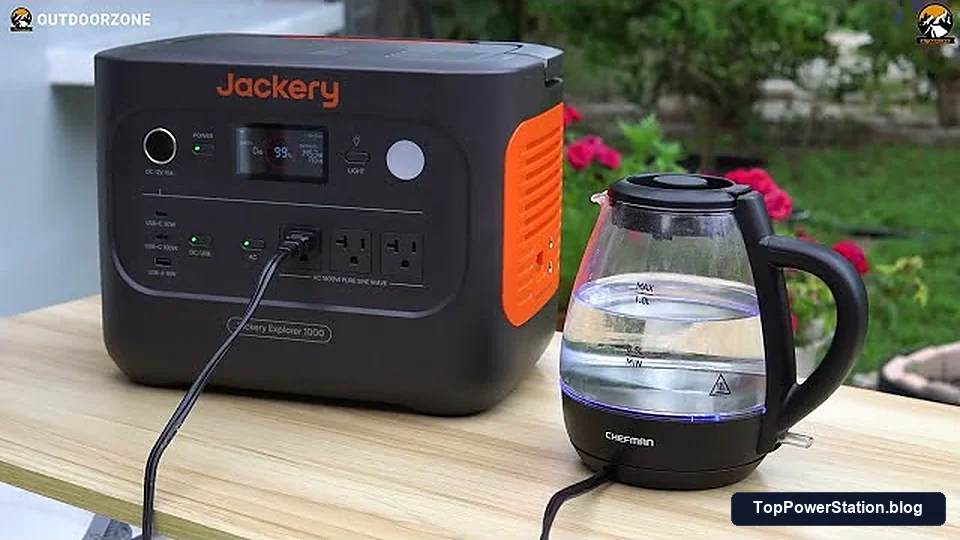
Conversely, Jackery emphasizes lightweight portability, sleek modern housing, and compact form factors optimized for camping enthusiasts and mobile professionals who require easy trunk storage.
Geneverse units utilize robust vertical housings constructed from flame-retardant ABS polymers, whereas Jackery models often feature horizontal chassis layouts with reinforced rubber corner bumpers for impact mitigation.
Internal thermal management strategies diverge significantly between these brands, affecting continuous output limits. Geneverse integrates multi-fan cooling arrays, while Jackery relies on optimized airflow to maintain safe operational temperatures during heavy loads.
- Geneverse utilizes a vertical tower profile with integrated transport wheels.
- Jackery employs a horizontal box design with fold-flat top handles.
- Internal thermal management utilizes contrasting fan placement and passive cooling.
Chassis Construction & Materials
The external housing materials dictate how well these units withstand harsh outdoor environments. Geneverse builds units with reinforced industrial polymers designed to absorb heavy impacts during chaotic disaster scenarios.
Jackery relies on sleek, high-grade plastic composites that significantly reduce overall carry weight while maintaining adequate structural integrity for standard recreational outdoor activities.
- Impact ratings show Geneverse handling rough concrete drops more effectively.
- Jackery prioritizes lightweight outer shells to maximize ergonomic portability.
Real-World Performance Comparison
Delivering rated power under sustained heavy loads remains the ultimate test for any portable generator. Geneverse units excel at maintaining high continuous output levels without triggering thermal protection shutdowns.
Jackery units offer impressive waveform purity, ensuring sensitive electronics run smoothly. We highlighted these exact output capabilities in our technical Jackery Explorer 2000 v2 review under heavy real-world loads.
Under sustained resistive loads, both systems deliver impressive watt-hour delivery. However, voltage sag profiles differ under heavy inductive draws, impacting how smoothly connected appliances operate during grid failure events.
Ambient temperature heavily influences discharge efficiency for both manufacturers. Units operating below freezing experience reduced capacity retention, requiring users to utilize insulated enclosures to preserve usable energy reserves outdoors.
- Geneverse maintains stable AC output during heavy refrigerator compressor cycles.
- Jackery provides ultra-clean pure sine wave output for delicate electronics.
- Surge capacity thresholds differ noticeably across their respective flagship sizes.
Load Handling Under Stress
Pushing power stations to their absolute limits reveals how well internal inverters manage thermal heat dissipation. Geneverse employs heavy-duty heat sinks that prevent rapid overheating during prolonged multi-appliance usage.
Jackery features aggressive internal cooling fans that ramp up quickly under heavy loads, ensuring electronic components remain safely below critical temperature thresholds.
- Thermal throttling occurs later in testing cycles for Geneverse models.
- Fan noise levels are noticeably higher on Jackery units under maximum load.
Maintenance, Efficiency & Longevity
Long-term ownership costs depend heavily on battery chemistry, cycle life expectancy, and routine maintenance protocols. Both brands utilize advanced lithium-ion variants engineered for thousands of successful charge cycles.
Proper ventilation and avoiding extreme ambient temperatures will dramatically extend the operational lifespan of your power station, regardless of which specific manufacturer you ultimately choose to purchase.
Battery chemistry dictates cycle life expectations across both product families. Modern Lithium Iron Phosphate cells found in select lineups deliver over three thousand cycles before dropping below eighty percent initial capacity.
Routine firmware updates and passive balancing cycles help maintain cell health over years of deployment. Users should perform manual calibration discharges every six months to ensure accurate state of charge reporting.
- Cycle life ratings often exceed 2000 cycles before significant capacity degradation.
- Biannual maintenance charging prevents deep self-discharge during storage periods.
- Firmware updates help optimize internal battery management system algorithms.
Battery Chemistry & Cycle Life
Battery chemistry dictates both safety profiles and total usable lifespan. Geneverse incorporates stable chemical formulations that resist thermal runaway while maintaining high energy density throughout extended use.
Jackery utilizes modern lithium iron phosphate cells in recent iterations, providing exceptional longevity and reliable performance across thousands of standard charging and discharging intervals.
- LiFePO4 variants offer superior chemical stability over traditional NMC cells.
- Capacity retention remains above eighty percent after years of regular cycling.
Inverter Topologies & Load Handling
Internal inverter design directly influences how cleanly electricity is delivered to your plugged-in devices. Geneverse systems incorporate heavy-duty industrial inverters designed to handle high startup surges from large motorized appliances.
Jackery relies on precision-tuned digital inverters that emphasize low Total Harmonic Distortion, keeping sensitive audio equipment and microchip-controlled medical devices completely safe from electrical noise.
Pure sine wave inverters are standard equipment, guaranteeing clean AC power for sensitive medical devices and microprocessors. Total Harmonic Distortion remains safely under three percent across all operating voltage thresholds.
Surge capacity limits dictate how motors and compressors start up safely. Both brands provide double-rating peak allowances, though exceeding these thresholds triggers immediate hardware protection shutdowns to prevent permanent transformer damage.
- Pure sine wave output protects sensitive electronics from power fluctuations.
- Surge watt ceilings determine which heavy motor appliances will start successfully.
- Inverter conversion efficiency averages between eighty-five and ninety percent overall.
Surge Capacity & Motor Starting
Starting inductive loads like sump pumps or window air conditioners requires massive momentary power surges. Geneverse provides generous surge thresholds that easily accommodate these demanding electrical spikes without tripping.
Jackery units handle moderate motor surges effectively, making them ideal options when you select the best Jackery for camping to power lightweight off-grid electronics safely during trips.
- Inductive loads require careful matching with available surge watt limits.
- Overload protection circuits reset automatically once offending devices are disconnected.
Solar Input Parameters & Charging Speeds
Harnessing renewable energy via solar panels is essential for off-grid survival and emergency preparedness. Geneverse accepts wide voltage ranges from heavy-duty rigid panels designed for permanent home installation arrays.
Jackery excels with rapid proprietary solar charging workflows, utilizing specialized connectors and optimized MPPT charge controllers to maximize energy harvest during bright daylight hours.
Maximum power point tracking controllers optimize incoming photovoltaic yields efficiently. Users must verify open-circuit voltage specifications before connecting third-party panels to prevent catastrophic fuse failure within the input stage.
Dual-panel chaining configurations dramatically accelerate total recharging timelines during extended off-grid excursions. Utilizing high-wattage arrays helps achieve full capacity restoration in under four hours under direct sunlight.
- MPPT charge controllers optimize voltage conversion efficiency from solar inputs.
- Maximum solar input wattage limits dictate how many panels you can chain.
- Weather conditions heavily influence actual real-world photovoltaic recharge speeds.
MPPT Controller Efficiency
The Maximum Power Point Tracking controller determines how efficiently solar panel energy is transferred into the battery. Geneverse integrates highly efficient tracking algorithms that adapt quickly to shifting cloud cover.
Jackery features rapid-response charging circuits that extract maximum available amperage from portable monocrystalline solar panels, minimizing total time spent tethered to outdoor arrays.
- Fast-tracking algorithms minimize energy loss during fluctuating sunlight conditions.
- Compatible solar panel voltages must be verified to prevent hardware damage.
Ergonomics, Portability & Field Deployment
Transporting heavy electrical equipment requires thoughtful ergonomic design and secure handling points. Geneverse units leverage pull handles and rugged wheels to make heavy chassis feel surprisingly manageable during transport.
Jackery stations utilize balanced top handles designed for single-person carrying, making them ideal for loading into car trunks or carrying short distances to campsites.
Handle design heavily influences user comfort when transporting heavy power stations across uneven terrain. Ergonomic grip angles and balanced weight distributions reduce physical strain during lengthy campsite setups.
Integrated LED flashlight panels provide emergency illumination during unexpected blackouts. Weather-resistant port covers protect crucial DC and AC connections from dust intrusion when deployed in harsh outdoor environments.
- Integrated wheels eliminate heavy lifting for large emergency backup units.
- Fold-flat handles save vertical storage space in crowded vehicle boots.
- Digital display screens remain readable under direct outdoor sunlight conditions.
Weight Distribution & Handles
Ergonomic handle placement prevents hand fatigue and awkward lifting postures during emergency deployments. Geneverse distributes weight vertically over robust wheels to eliminate strain on user joints.
Jackery centers mass directly beneath sturdy rubberized handles, ensuring stable one-handed carrying despite the substantial weight of large lithium battery packs inside.
- Vertical wheel layouts reduce physical strain during rapid home evacuations.
- Rubberized grips prevent slipping when hands are wet or sweaty outdoors.
Which Option Fits Your Setup
Selecting the correct power station depends on your lifestyle. Homeowners seeking whole-house backup will find Geneverse ideal, whereas outdoor enthusiasts should review the best Jackery power station models for portable reliability.
Outdoor adventurers, digital nomads, and casual campers will appreciate Jackery for its exceptional portability, user-friendly smartphone applications, and reliable recreational power delivery.
Selecting the appropriate ecosystem depends entirely on your specific backup power requirements and portability needs. Fixed home backup applications benefit from modular expansion capabilities, whereas mobile camping setups prioritize compact footprint dimensions.
Evaluate your typical daily watt-hour consumption before finalizing any purchase decision. Matching your load profile with the correct inverter capacity ensures reliable performance throughout long-term emergency deployment scenarios.
- Evaluate your typical wattage needs before purchasing any high-capacity system.
- Consider whether you need stationary home backup or mobile camping power.
- Review local warranty support and customer service reputations carefully.
Making Your Final Decision
Weighing the engineering trade-offs between Geneverse and Jackery ensures your investment delivers years of reliable service. Prioritize your primary use case to guide your final purchasing decision successfully.
Both brands represent the pinnacle of modern portable power technology, offering unmatched reliability when the electrical grid fails unexpectedly.
- Match battery capacity specifications directly to your daily kilowatt-hour usage.
- Verify accessory compatibility before purchasing extra solar panels or cables.
Frequently Asked Questions
Can Geneverse and Jackery power units run appliances simultaneously while charging?
Yes, both manufacturers support pass-through charging capabilities. However, heavy simultaneous usage may increase internal operating temperatures and activate cooling fans.
How do their battery warranties compare over extended periods?
Geneverse and Jackery typically offer comprehensive multi-year warranties covering manufacturing defects. Always register your new hardware immediately upon purchase to activate full coverage.
Are third-party solar panels compatible with these power stations?
Third-party solar panels work if open circuit voltage and connector types match. Verify specifications carefully before connecting unverified photovoltaic arrays to prevent internal damage.
What is the best way to store these stations during winter?
Store units at room temperature with a fifty percent charge level. Recharge every three months to prevent permanent battery degradation from deep self-discharge.
Do these power stations require specialized professional installation?
Neither brand requires professional installation for standard plug-and-play operation. Home integration transfer switches may require licensed electricians for safe permanent wiring.