EcoFlow Delta vs Jackery 1500: Technical Showdown
Evaluating high-capacity portable power stations requires analyzing internal chemistry, inverter limits, and charging speeds. This technical guide directly compares both flagship generators.


Choose the EcoFlow Delta for rapid AC recharging and higher surge capacity, or select the Jackery 1500 for rugged structural ergonomics and simpler interface layouts.
Compare all top models in our Best Portable Power Station: Top Picks for 2026.
Side-by-Side Breakdown
| Criteria | EcoFlow Delta | Jackery 1500 | Edge |
|---|---|---|---|
| Core Design / Build | Modular plastic shell with dual cooling fans | Ruggedized orange-and-black chassis with robust handles | Jackery 1500 |
| Real-World Performance | 1800W continuous output with 3300W surge | 1800W continuous output with 3600W surge | EcoFlow Delta |
| Ease of Setup & Use | Advanced digital screen with detailed metrics | Straightforward button layout and clear indicators | Jackery 1500 |
| Durability & Reliability | NMC lithium-ion core rated for 800 cycles | NMC chemistry engineered for 500 full cycles | EcoFlow Delta |
| Efficiency / Operating Footprint | X-Stream fast charging technology reduces downtime | Traditional wall adapter charging with heavy blocks | EcoFlow Delta |
| Maintenance Requirements | Requires regular firmware updates and thermal monitoring | Minimal maintenance with standard storage protocols | Jackery 1500 |
| Best Ideal Use Case | Rapid power restoration and heavy-duty tool operation | Extended off-grid camping and emergency backup | EcoFlow Delta |
Core Design And Engineering Architecture
Modern portable power stations rely on sophisticated internal engineering to manage thermal loads safely during heavy continuous use. Manufacturers must balance structural weight against battery protection requirements.
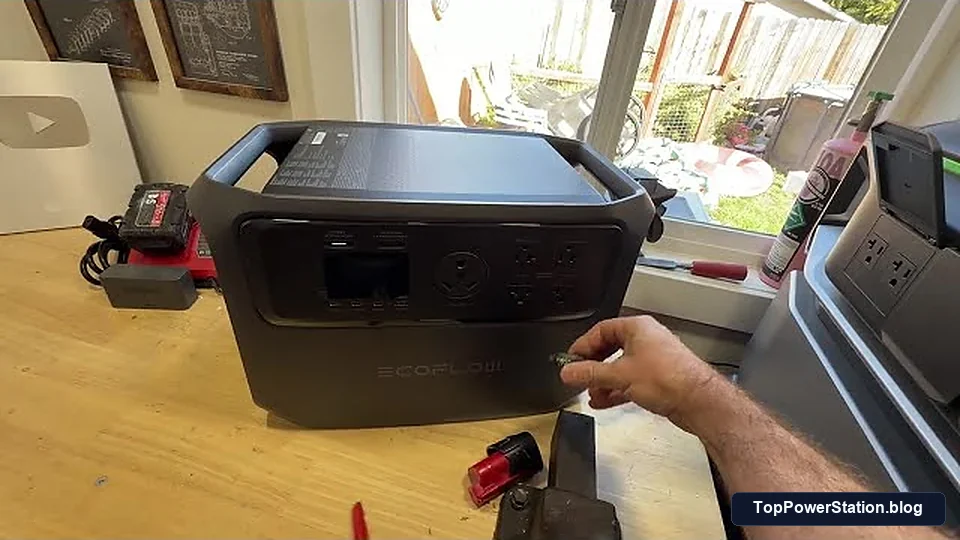
The internal layout dictates how efficiently cooling air circulates past sensitive inverter components and lithium battery cells under maximum electrical loads.
Engineers prioritize different metrics when designing enclosures, as highlighted in our Ecoflow Delta Pro 3 review, resulting in distinct physical footprints and ergonomic profiles for each competing unit.
- Chassis material selection impacts overall drop resistance and thermal dissipation rates.
- Internal fan placement determines acoustic profiles during high-wattage inverter operation.
- Handle integration affects lifting safety and one-person transport ergonomics significantly.
Structural Shell Construction
Exterior casing durability remains a critical factor for users transporting power units across rough terrain or job sites. Heavy-duty polymers absorb kinetic energy during accidental impacts.
Reinforced internal frames prevent chassis flex, protecting soldered circuit boards from micro-fractures over years of mobile use.
- Impact-resistant exterior plastics prevent cracking in freezing outdoor environments.
- Internal structural bracing secures heavy battery modules against vibration damage.
Thermal Management Systems
Active cooling systems utilize internal temperature sensors to trigger variable-speed fans when internal heat rises. Proper airflow prevents premature thermal throttling during high-draw applications.
Passive heat sinks work alongside active fans to dissipate thermal energy away from sensitive lithium-ion battery management systems.
- Dual-fan configurations improve airflow across dense inverter transformer blocks.
- Smart thermal algorithms adjust charging speeds automatically if ambient temperatures spike.
Real-World Power Performance Analysis
Evaluating real-world electrical output is vital, as seen in our Ecoflow Delta 2 review, which tests continuous wattage delivery against advertised manufacturer specifications under standard operating conditions.
Surge capacity determines whether a power station can successfully spin up heavy inductive motor loads found in household appliances and power tools.
Inverter efficiency curves shift depending on whether the unit is outputting alternating current or regulating direct current power to connected mobile devices.
- Continuous wattage ratings dictate which household appliances can run simultaneously.
- Surge headroom protects the inverter circuit from tripping during compressor motor startups.
- Pure sine wave output ensures clean electricity for sensitive medical equipment.
Inverter Output Stability
Clean sine wave generation prevents electrical humming and premature motor wear in connected appliances. High-frequency switching circuits maintain stable voltage output despite fluctuating battery levels.
Total harmonic distortion metrics remain low on quality units, protecting microprocessors inside modern refrigerators and computing gear.
- Pure sine wave distortion stays below three percent under full load.
- Voltage regulation circuits prevent spikes when heavy loads disconnect abruptly.
Surge Handling Capabilities
Inductive loads demand temporary bursts of electrical current that far exceed their normal running wattage requirements. Power stations must absorb these spikes without triggering safety shutdowns.
Robust internal capacitors provide the momentary reserve energy needed to bridge the gap during heavy motor startups.
- Motor compressors require double their running wattage during initial startup phases.
- Overload protection trips safely before permanent inverter damage occurs.
Charging Speeds And Energy Replenishment
Rapid energy replenishment is essential for users facing frequent grid outages or tight timelines between off-grid camping excursions. AC wall charging speeds vary dramatically based on internal charging hardware.
Solar panel integration requires efficient maximum power point tracking controllers, a feature we test closely in our Ecoflow Delta 2 Max review, to harvest available photovoltaic energy without wasting precious sunlight.
Vehicle charging ports offer convenient mobile top-ups during transit, though lower amperage outputs significantly extend total recharge duration periods.
- AC fast-charging circuits draw high current directly from standard wall outlets safely.
- Solar input limits dictate maximum panel wattage arrays for off-grid deployment.
- Car adapter charging provides slow maintenance power while driving between locations.
AC Wall Charging Efficiency
Advanced internal rectifiers convert alternating grid current into direct current quickly without generating excessive waste heat. This technology allows complete energy restoration in record time.
Users must ensure wall outlets can supply sufficient amperage to support rapid charging modes without tripping household circuit breakers.
- High-speed charging circuits restore eighty percent capacity within an hour.
- Integrated circuit protection prevents overheating during rapid energy intake.
Solar Photovoltaic Integration
Maximum power point tracking algorithms optimize energy harvest from portable solar panels under changing sky conditions. Voltage matching ensures safe operation with third-party panels.
Anderson and solar input ports must handle wide voltage ranges safely while delivering steady current to the internal battery pack.
- MPPT controllers boost solar harvesting efficiency by up to twenty percent.
- Open circuit voltage limits must be respected to prevent controller damage.
Battery Chemistry Longevity And Maintenance
Lithium-ion battery chemistry dictates the overall lifespan, weight, and long-term reliability of any portable power station investment. Understanding cycle ratings helps owners project long-term utility.
Battery management systems monitor individual cell voltages to prevent overcharging, deep discharging, and dangerous thermal runaway events during operation.
Proper storage protocols during periods of inactivity preserve internal capacity and prevent permanent chemical degradation of the lithium cells.
- Cycle life ratings indicate how many charge iterations occur before capacity drops.
- Battery management systems balance cell voltages automatically during every charge cycle.
- Storage state-of-charge guidelines prevent chemical degradation during winter months.
Cycle Life And Degradation
Standard lithium nickel manganese cobalt chemistry gradually loses maximum capacity after hundreds of full charge cycles. Maintaining moderate depth of discharge extends operational lifespan significantly.
Advanced thermal regulation during charging prevents accelerated chemical degradation caused by localized hot spots within the battery pack.
- Eighty percent capacity retention marks the standard threshold for battery lifespan.
- Avoiding extreme heat exposure preserves internal chemical integrity over time.
Battery Management System Safety
Complex safety firmware constantly tracks current flow, cell temperature, and voltage discrepancies across every internal module. Immediate shutdown protocols engage if abnormal parameters are detected.
Redundant hardware fuses provide a secondary layer of protection against catastrophic electrical shorts.
- Over-voltage protection prevents dangerous pressure buildup inside sealed cells.
- Short-circuit detection isolates faulty output ports instantaneously.
Ergonomics Interface Design And Portability
Physical usability heavily influences how comfortably users can transport, position, and operate power stations in remote environments. Intuitive interface layouts reduce setup friction during stressful emergencies.
Display screens must provide clear, legible metrics regarding input wattage, output load, and remaining battery percentage under bright sunlight conditions.
Port placement and dust cover protection determine how reliably units function in dusty campsites or inclement weather scenarios.
- Digital LCD screens display precise runtime estimations based on current power draws.
- Dedicated port covers shield sensitive electrical contacts from moisture and debris.
- Balanced weight distribution prevents awkward tilting when lifting the heavy unit.
Display Clarity And Monitoring
Backlit liquid crystal displays offer immediate visibility of crucial operational metrics without requiring complex menu navigation. Clear percentage readouts eliminate guesswork during power emergencies.
Bluetooth and Wi-Fi connectivity options allow remote monitoring via smartphone applications when units are placed out of reach.
- Percentage indicators show precise remaining battery capacity instantly.
- Error code readouts simplify troubleshooting during unexpected operational faults.
Physical Transport And Handling
Fixed or folding carry handles dictate how comfortably two people or a single user can transport heavy power stations across uneven terrain. Ergonomic grip angles reduce strain.
Rubberized base pads absorb shock and prevent the heavy generator from sliding around inside vehicle cargo areas during transit.
- Integrated handles streamline storage by eliminating protruding mechanical parts.
- Non-slip rubber feet maintain stability on slick outdoor surfaces.
Application Suitability And Buyer Decision Guide
Selecting the ideal portable power station requires matching specific technical capabilities to your unique outdoor lifestyle or emergency preparedness plan. Overestimating power needs wastes money.
Emergency home backup scenarios demand high surge capacity and rapid AC recharging to bridge unexpected grid failures seamlessly and safely.
Off-grid recreational users prioritize solar input efficiency and physical ruggedness to withstand harsh weather conditions during extended camping trips.
- Match continuous inverter wattage to your largest expected electrical appliance load.
- Evaluate solar recharge speeds if grid electricity remains unavailable for days.
- Consider total unit weight against your physical transport capabilities.
Emergency Home Backup Scenarios
Grid failures require reliable power sources capable of running refrigerators and medical gear simultaneously, a capability thoroughly examined in our Ecoflow Delta Pro Ultra review for whole-home backup.
Automatic transfer switch compatibility transforms portable units into seamless backup solutions for essential household circuits.
- Keep refrigerators running continuously during extended neighborhood blackouts.
- Power medical CPAP machines reliably throughout the entire night.
Off-Grid Recreation And Camping
Camping setups benefit from lightweight designs and efficient solar charging ports that harness renewable energy in remote locations. Quiet operation preserves natural serenity.
Durable exterior housings resist dust and moisture exposure encountered during backcountry excursions and overland vehicle travel.
- Recharge camera batteries and drones directly from integrated USB ports.
- Run electric coolers continuously without draining vehicle starter batteries.
Frequently Asked Questions
Can both power stations run heavy appliances like household refrigerators simultaneously?
Both models feature robust 1800W continuous output capabilities that easily handle standard residential refrigerators. Their pure sine wave inverters protect sensitive compressor motors from electrical damage during extended power outages.
How do their AC wall charging speeds differ in real-world testing?
The EcoFlow Delta utilizes advanced fast-charging circuitry to restore full capacity remarkably fast. Meanwhile, the Jackery 1500 relies on standard adapter blocks that require significantly more time for complete energy replenishment.
Are these portable power stations safe to use inside enclosed living spaces?
Yes, because they produce zero toxic emissions and operate without combustion engines. You can safely run sensitive electronics and appliances indoors without worrying about carbon monoxide or dangerous exhaust fumes.
What type of maintenance do these lithium battery stations require over time?
They require minimal maintenance beyond keeping firmware updated and storing units at a partial charge. Periodic capacity calibration cycles help ensure digital display accuracy during long-term storage periods.
Can I connect third-party solar panels to recharge these power generators?
Yes, both units accept third-party photovoltaic panels provided their voltage and amperage fall within specified limits. Always verify open circuit voltage ratings carefully before connecting external solar arrays.