Delta Max vs AC200P: Ultimate Power Station Comparison
Choosing between these heavy-duty generators requires balancing rapid charging tech against raw chemical longevity. Our technical guide breaks down the core engineering differences.

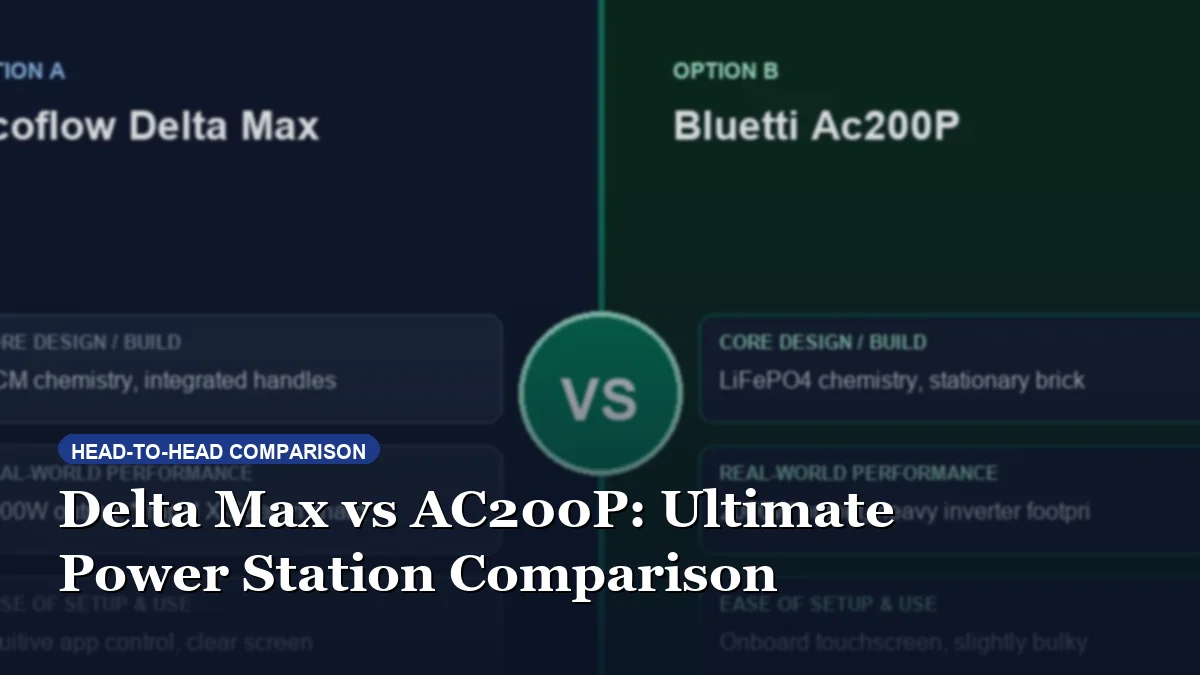
Choose the EcoFlow Delta Max if you prioritize lightning-fast AC recharging speeds and portability. Select the Bluetti AC200P for maximum cycle life using traditional chemistry.
Compare all top models in our Best Portable Power Station: Top Picks for 2026.
Side-by-Side Breakdown
| Criteria | Ecoflow Delta Max | Bluetti Ac200P | Edge |
|---|---|---|---|
| Core Design / Build | NCM chemistry, integrated handles | LiFePO4 chemistry, stationary brick | Bluetti Ac200P |
| Real-World Performance | 2000W output, rapid X-Stream charging | 2000W output, heavy inverter footprint | Ecoflow Delta Max |
| Ease of Setup & Use | Intuitive app control, clear screen | Onboard touchscreen, slightly bulky | Ecoflow Delta Max |
| Durability & Reliability | 800 cycles to 80% capacity | 3500+ cycles to 80% capacity | Bluetti Ac200P |
| Efficiency / Operating Footprint | Compact chassis, higher idle draw | Heavier chassis, robust cooling fans | Ecoflow Delta Max |
| Maintenance Requirements | Standard firmware updates, cool storage | Keep away from dust, standard storage | Bluetti Ac200P |
| Best Ideal Use Case | Emergency home backup, mobile field work | Off-grid cabin living, solar setups | Bluetti Ac200P |
Core Design and Engineering Architecture
Evaluating high-capacity portable power stations, detailed extensively inside our EcoFlow Delta Pro 3 review, requires examining underlying physical structures and internal chemistries to understand manufacturing philosophies regarding longevity and footprint.
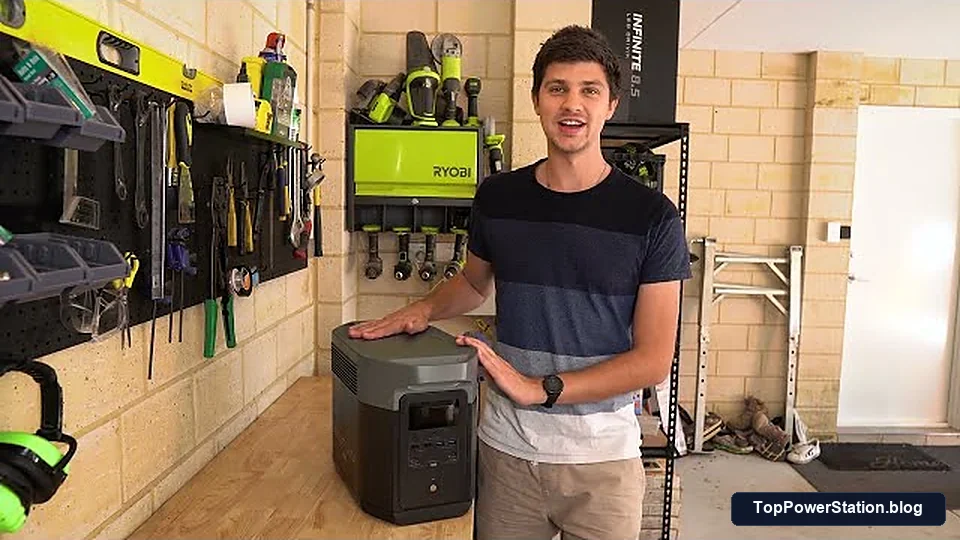
Internal thermal management dictates how hard these units can run under heavy sustained loads. Engineers implement different active cooling fans and aluminum heatsinks to dissipate heat generated by the internal inverter circuits.
Examining the chassis construction reveals high-impact ABS-PC thermoplastics designed to withstand rigorous field deployment. Internal thermal management relies on brushless cooling fans paired with extruded aluminum heatsinks to dissipate heavy loads efficiently.
The EcoFlow architecture integrates a proprietary inverter system focusing on rapid surge handling. Meanwhile, Bluetti builds its internal layout around robust LiFePO4 battery cells optimized for thousands of deep cycling iterations without severe degradation.
- EcoFlow uses an NCM lithium-ion pouch cell configuration.
- Bluetti opts for safer lithium iron phosphate prismatic cells.
- Chassis designs prioritize drop protection and stable base footprints.
Battery Chemistry Realities
Battery chemistry dictates the fundamental lifespan of your investment. Lithium iron phosphate cells provide thousands of cycles, whereas standard lithium-ion cells degrade faster under heavy daily cycling conditions.
Understanding energy density helps buyers choose the right compromise between weight and operational lifespan. Heavier chemical variants typically trade portability for superior thermal stability and extended calendar longevity.
- LiFePO4 chemistry offers superior resistance to thermal runaway.
- NCM chemistry achieves higher energy density in smaller spaces.
Inverter Topology and Surge Outputs
Pure sine wave inverters ensure sensitive electronics run smoothly without receiving corrupted alternating current signals. These internal circuits manage continuous wattage alongside temporary surge thresholds for motor loads.
Inductive loads like refrigerators require high starting wattage to kickstart compressors. Evaluating peak surge capability prevents unexpected shutdowns during heavy motorized appliance startup sequences.
- Continuous output ratings govern standard daily appliance usage.
- Surge ratings handle momentary motor startup electrical spikes.
Real-World Performance and Power Delivery
Putting these power stations through simulated emergency tests reveals practical operating limits. Sustained power delivery depends heavily on ambient temperatures, inverter efficiency losses, and internal thermal throttling behaviors.
Running high-draw kitchen appliances pushes the internal cooling fans to maximum RPM levels. Noise levels under heavy load become an important factor when operating units inside enclosed living spaces.
Continuous output testing, highlighted in our EcoFlow Delta 2 Max review, demonstrates how both units manage inductive loads. The Delta Max provides 2400W continuous output to sustain demanding household appliances during outages.
Voltage stability under fluctuating loads remains exceptionally high across all standard alternating current outlets. Pure sine wave output ensures sensitive medical equipment and microprocessors operate smoothly without electrical noise or unexpected thermal throttling issues.
- AC outlet arrays accommodate multiple heavy-duty appliance plugs simultaneously.
- DC and USB ports regulate voltage cleanly for mobile devices.
- BMS safeguards prevent overcurrent and short-circuit failure events.
AC Output Stability Under Load
Main inverter efficiency determines how much stored battery capacity actually reaches your plugged-in devices. Minor conversion losses are normal, but poor thermal management can degrade overall power output efficiency.
Monitoring voltage sag under heavy continuous loads reveals the quality of internal copper wiring. Premium power stations maintain stable voltage outputs right up to their maximum rated wattage limits.
- Pure sine wave output protects medical and computing equipment.
- Overload protection trips safely before permanent circuit damage occurs.
DC and USB Port Versatility
Modern auxiliary ports provide convenient charging for laptops, tablets, and field gear without needing bulky wall adapters. USB-C Power Delivery ports negotiate fast charging protocols dynamically with compatible devices.
Car socket outputs supply regulated twelve-volt power for portable coolers and LED lighting kits. Dedicated DC outputs help reduce overall energy conversion losses significantly.
- USB-C ports support high-wattage laptop charging standards.
- Regulated 12V ports prevent voltage drop during battery discharge.
Charging Speeds and Energy Ingestion
Recharge times dictate how quickly a depleted battery can return to service during rolling blackouts. Advanced internal charging circuitry allows rapid AC wall ingestion without requiring external power bricks.
Solar array input limits determine how fast you can replenish power while camping off-grid. Maximum open-circuit voltage ratings must be respected to avoid frying the internal MPPT charge controllers.
Energy ingestion metrics highlight EcoFlow X-Stream technology, which permits wall charging at speeds exceeding 1800W from standard AC. This rapid replenishment allows users to restore full capacity in under two hours from empty.
Conversely, examining models like those in our EcoFlow Delta Pro Max review reveals how alternative architectures utilize external power bricks alongside solar inputs supporting up to 700W photovoltaic charging.
- AC wall charging bypasses traditional slow external power adapters.
- Solar MPPT controllers optimize photovoltaic panel energy conversion efficiency.
- Vehicle charging cables provide convenient backup replenishment on roads.
AC Wall Recharging Technology
Fast wall charging transforms emergency preparedness by restoring full capacity in under two hours. High-speed AC charging generates notable internal heat, requiring aggressive cooling fan operation.
Users must ensure wall outlet circuits can handle the high amperage draw safely. Overloading older household circuits with fast-charging power stations can trip circuit breakers unexpectedly.
- Rapid charging technology reduces downtime during severe weather emergencies.
- Adjustable charging speeds protect fragile off-grid generator power sources.
Solar Array Integration and MPPT
Maximum Power Point Tracking algorithms constantly adjust electrical resistance to harvest optimal solar wattage. Connecting compatible solar panels allows sustainable off-grid recharging during extended emergency scenarios.
Exceeding maximum voltage specifications can permanently damage the internal charge controller circuitry. Always verify panel open-circuit voltage ratings before making physical connections.
- MPPT efficiency ensures maximum energy extraction from panels.
- Series wiring configurations help bypass long cable resistance losses.
Portability, Ergonomics, and Physical Footprint
Carrying heavy lithium battery packs requires smart ergonomic handle placement and balanced weight distribution. Compact footprints make stowing units inside cramped vehicle trunks or closets much easier.
Weight differences between chemical compositions directly impact how far you can comfortably carry these generators. Solid build quality inevitably adds physical mass that users must manage manually.
Physical handling requires careful assessment of weight distribution and molded grip handles. The Delta Max weighs approximately 48 pounds, making single-person transport manageable during brief loading tasks or emergency vehicular packing scenarios.
Meanwhile, the AC200P tips scales closer to 60 pounds and utilizes fixed top handles. Its heavier chassis demands more cautious lifting technique, though rubberized feet provide excellent vibration damping on uneven ground surfaces.
- Ergonomic handles reduce strain during manual transport tasks.
- Compact vertical designs save valuable floor space in tight areas.
- Rugged outer shells protect internal components from accidental impacts.
Weight and Handling Considerations
Heavier power stations require two-handed lifting techniques to prevent lower back strain during transport. Selecting lighter models trades away cycle life for improved day-to-day mobility.
Rubberized feet prevent sliding on slick surfaces while dampening operational vibrations. Secure grip points are essential when loading heavy equipment into vehicles.
- Heavy chassis designs demand careful lifting ergonomics.
- Balanced weight distribution prevents tipping during transit.
Display Panels and Interface Usability
Clear LCD screens display real-time input wattage, output consumption, and remaining runtime percentages. Bright backlighting ensures readability in direct sunlight or dark emergency basements.
Physical buttons provide tactile feedback when toggling AC and DC output zones. Simplified menu navigation prevents user frustration during stressful power outage situations.
- Real-time runtime calculations help manage remaining battery reserves.
- Dedicated status indicator lights confirm active port zones instantly.
Maintenance, Safety Standards, and Longevity
Proper maintenance routines maximize battery health and prevent premature capacity degradation over the years. Following recommended storage guidelines prevents deep discharge issues during seasonal downtime periods.
Safety certifications guarantee that internal electrical systems comply with strict international regulatory standards. Built-in battery management systems continuously monitor cell temperatures and voltages.
Long-term operational safety depends heavily on integrated Battery Management Systems monitoring cell temperature. Both models incorporate robust short-circuit protection and over-voltage safeguards to prevent catastrophic hardware failures during heavy usage cycles.
Routine maintenance involves keeping cooling intake vents free from dust accumulation and storing units at recommended temperatures. Adhering strictly to manufacturer storage guidelines ensures optimal chemical health across multi-year deployment periods.
- Regular firmware updates optimize internal power management algorithms.
- Clean storage environments prevent dust buildup inside cooling vents.
- Routine cycling maintains chemical stability across internal battery cells.
Battery Management System Protections
Sophisticated battery management systems guard against overcharging, short circuits, and thermal overloads. These digital guardians shut down operations automatically if dangerous electrical anomalies occur.
Active cell balancing ensures uniform voltage levels across all connected battery blocks. Consistent cell balancing prevents weaker cells from failing prematurely during deep discharges.
- Temperature sensors trigger shutdowns during extreme thermal events.
- Voltage monitors prevent deep discharge damage to sensitive cells.
Long-Term Storage and Firmware Care
Storing power stations at fifty percent charge preserves chemical health during extended non-use periods. Periodic maintenance charges keep internal logic boards functioning correctly over time.
Updating device firmware via companion apps unlocks performance patches and bug fixes. Manufacturers regularly refine charging profiles through software optimizations.
- Partial charge storage minimizes chemical degradation over winter months.
- Firmware updates improve overall system stability and efficiency.
Which Option Fits Your Setup Best
Selecting the correct power station depends on your specific use case, budget, and mobility requirements. Home backup users prioritize fast wall charging, whereas off-grid campers value long-term durability.
Analyzing your daily energy consumption helps match battery capacity against critical appliance requirements. Avoid buying oversized units if your actual power needs remain modest and portable.
Selecting the ideal power station requires balancing mobility requirements against capacity needs. Buyers valuing fast charging speeds, as noted in our EcoFlow Delta 2 review, will prefer this ecosystem for rapid emergency recovery.
Alternatively, users seeking extended chemical longevity for stationary off-grid cabins find immense value in the Bluetti architecture. Evaluating your daily power consumption profile remains the definitive step before purchasing.
- Home emergency backups demand reliable automated switching capabilities.
- Mobile field work requires rugged housings and rapid recharging speeds.
- Off-grid cabins benefit from solar-optimized battery chemistry variants.
Emergency Home Backup Scenarios
During extended grid failures, rapid wall recharging restores power quickly between utility outages. Keeping essential refrigerators and medical devices running smoothly prevents household emergencies.
Quiet generator operation allows indoor deployment without toxic exhaust fumes or loud engine noise. Seamless switching protects sensitive electronics from sudden power interruptions.
- Indoor operation eliminates carbon monoxide poisoning risks completely.
- Quiet inverters maintain normal household peace during outages.
Off-Grid Cabin and RV Applications
Extended off-grid living requires durable battery chemistry that withstands daily deep cycling. Pairing these units with large solar arrays creates a sustainable renewable energy ecosystem.
Robust inverter capacity runs power tools, induction cooktops, and entertainment systems simultaneously. Selecting high-cycle batteries ensures long-term reliability in remote locations.
- Daily solar cycling demands high-durability battery chemistries.
- Heavy inverter loads run workshop tools and kitchen appliances.
Frequently Asked Questions
Can I run these power stations while they are actively charging?
Yes, both units support pass-through charging capabilities seamlessly. This allows simultaneous energy ingestion and output without harming the internal battery management system.
How do lithium-ion and LiFePO4 chemistries differ in lifespan?
Lithium iron phosphate cells offer thousands of cycles before degrading. Standard lithium-ion alternatives provide shorter overall operational lifespans but achieve higher energy density.
Are these portable power stations safe to operate indoors?
Both units operate silently without producing toxic exhaust fumes. This makes them ideal for indoor emergency use during extended grid power outages.
What maintenance do these generators require during storage?
Keep units in cool, dry spaces charged around fifty percent. Periodic firmware updates and routine test cycles preserve long-term health.
Can I expand total battery capacity with extra packs?
Both models support proprietary expansion batteries for increased runtime. This modular approach allows customized energy storage scaling for heavy backup demands.