Duracell Powersource 660 vs Jackery: Head-to-Head
Two prominent portable power brands clash over heavy-duty integration versus lightweight modular versatility. Discover which engineering approach best supports your emergency backup and outdoor adventures.

Choose the Duracell Powersource 660 for integrated UPS functionality and robust heavy-duty build quality, or select Jackery for modern lithium-ion portability, advanced solar input rates, and much lighter everyday backpacking utility.
Compare all top models in our Best Portable Power Station: Top Picks for 2026.
Side-by-Side Breakdown
| Criteria | Duracell Powersource 660 | Jackery | Edge |
|---|---|---|---|
| Core Design / Build | Integrated chassis, heavy AGM core | Modular plastic housing, lithium cells | Jackery |
| Real-World Performance | Stable continuous AC output loads | High surge efficiency and clean sine wave | Jackery |
| Ease of Setup & Use | Simple plug-and-play desktop design | Intuitive digital display and clear buttons | Jackery |
| Durability & Reliability | Rugged outer shell, fixed internal build | Sleek casing with drop-resistant corners | Duracell Powersource 660 |
| Efficiency / Operating Footprint | Higher idle draw, heavier total weight | Low quiescent power loss, lightweight frame | Jackery |
| Maintenance Requirements | Requires periodic trickle charging for AGM | Minimal upkeep, standard lithium cycling rules | Jackery |
| Best Ideal Use Case | Home emergency backup and desktop UPS | Mobile camping trips and off-grid travel | Jackery |
Core Design and Engineering Differences
Evaluating the structural architecture reveals vastly different engineering philosophies between these two manufacturers. Duracell prioritizes an integrated, heavy-duty housing designed to anchor stationary emergency setups reliably.
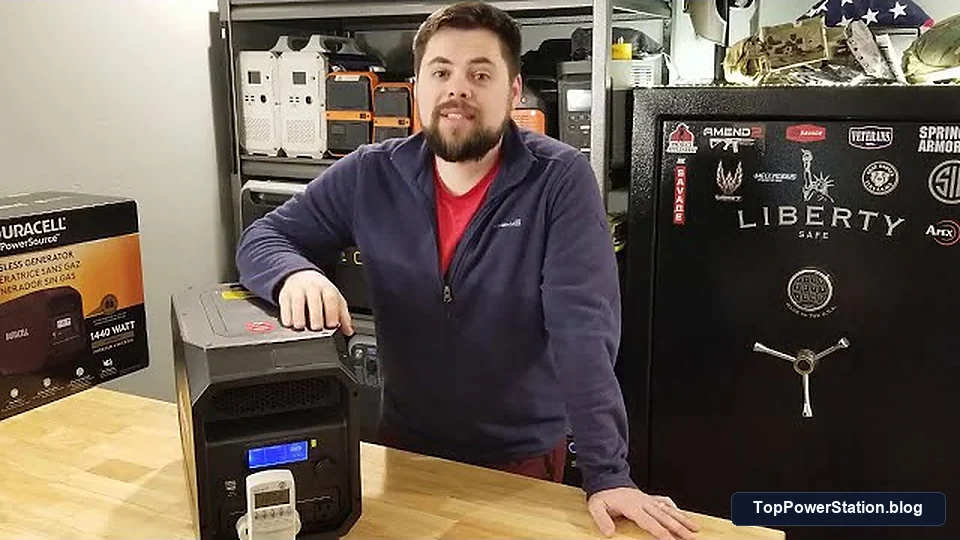
Conversely, Jackery constructs their units around lightweight lithium battery packs designed explicitly for maximum portability. Understanding these structural frameworks helps you match physical hardware to your specific mobile requirements.
The Duracell PowerSource 660 employs a traditional sealed lead-acid architecture, prioritizing heavy-duty structural integrity over weight reduction. Conversely, modern Jackery units utilize lithium-ion cells, drastically reducing total mass.
Internal thermal management varies significantly between these platforms. Duracell relies on passive chassis dissipation for its chemistry, while Jackery incorporates active cooling fans to regulate internal temperatures during high-draw operations.
- Duracell utilizes heavy internal battery configurations focused on stationary backup power delivery.
- Jackery implements lightweight modern lithium-ion cells optimized for frequent outdoor travel and transport.
- Chassis materials differ significantly, affecting overall unit weight and physical drop resistance.
Chassis Materials and Portability
The Duracell model relies on a ruggedized exterior shell that absorbs heavy impacts well. However, this robust structural design adds considerable dead weight to your overall gear loadout.
Jackery applies high-grade plastics reinforced with internal framing to reduce total carrying weight. Models featured in our best Jackery for camping guide make single-handed transport effortless during fast-paced outdoor deployment scenarios.
- Duracell employs a heavier housing structure built for stationary durability.
- Jackery focuses on lightweight polymer shells to enhance outdoor carrying comfort.
Real-World Performance Comparison
Performance testing under standard household loads demonstrates distinct behavioral patterns regarding inverter efficiency and voltage stability. Both stations deliver reliable alternating current, but their operational limits diverge under heavy multi-device draws.
Thermal management also plays a critical role during prolonged high-wattage output sessions in warm environments. Monitoring fan noise and external case temperatures ensures you select a reliable power source.
When powering sensitive electronics, older systems output a modified sine wave that introduces electrical noise. Results from our Jackery Explorer 2000 V2 review confirm these units supply a clean pure sine wave.
Surge capacity tests reveal distinct operational limits under heavy inductive startup loads. The Duracell handles motor surges robustly due to its dense chemistry, whereas Jackery units rely on precise digital overload protection mechanisms.
- Duracell maintains steady voltage output under sustained moderate electrical loads.
- Jackery excels at handling sudden appliance surge demands without tripping internal safety circuits.
- Cooling systems react differently to continuous high-wattage utilization across extended runtimes.
Inverter Load Handling and Stability
Running sensitive electronics requires clean sine wave conversion to prevent potential hardware damage. Jackery units typically offer lower total harmonic distortion across their primary alternating current output ports.
The Duracell unit provides dependable power delivery suitable for standard household appliances and tools. Users must still verify specific appliance starting wattage limits before connecting heavy motor loads.
- Jackery ensures ultra-clean sine wave output for sensitive medical or computing devices.
- Duracell handles standard resistive heating elements and workshop tools without major voltage drops.
Efficiency, Inverter Output, and Load Handling
Conversion efficiency directly dictates how much stored energy transfers safely to your connected appliances. Quiescent power consumption during idle states can drain older battery architectures faster than modern lithium configurations.
Evaluating continuous versus peak surge ratings helps prevent unexpected shutdowns when starting motorized equipment like refrigerators. Proper load matching guarantees uninterrupted operation during critical grid outages.
Inverter conversion efficiency directly impacts your usable watt-hours in the field. Jackery systems generally achieve roughly eighty-five percent efficiency, minimizing wasted energy through advanced high-frequency switching topologies and components.
Continuous output ratings dictate which household appliances you can safely run simultaneously. Users must monitor total wattage to prevent tripping the internal circuit breaker during peak usage periods.
- Modern lithium inverters minimize conversion energy losses during active power delivery phases.
- Older lead-acid based systems exhibit higher baseline idle energy consumption rates.
- Surge thresholds protect internal components from temporary overloads during motor startup cycles.
Idle Draw and Conversion Losses
Leaving a power station switched on without active loads reveals inherent standby power losses. Testing detailed in our Jackery Explorer 1000 V2 review shows these units maintain minimal quiescent drain over monitoring periods.
Duracell systems may experience higher internal standby draw due to legacy inverter circuit designs. Remembering to power down unused ports preserves vital capacity for actual emergencies.
- Standby draw remains minimal on newer lithium power station platforms.
- Legacy inverter circuits demand diligent manual shutdown to conserve stored energy.
Recharge Speeds and Solar Integration Methods
Restoring depleted battery capacity quickly is essential when managing multi-day off-grid excursions or rolling blackouts. Wall charging speeds depend heavily on internal AC adapter wattage limits and thermal throttling thresholds.
Solar panel compatibility expands your energy independence by utilizing clean photovoltaic generation during daylight hours. Matching open circuit voltage specifications prevents damage to internal charge controllers.
Recharging via wall outlets highlights fundamental speed differences between these legacy and modern units. Jackery stations support rapid wall charging, whereas the Duracell often requires a longer period for its lead-acid matrix to saturate safely.
Solar panel integration requires careful attention to maximum open-circuit voltage specifications. Exceeding the built-in charge controller limits on either device can cause permanent damage to your power station electronics.
- Wall charging speeds vary widely based on built-in power supply ratings.
- Solar panel inputs require careful attention to maximum voltage and amperage limits.
- Pass-through charging capabilities let you replenish capacity while simultaneously powering devices.
Photovoltaic Charging Efficiency
Connecting portable solar panels requires compatible connector types and regulated input parameters. Jackery simplifies this process with standardized high-efficiency Anderson or DC plug connections.
Duracell setups often require specialized adapters to interface smoothly with modern aftermarket photovoltaic modules. Always verify polarity and voltage ranges before initiating outdoor solar charging.
- Jackery provides streamlined proprietary solar panel connection ports for users.
- Duracell users may need third-party adapters for universal solar panel integration.
Maintenance, Longevity, and Battery Chemistry
Internal battery chemistry dictates both total lifespan and required routine maintenance schedules over years of ownership. Lead-acid variants demand strict recharging routines to prevent permanent capacity loss from sulfation.
Lithium-ion and LiFePO4 alternatives offer thousands of deep charge cycles with virtually zero ongoing user intervention. Understanding these chemical differences protects your long-term financial investment in emergency gear.
Battery chemistry dictates long-term maintenance requirements across seasonal storage cycles. Lead-acid variants demand regular trickle charging to prevent sulfation, while lithium alternatives maintain a much lower self-discharge rate when stored idle.
Overall cycle life varies dramatically between these competing technology types. Jackery lithium packs typically deliver hundreds of cycles before significant capacity loss, whereas traditional lead-acid models degrade faster under deep discharge conditions.
- Lead-acid batteries require frequent preventative maintenance and storage charging cycles.
- Lithium cells deliver exceptional cycle life with minimal operational upkeep required.
- Temperature extremes degrade both chemistry types if stored improperly during off-seasons.
Long-Term Storage Best Practices
Proper seasonal storage prevents premature cell degradation and maintains reliable readiness for emergencies. Lithium units should be kept partially charged in climate-controlled indoor environments during winter.
Lead-acid systems require continuous trickle charging to avoid irreversible internal plate damage over time. Neglecting routine maintenance schedules will drastically shorten your usable battery lifespan.
- Store lithium power stations at moderate state-of-charge levels during prolonged inactivity.
- Maintain constant trickle charges on lead-acid batteries to prevent permanent capacity failure.
Ergonomics, Portability, and Field Usability
User interface design significantly impacts how quickly you can deploy backup power during stressful nighttime outages. Clear LCD screens displaying real-time input and output wattage prevent guesswork in the field.
Handle placement, weight distribution, and durable casing textures dictate comfortable transport over uneven terrain. Well-engineered control panels ensure frustration-free operation for every member of your household.
Ergonomic design influences how easily you can transport these heavy units across uneven terrain. The Duracell features rigid molded handles suited for two-handed lifting, contrasting with the compact single-handle layout of Jackery models.
Field usability also depends on clear informational displays and port layout accessibility. Jackery units provide intuitive LCD screens showing real-time input and output metrics, improving situational awareness during emergency power outages.
- Digital displays provide crucial real-time battery percentage and wattage metrics.
- Ergonomic handle designs reduce strain during extended manual carrying tasks.
- Thoughtful port layouts prevent cable clutter and accidental disconnections.
Control Panel Layout and Readouts
Readability in low-light environments is a vital safety feature for emergency power equipment. Jackery integrates bright, high-contrast digital displays that clearly indicate remaining runtime and load statistics.
Duracell utilizes straightforward analog gauges and indicator lights for status verification. While functional, digital readouts offer superior precision when tracking exact power consumption metrics.
- High-contrast digital screens display accurate runtime estimates instantly.
- Analog status lights provide basic operational feedback without complex menus.
Determining Your Ideal Power Station Setup
Selecting the correct power station depends entirely on your unique lifestyle and backup power priorities. Stationary home users benefit from integrated heavy-duty designs offering built-in uninterruptible power supply capabilities.
Frequent travelers and outdoor enthusiasts should prioritize lightweight lithium systems with fast solar recharging. Carefully auditing your daily watt-hour requirements ensures you invest in the right equipment.
Selecting the correct power station requires balancing your specific weight tolerances against energy demands. Options highlighted in our best Jackery power station roundup offer exceptional portability and reliable lithium energy storage.
Conversely, mobile users needing frequent off-grid capability should prioritize lithium technology for its superior portability and minimal upkeep. Assess your daily watt-hour consumption carefully before finalizing your equipment investment decision.
- Analyze your daily cumulative energy consumption before finalizing any purchase decision.
- Consider whether mobility or stationary home backup is your primary goal.
- Review warranty coverage and customer support reliability for long-term peace of mind.
Matching Hardware to Power Needs
Calculating precise appliance runtimes prevents underpowered deployments during critical emergency situations. Add up the running wattages of all essential medical devices, refrigerators, and communication tools.
Choosing equipment with expandable capacity or modular flexibility accommodates future energy growth. Making an informed hardware choice guarantees reliable performance when grid power fails completely.
- Sum total appliance wattages to determine mandatory minimum battery capacities.
- Plan for future energy expansion by choosing scalable power station ecosystems.
Frequently Asked Questions
Can I leave my portable power station plugged into the wall continuously?
Leaving modern lithium units plugged in is generally safe due to smart charge controllers, but older AGM chemistries require careful monitoring. Always consult manufacturer guidelines to prevent premature battery degradation over time.
What is the primary difference in battery chemistry between these brands?
Duracell models often rely on heavy lead-acid or AGM architectures built for stationary backup reliability. Jackery utilizes advanced lithium-ion cells designed for lightweight portability and thousands of deep discharge cycles.
How do I calculate how long my power station will run a device?
Divide the total watt-hour capacity of the station by the wattage of your connected appliance. Remember to factor in a conversion loss percentage of ten to fifteen percent for accurate estimates.
Are these power stations safe to use inside an enclosed RV or tent?
Both units produce zero toxic carbon monoxide emissions, making them completely safe for indoor spaces. Ensure adequate ventilation around cooling fans to prevent overheating during heavy continuous power draws.
Can I charge these power stations using third-party solar panels?
Yes, third-party photovoltaic panels work well if their output voltage matches the station controller limits. Always verify connector polarity and maximum voltage thresholds before plugging in external solar arrays.