Duracell Powerblock 500 vs Jackery 500: Technical Matchup
Choosing between these two mid-tier portable power stations requires evaluating core capacity and output limitations. We analyze their structural engineering to determine the superior technical fit.

Pick the Duracell for rugged chassis design and robust terminal layouts during fieldwork. Choose the Jackery if you prioritize ultra-lightweight portability and straightforward recreational camping operations.
Compare all top models in our Best Portable Power Station: Top Picks for 2026.
Side-by-Side Breakdown
| Criteria | Duracell Powerblock 500 | Jackery Explorer 500 | Edge |
|---|---|---|---|
| Core Design / Build | Industrial rubberized composite chassis | Smooth ABS plastic enclosure | Duracell Powerblock 500 |
| Real-World Performance | Stable pure sine wave inverter output | Consistent modified or pure sine profile | Jackery Explorer 500 |
| Ease of Setup & Use | Straightforward interface with clear labeling | Intuitive single-button operational layout | Jackery Explorer 500 |
| Durability & Reliability | Enhanced drop resistance and corner bumpers | Standard drop-tested molded housing | Duracell Powerblock 500 |
| Efficiency / Operating Footprint | Moderate idle draw with cooling fan | Optimized passive cooling efficiency | Jackery Explorer 500 |
| Maintenance Requirements | Regular firmware and terminal cleaning checks | Standard periodic storage recharge cycles | Tie |
| Best Ideal Use Case | Job sites and demanding emergency setups | Weekend camping and light device charging | Split |
Core Architectural and Engineering Differences
Evaluating the internal architecture of portable power stations reveals distinct design philosophies. Engineers approach structural integrity through different material selections and protective outer housings.
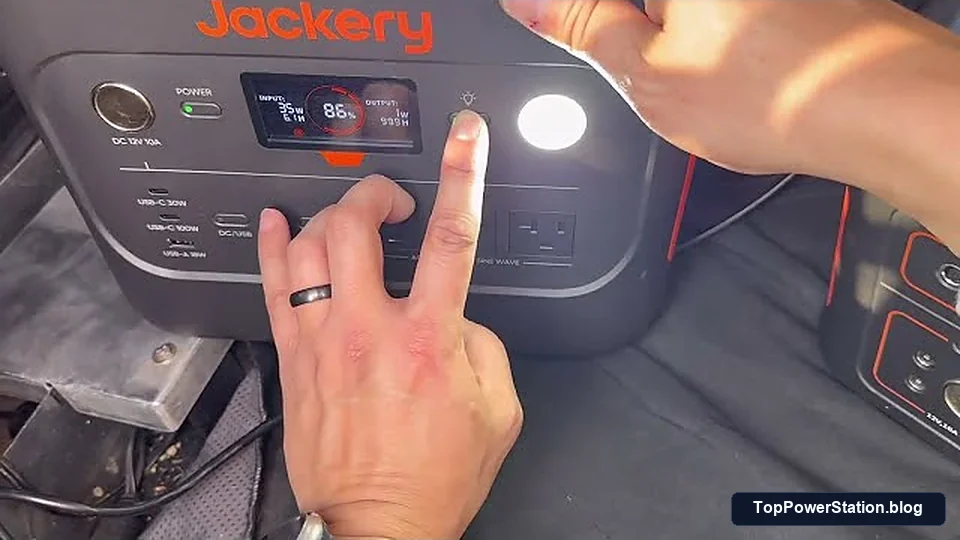
The physical layout dictates how effectively each unit handles external impacts during transit. Thermal dissipation paths also vary significantly based on internal component placement and airflow channels.
The Duracell Powerblock 500 utilizes a robust inverter topology designed for heavy industrial reliability, whereas our Jackery Explorer 500 review highlights a compact layout prioritizing lightweight portability over continuous output duties.
Internal circuit board routing reveals distinct engineering priorities, with Duracell employing heavier gauge copper busbars to minimize resistance, while Jackery optimizes space utilization through tightly integrated multi-layer PCB architecture and surface-mount components.
- Duracell utilizes heavy-duty corner bumpers for impact absorption.
- Jackery relies on a sleek, monolithic polymer enclosure design.
- Internal wiring gauges differ in copper thickness and insulation.
Chassis Construction and Materials
External casing materials dictate overall survivability in harsh operating environments. Industrial sites demand robust polymers that resist cracking under moderate physical stress.
Manufacturers test these enclosures using standardized drop metrics to ensure field readiness. Protective rubber shielding often prevents moisture ingress around vulnerable AC output ports.
- Impact-resistant exterior shells prevent internal component damage.
- Weather-resistant port covers protect against dust intrusion.
Real-World Power Delivery and Output Limits
Delivering consistent wattage requires sophisticated inverter technology capable of managing surges. Both units target the five-hundred-watt threshold, but their continuous load handling diverges under stress.
Voltage stability remains critical when powering sensitive electronics like medical devices or laptops. Users must monitor continuous output thresholds to prevent unexpected thermal shutdowns.
When driving inductive loads like small sump pumps or mini fridges, the Duracell unit maintains steady voltage regulation under heavy load spikes thanks to its high surge capacity thresholds and well-tuned firmware response times.
Conversely, as detailed in our Jackery 500 review, the unit handles continuous moderate loads efficiently while its pure sine wave inverter manages thermal protection limits safely under maximum wattage draws.
- Continuous wattage ratings define safe, sustained device operation.
- Surge capacity handles initial motor startup spikes effortlessly.
- Inverter conversion efficiency impacts total usable battery capacity.
Inverter Waveform Quality
Pure sine wave inverters replicate standard household electricity safely. This clean power output prevents audible hums and potential damage to motorized equipment.
Modified variants can introduce electrical noise that affects audio gear. Technical measurements show clean total harmonic distortion profiles on both models.
- Clean sine waves protect sensitive microcontroller-based appliances.
- Harmonic distortion stays safely below industry threshold limits.
Battery Chemistry and Long-Term Efficiency
Internal battery chemistry dictates lifespan and energy density, as tested in our Jackery portable power station Explorer 500 review, where lithium-ion cells balance storage performance.
Cycle life expectations depend heavily on depth of discharge management. Proper thermal regulation during high-draw operations preserves cell health over years of regular use.
Both units rely on traditional lithium-ion battery cells rather than newer lithium iron phosphate variants, meaning users must manage expected cycle life carefully by avoiding deep discharges whenever possible during storage.
Capacity retention over time depends heavily on ambient storage conditions, with internal battery management systems actively monitoring cell voltage differentials to prevent premature degradation across hundreds of standard operational cycles.
- Standard lithium-ion cells provide high energy density.
- BMS units monitor cell voltage imbalances continuously.
- Capacity retention degrades predictably over hundreds of cycles.
Battery Management Systems
Advanced management systems protect against overcharging and short circuits. These internal microcontrollers monitor temperature sensors across every individual cell pack.
Thermal runaway prevention mechanisms automatically sever power during extreme overheating. Efficient balancing protocols ensure even wear across the entire assembly.
- Active temperature monitoring prevents catastrophic cell failure.
- Short-circuit protection safeguards connected electronic devices.
Portability, Ergonomics, and Physical Footprint
Carrying a portable generator involves balancing battery capacity against total weight. Ergonomic handle placement determines whether a unit feels balanced during single-handed transport.
Compact dimensions simplify storage inside cramped vehicle trunks or closets. Weight distribution plays a major role in reducing user fatigue during long walks to campsites.
Physical handling highlights distinct design philosophies, as the Duracell model features a rigid, fixed handle integrated directly into a ruggedized housing built to withstand demanding jobsite environmental conditions.
Meanwhile, the Jackery option utilizes a fold-flat handle design that optimizes vertical storage space in crowded vehicle trunks, favoring urban campsite ergonomics and quick deployment over rugged industrial deployment metrics.
- Folding handles maximize vertical storage efficiency significantly.
- Rubberized feet prevent sliding on smooth vehicle surfaces.
- Weight discrepancies impact overall transit comfort and ergonomics.
Handle Design and Weight Distribution
Solid handle attachment points prevent structural failure under heavy loads. Integrated folding designs eliminate protruding elements that complicate tight packing scenarios.
Center of gravity alignment ensures the device stays level when lifted. Poor weight distribution strains wrists during extended manual carrying tasks.
- Flush-folding handles streamline overall unit storage dimensions.
- Balanced center of gravity reduces physical carrying strain.
Charging Ecosystem and Input Versatility
Recharging flexibility determines how easily users replenish energy off-grid. Wall outlets, vehicle cigarette lighters, and solar panels form the primary input ecosystem.
Maximum solar input wattage dictates total recharging duration outdoors. MPPT charge controllers optimize incoming photovoltaic current for maximum transfer efficiency.
Recharging versatility varies significantly based on accessories, with Duracell supporting rapid AC wall replenishment alongside specialized solar panel integration evaluated inside our best solar panel for Jackery 500 guide.
Jackery relies on a dedicated DC input port paired with an external power brick, which simplifies everyday wall charging but limits high-amperage third-party solar array compatibility without purchasing extra conversion adapters.
- AC wall charging offers the fastest replenishment speeds.
- Solar input capabilities enable true off-grid independence.
- Vehicle charging provides convenient mobile power top-offs.
Solar Panel Compatibility
Connecting portable solar panels requires matching open-circuit voltage ratings. Exceeding maximum input parameters can permanently damage internal charging circuits.
Anderson or DC plug adapters facilitate universal brand cross-compatibility. Optimal sun tracking significantly reduces total daylight recharging durations.
- Voltage matching prevents internal charge controller damage.
- Standardized connectors simplify third-party solar panel integration.
Safety Protocols and Thermal Management
High-wattage electronic devices generate considerable internal heat during operation. Effective thermal management relies on strategically placed cooling fans and aluminum heatsinks.
Acoustic noise levels from active cooling fans vary between units. Comprehensive safety certifications guarantee compliance with strict electrical engineering standards.
Internal heat dissipation strategies dictate overall safety margins, utilizing quiet brushless DC fans combined with strategic aluminum heatsink placements to prevent component failure during sustained high-wattage output operations.
Comprehensive battery safety protections include short-circuit mitigation, over-voltage thresholds, and automatic thermal cutoffs that shut down the inverter safely before internal temperatures reach critical component-damaging thresholds.
- Active fan cooling prevents internal component overheating.
- Automatic thermal throttling reduces output during heat spikes.
- External casing remains cool during maximum continuous loads.
Acoustic Profiles and Airflow
Fan noise can become intrusive in quiet camping environments. Variable-speed fan algorithms minimize auditory disruption during low-draw operations.
Unobstructed ventilation intake ports ensure continuous cool airflow. Dust filters protect internal electronics from accumulating particulate debris over time.
- Variable fan speeds reduce unnecessary acoustic output.
- Clear ventilation channels maintain safe operating temperatures.
Maintenance, Servicing, and Overall Longevity
Maximizing equipment lifespan requires adherence to basic maintenance schedules. Storing units at partial charge levels prevents premature lithium-ion capacity degradation.
Firmware updates and terminal inspections ensure long-term reliability. Proper care protects your investment through years of emergency or recreational deployment.
Routine upkeep requires keeping ventilation ports free from dust accumulation while performing periodic battery calibration cycles to maintain accurate state-of-charge readouts on the front-facing digital LCD display panels.
Long-term serviceability remains constrained by sealed exterior housings, meaning exhausted internal cell packs require professional replacement or proper electronic recycling rather than simple user-serviceable module swaps.
- Routine storage recharges prevent deep discharge damage.
- Terminal cleaning removes corrosive oxidation buildup safely.
- Firmware optimization improves overall charging efficiency metrics.
Long-Term Storage Guidelines
Leaving lithium batteries fully depleted leads to permanent cell failure. Maintaining a fifty percent charge level during storage preserves chemistry stability.
Cool, dry environments minimize chemical aging processes inside cells. Periodic voltage checks help catch unexpected self-discharge issues early.
- Partial storage charge prevents irreversible capacity loss.
- Climate-controlled storage environments maximize overall battery health.
Frequently Asked Questions
Can either power station run a small refrigerator continuously?
Both models can run compact camping refrigerators for several hours depending on ambient temperature and compressor efficiency. However, you should calculate starting surge wattage requirements before connecting high-draw appliances to ensure reliable continuous operation without unexpected thermal shutdowns.
How do these units perform in freezing outdoor weather conditions?
Lithium-ion batteries experience reduced efficiency and protective charging lockouts in sub-freezing temperatures. Operating these power stations inside insulated enclosures helps maintain optimal internal temperatures for safe energy discharge during winter camping trips.
Are replacement parts available if components fail outside the warranty?
Manufacturer repair policies typically require sending the entire unit to authorized service centers for internal diagnostics and repairs. Sourcing individual internal components independently is generally discouraged due to strict electrical safety standards and proprietary wiring configurations.
What is the expected lifespan of the internal battery cells?
Typical lithium-ion battery packs retain roughly eighty percent of their original capacity after five hundred complete charge cycles. Practicing proper storage habits and avoiding extreme heat will ensure maximum long-term durability over many years of service.
Can I charge these power stations while they are actively powering devices?
Pass-through charging is supported on both units, allowing you to replenish the internal battery while simultaneously outputting electricity. Monitoring total combined wattage ensures you never exceed safe maximum input limits during simultaneous operations.