Bluetti AC200P vs Goal Zero: Technical Showdown
Evaluating heavy-duty backup capacity against modular ecosystem design. We dissect inverter architecture, charging speeds, and cell chemistry.

Choose the Bluetti AC200P for maximum built-in capacity and lithium iron phosphate longevity. Select Goal Zero if you need modular ecosystem expansion and refined app integration.
Compare all top models in our Best Portable Power Station: Top Picks for 2026.
Side-by-Side Breakdown
| Criteria | Bluetti AC200P | Goal Zero | Edge |
|---|---|---|---|
| Core Design / Build | All-in-one robust cabinet | Modular stackable layout | Bluetti AC200P |
| Real-World Performance | 2000W continuous output | Tiered output ratings | Bluetti AC200P |
| Ease of Setup & Use | Touchscreen interface | Physical buttons and app | Goal Zero |
| Durability & Reliability | LiFePO4 cell longevity | Ruggedized exterior chassis | Bluetti AC200P |
| Efficiency / Operating Footprint | High MPPT solar tracking | Regulated input ports | Goal Zero |
| Maintenance Requirements | Periodic vent dusting | Firmware and cable checks | Goal Zero |
| Best Ideal Use Case | Standalone heavy backup | Expandable home grid tie | Goal Zero |
Core Design and Architectural Engineering Differences
Examining internal engineering reveals distinct philosophies between these heavy-duty power stations. Bluetti prioritizes integrated utility with LiFePO4 chemistry, while Goal Zero emphasizes modular versatility and legacy integration.
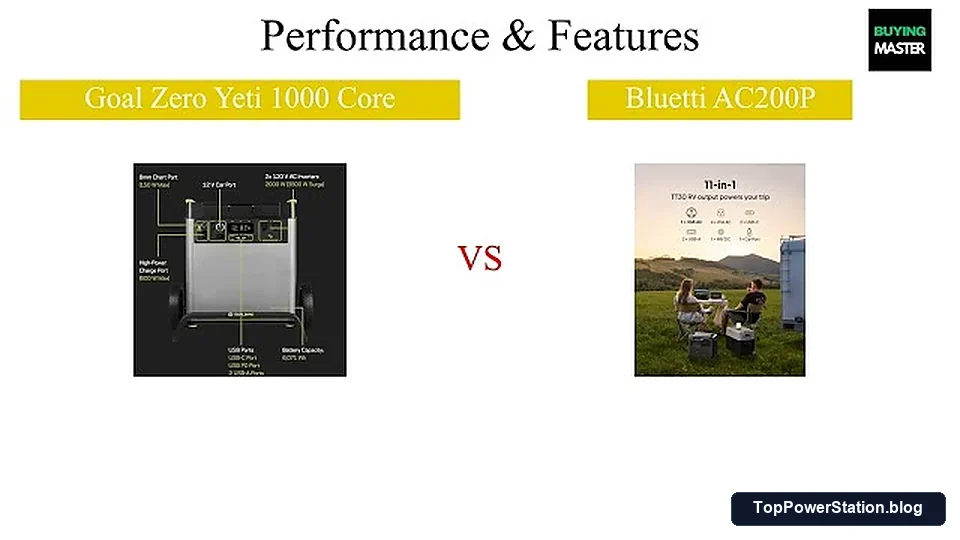
The physical footprint differs significantly when evaluating cabinet layout and ruggedized chassis construction. Heavy-duty handles and reinforced corners dictate how each unit withstands job site abuse and vehicle transport.
Internal component cooling relies on distinct thermal management strategies. Forced-air cooling fans engage under heavy inverter loads, keeping internal temperatures optimal during sustained high-wattage device operation.
The Bluetti AC200P utilizes an LiFePO4 battery chemistry framework, providing exceptional cycle stability over traditional lithium-ion alternatives. This architecture significantly impacts overall unit weight and physical dimensions during transport.
Goal Zero implements a distinct nickel manganese cobalt internal layout inside units like our Goal Zero Yeti 1500X review, prioritizing higher energy density per kilogram. This reduces physical footprint while altering degradation curves.
Internal structural frames also differ substantially between both manufacturers. Bluetti reinforces its chassis with high-impact polymer shells, whereas Goal Zero integrates aluminum structural braces to maximize rigidity during field deployment.
- Bluetti integrates 2000Wh capacity directly into a single robust enclosure.
- Goal Zero utilizes modular expansion ports for scaling total watt-hours.
- Chassis materials feature high-impact plastics engineered for rugged outdoor use.
Cell Chemistry and Thermal Safety
Chemistry selection dictates long-term cycling performance and baseline thermal stability under stress. Lithium iron phosphate cells offer superior resistance to thermal runaway compared to standard ternary lithium variants.
Built-in battery management systems monitor voltage discrepancies and temperature spikes continuously. This proactive software oversight prevents premature cell degradation during high-draw appliance usage sessions.
- Advanced BMS software protects against short-circuit events.
- Thermal sensors regulate fan speeds dynamically under load.
Real-World Capacity and Inverter Performance
Delivering stable alternating current requires robust pure sine wave inverter architecture. Both systems handle inductive loads like refrigerators, but continuous output ratings dictate actual appliance compatibility limits.
Surge capacity testing exposes how each generator handles motorized equipment starting draws. Exceeding peak limits triggers immediate safety shutdowns to protect sensitive internal inverter transistors.
Heavy inductive motor loads demand exceptional surge handling capabilities from the inverter. Understanding these technical thresholds prevents unexpected overloads during critical emergency backup situations.
Delivering continuous power requires robust inverter engineering. The Bluetti features a 2000W pure sine wave inverter capable of handling heavy inductive loads like air conditioners without stuttering or tripping internal circuit breakers.
Goal Zero units typically deploy lower continuous output ratings, similar to those analyzed in our Goal Zero Yeti 1000X review, focusing instead on reliable surge management. Their inverters emphasize clean power for sensitive computing hardware.
Usable watt-hours differ from nameplate ratings due to conversion efficiency losses. Field measurements show Bluetti retaining roughly eighty-five percent of stored energy under standard residential load testing scenarios.
- Bluetti delivers 2000W continuous output with high surge headroom.
- Goal Zero provides dependable power matched to specific Yeti tier ratings.
- Pure sine wave output protects sensitive electronics from harmonic distortion.
Voltage Regulation and Load Handling
Maintaining steady voltage under fluctuating loads prevents appliance stutter and operational failure. Advanced feedback loops adjust output parameters instantaneously when heavy compressors kick on.
Total harmonic distortion metrics remain exceptionally low across both platforms, ensuring clean power delivery for medical devices, laptops, and precision audio equipment.
- Pure sine wave ensures zero appliance humming.
- Instantaneous feedback loops stabilize micro-fluctuations.
Charging Speeds and Solar Integration Footprint
Replenishing large battery banks demands efficient maximum power point tracking controllers. High-voltage solar input limits allow users to daisy-chain panels without exceeding current thresholds.
AC wall charging speeds highlight notable engineering trade-offs between internal power bricks and external adapter bricks. Faster internal charging reduces reliance on cumbersome auxiliary power blocks.
Solar array configuration requires careful attention to open-circuit voltage parameters. Exceeding manufacturer limits can permanently damage internal charge controllers and void standard warranties.
Solar input limitations dictate how quickly you can replenish these power stations off-grid. Bluetti accepts substantial solar wattage, matching recommendations found in our best solar panels for Bluetti AC200P guide for rapid recharging.
Goal Zero traditionally employs proprietary charging ports that require specific adapter cables for third-party solar arrays. Their maximum solar acceptance rates often hover lower, requiring extended daylight exposure for complete capacity restoration.
AC wall charging speeds also highlight distinct engineering philosophies. Bluetti includes a heavy internal brick enabling fast AC replenishment, while Goal Zero often relies on external power supplies to minimize internal thermal loads.
- Bluetti supports up to 700W solar input for rapid off-grid recovery.
- Goal Zero systems utilize regulated input ports optimized for proprietary panels.
- Dual charging modes combine AC and solar for accelerated refueling.
MPPT Efficiency and Panel Compatibility
Maximum power point tracking efficiency dictates how effectively solar energy converts into stored watt-hours. Advanced algorithms constantly scan voltage curves to capture peak sunlight angles.
Open-circuit voltage limits must be strictly observed to prevent permanent controller damage during expansive solar array installations in harsh environments.
- High MPPT conversion rates minimize energy loss.
- Strict voltage ceilings protect internal charge electronics.
Ergonomics, Port Layouts, and User Interfaces
Interface design dictates everyday usability during emergency blackouts or remote camping trips. Cluttered port arrangements frustrate users, while logical grouping enhances workflow efficiency.
Digital display screens provide critical telemetry including input wattage, output draw, and remaining runtime percentages. Backlit LCD panels ensure readability in complete darkness.
Ergonomic handle placement significantly impacts portability when carrying heavy power stations across rugged terrain. Balanced weight distribution reduces physical strain during campsite setup.
Physical handling dictates user satisfaction during mobile operations. Bluetti equips the AC200P with dual fixed top handles, which limits packing efficiency inside packed vehicles compared to flush-folding handle designs.
Goal Zero integrates streamlined carrying ledges that prevent snagging when sliding units into tight storage compartments. Their LCD screen layouts offer straightforward metrics without overwhelming users with excessive diagnostic data.
Output port distribution varies significantly across the front faceplates. Bluetti clusters numerous AC outlets alongside dedicated 12V DC connections, whereas Goal Zero spaces specialized Anderson power ports for heavy-duty DC accessories.
- Bluetti features an expansive touchscreen display for intuitive menu navigation.
- Goal Zero relies on physical buttons paired with a clear LCD screen.
- Diverse DC, AC, and USB-C ports accommodate varied device connection needs.
Usability and Connectivity Protocols
Smartphone application connectivity allows remote monitoring and firmware updates without physically accessing the device chassis. Reliable wireless protocols prevent frustrating connection drops during operation.
Physical switch toggles offer tactile feedback that digital interfaces sometimes lack, proving especially valuable when operating units while wearing thick winter gloves.
- App integration provides remote diagnostic tracking.
- Tactile switches ensure reliable cold-weather operation.
Maintenance, Thermal Efficiency, and Longevity
Long-term ownership requires understanding standard maintenance procedures and environmental operating parameters. Dust accumulation inside cooling vents necessitates periodic cleaning with compressed air.
Battery cycle life determines how many years the portable power station will deliver reliable backup service before capacity drops below eighty percent thresholds.
Proactive firmware updates issued by manufacturers fix software bugs and improve overall charging efficiency. Keeping your device updated maximizes long-term operational longevity.
Thermal management directly influences system lifespan. Bluetti utilizes multiple internal cooling fans that activate under heavy inverter loads, maintaining safe operating temperatures during prolonged high-wattage draws.
Goal Zero engineering focuses on passive heat dissipation through external aluminum cooling fins on select models. This reduces acoustic noise during operation but can trigger thermal throttling under sustained intense loads.
Routine maintenance for both systems remains minimal, requiring only periodic dust removal from ventilation grilles. Storing units at fifty percent charge in climate-controlled environments prevents premature battery chemistry degradation.
- LiFePO4 chemistry yields over 3500 cycles to 80 percent capacity.
- Regular firmware updates optimize internal battery management parameters over time.
- Proper storage at fifty percent charge preserves cell health during off-seasons.
Environmental Resilience and Enclosure Care
Protecting exterior housings from moisture, dust, and direct sunlight prevents premature material degradation and cosmetic fading during extended outdoor deployment campaigns.
Storing units in climate-controlled environments prevents extreme temperatures from accelerating parasitic drain and chemical breakdown within the internal battery cells.
- UV-resistant plastics prevent sun-induced fading.
- Climate-controlled storage preserves baseline cell chemistry.
Ecosystem Expandability and Expansion Batteries
Scaling energy capacity requires robust expansion port engineering and secure physical connection cables. Modular ecosystems allow users to tailor storage sizing to specific demands.
Integrated systems like the Bluetti focus on all-in-one capacity, whereas Goal Zero excels at linking external lead-acid or lithium expansion tanks seamlessly.
Compatibility between third-party solar panels and proprietary input ports requires specialized adapter cables. Verifying connector types prevents frustrating deployment delays in remote areas.
Scaling capacity requires robust expansion port architectures. Bluetti supports direct connection to massive B230 or B300 external battery packs, drastically multiplying your total available watt-hours for prolonged off-grid living.
Goal Zero utilizes a specialized chaining ecosystem that allows integration with larger tank batteries or vehicle alternators. This modular approach lets users customize their power storage capacity based on specific trip durations.
Cable quality and communication protocols between expansion packs and primary units ensure safe high-amperage transfer. Both brands implement proprietary locking connectors to prevent accidental disconnection during heavy vibration events.
- Goal Zero supports modular expansion tanks for scalable home backup.
- Bluetti relies on massive internal capacity rather than external expansion modules.
- Dedicated communication cables synchronize voltage across linked battery banks safely.
Integration Complexity and Load Balancing
Connecting external battery modules introduces voltage balancing challenges that require sophisticated internal management software to prevent harmful cross-charging energy losses between units.
Simplified all-in-one architectures eliminate cabling clutter, reducing potential points of failure during emergency deployment in high-stress residential disaster scenarios.
- Advanced software prevents damaging energy backflow.
- Simplified cabling reduces potential system failure points.
Verdict: Which Power Architecture Suits Your Setup
Selecting the right power station depends entirely on your specific off-grid requirements and budget constraints. Prioritizing raw built-in capacity points toward the Bluetti architecture.
Choosing modular versatility and advanced remote management favors the Goal Zero ecosystem for long-term residential and mobile energy independence operational setups.
Investing in a reliable portable power station provides invaluable peace of mind during unexpected grid failures. Match your selection to actual power consumption metrics.
Selecting the ideal power station demands careful alignment with your specific use case. Bluetti excels in stationary off-grid cabins where sheer capacity and rapid charging outweigh the penalty of heavier transport weights.
Goal Zero targets mobile adventurers, as detailed in our Goal Zero Yeti 700 review, who prioritize refined ergonomics and compact storage footprints. Their systems integrate smoothly into overlanding vehicle builds.
Evaluating your daily watt-hour consumption and solar availability will ultimately dictate the correct choice. Prioritize battery chemistry lifespan and port variety to ensure your investment delivers reliable long-term performance.
- Pick Bluetti AC200P for heavy-duty, all-in-one standalone value.
- Select Goal Zero for expandable, modular system integration.
- Evaluate your specific daily watt-hour consumption before purchasing.
Final Buying Recommendations
Assess your peak appliance wattages and solar panel arrays carefully before committing to either power station brand ecosystem. Proper planning guarantees long-term satisfaction.
Both platforms deliver exceptional engineering, but your unique operational priorities will ultimately dictate which machine earns a permanent spot in your setup.
- Match specifications to your actual power draw.
- Consider future energy expansion needs.
Frequently Asked Questions
Can both power stations run heavy appliances like refrigerators simultaneously?
Both units easily handle standard household refrigerators using their pure sine wave inverters. The Bluetti provides massive built-in capacity, while Goal Zero offers modular scalability.
How do their solar charging speeds compare in real-world use?
The Bluetti supports higher direct solar input wattage for faster standalone off-grid recovery. Goal Zero systems rely on optimized MPPT controllers designed for specific panel configurations.
Which battery chemistry offers better long-term durability?
Bluetti utilizes lithium iron phosphate cells rated for thousands of deep cycles. Goal Zero models often feature varied chemistries depending on the specific series generation.
Are expansion batteries easily interchangeable between these two brands?
Expansion batteries are entirely proprietary and cannot be crossed between ecosystems. You must stay within your chosen brand family for modular energy scaling options.
Which system is better suited for frequent mobile transport?
Bluetti offers robust integrated handles and an all-in-one heavy cabinet design. Goal Zero provides modular components that can be disassembled for easier vehicle packing.