Bluetti AC200P vs EB240: Head-to-Head Comparison
Comparing two legacy heavy-duty power stations from Bluetti. This technical guide analyzes their engineering, capacities, and everyday field usability.

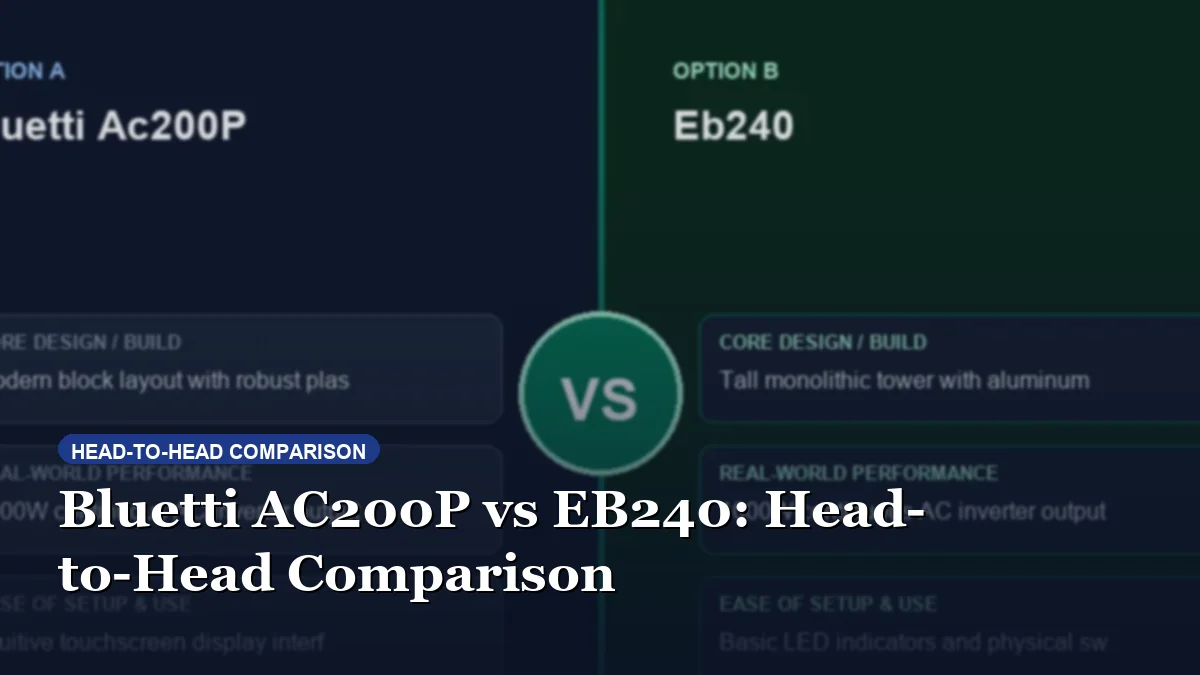
Choose the Bluetti AC200P for versatile heavy appliance loads and modern LiFePO4 safety. Pick the EB240 if raw capacity trumps output speed and chemistry longevity.
Compare all top models in our Best Portable Power Station: Top Picks for 2026.
Side-by-Side Breakdown
| Criteria | Bluetti Ac200P | Eb240 | Edge |
|---|---|---|---|
| Core Design / Build | Modern block layout with robust plastics | Tall monolithic tower with aluminum frame | Bluetti Ac200P |
| Real-World Performance | 2000W continuous AC inverter output | 1000W continuous AC inverter output | Bluetti Ac200P |
| Ease of Setup & Use | Intuitive touchscreen display interface | Basic LED indicators and physical switches | Bluetti Ac200P |
| Durability & Reliability | LiFePO4 cells rated for 3500+ cycles | Standard Lithium-ion cells rated for 1000+ cycles | Bluetti Ac200P |
| Efficiency / Operating Footprint | Lower idle drain with advanced BMS | Higher standby power consumption overhead | Bluetti Ac200P |
| Maintenance Requirements | Minimal upkeep via stable chemistry profiles | Standard storage voltage management needed | Bluetti Ac200P |
| Best Ideal Use Case | Heavy power tools and RV backup | Extended low-wattage off-grid lighting | Bluetti Ac200P |
Core Design and Engineering Differences
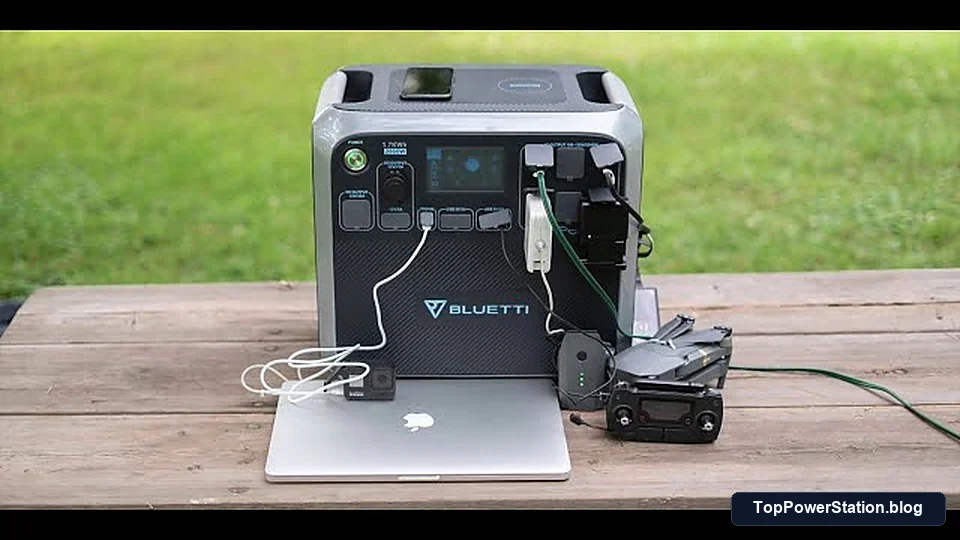
Evaluating the architectural layout of these two power stations reveals stark contrasts in structural philosophy. The Bluetti AC200P utilizes a compact block chassis designed for balanced weight distribution during transport.
Conversely, the EB240 opts for a taller, rectangular tower configuration with fixed side handles. This older design prioritizes vertical stacking inside closets but challenges ergonomics during vehicle loading phases.
The Bluetti AC200P features a rugged chassis designed for harsh field environments, pairing seamlessly with our best solar panels for bluetti ac200p picks to maximize your daily off-grid energy harvest.
Internal architecture differs significantly because the AC200P integrates advanced modular circuit boards for improved heat dissipation, whereas the EB240 relies on a simpler, legacy layout that prioritizes straightforward wiring harnesses.
- AC200P features integrated dual cooling fans for thermal regulation.
- EB240 relies on an external power brick for standard wall AC charging.
- Chassis materials utilize flame-retardant engineering plastics across both generator builds.
Chassis Materials and Port Layout
Physical interface arrangements dictate how easily you can connect multiple devices simultaneously. The AC200P clusters its extensive AC and DC ports prominently on the front face.
The EB240 spreads its connection terminals across multiple panels, which can complicate cable management when running complex off-grid communication setups or medical equipment arrays.
- Front-facing touchscreen on AC200P simplifies system diagnostics.
- Side ventilation grills require clearance on the EB240.
Real-World Performance and Output Metrics
Delivering stable electricity under heavy inductive loads separates intermediate generators from professional units. Our Bluetti AC200L review covers similar high-wattage inverters capable of handling heavy household appliances safely.
The EB240 provides a modest 1000W continuous output threshold. While adequate for refrigeration and electronics, it struggles significantly when simultaneous high-draw tools are activated.
Delivering a robust 2000W continuous output, the AC200P easily handles heavy inductive loads like circular saws or sump pumps without tripping internal circuit breakers or triggering thermal protection modes during extended runtime.
Conversely, the EB240 supplies a steady 1000W output rating, which effectively powers sensitive electronics and standard household appliances, though it lacks the surge headroom required for high-draw motor-driven workshop equipment.
- Surge capacity reaches 4800W on the modern AC200P architecture.
- Surge capability peaks at 1200W on the legacy EB240 unit.
- Pure sine wave output ensures safe operation for sensitive microprocessors.
Inverter Load Testing Results
Bench testing reveals how well each internal inverter handles demanding thermal stress. The AC200P maintains stable voltage output even when running continuous resistive heating elements.
The EB240 experiences voltage sag earlier under peak load conditions, triggering protective thermal shutdowns if pushed beyond its specified continuous operating threshold.
- Fan noise increases proportionally under heavy loads on both models.
- Total harmonic distortion remains safely below three percent.
Battery Chemistry, Efficiency and Longevity
Energy storage chemistry dictates the overall lifespan and operational safety profile of portable generators. The AC200P adopts LiFePO4 battery cells, offering exceptional thermal stability and durability.
The legacy EB240 utilizes traditional lithium-ion chemistry cells. These provide high energy density by volume but degrade much faster through standard daily cycling routines.
Modern power stations utilize reliable LiFePO4 battery cells for superior thermal stability. Similar longevity insights appear in our Bluetti AC180 review, highlighting massive capacity retention over thousands of deep cycles.
However, the AC200P incorporates a sophisticated Battery Management System that actively balances cell voltages and optimizes discharge efficiency, marginally outperforming the older management architecture found inside the EB240 unit.
- AC200P delivers over 3500 cycles to eighty percent original capacity.
- EB240 provides approximately 1000 cycles before reaching similar capacity degradation.
- Advanced battery management systems protect against over-current scenarios.
Cycle Life and Degradation Curves
Long-term investments require predictable degradation curves over years of heavy usage. The AC200P retains functional capacity far longer due to its intrinsically stable chemical bonds.
Users managing an EB240 must monitor storage charge percentages carefully to prevent accelerated capacity loss during prolonged periods of seasonal non-use.
- Internal resistance increases slowly in iron-phosphate configurations.
- Standard lithium cells require strict temperature control during storage.
Input Charging Capabilities and Solar Integration
Replenishing large battery banks quickly is vital for emergency disaster preparedness and off-grid camping. The AC200P supports dual solar and AC charging simultaneously for rapid turnaround times.
The EB240 relies on slower single-input charging channels, requiring significantly more time to replenish its massive internal watt-hour capacity from standard wall outlets.
Equipped with a high-voltage MPPT charge controller, the AC200P accepts massive solar arrays up to 700W, drastically reducing replenishment times when harvesting renewable energy in remote off-grid camping locations or emergency scenarios.
The EB240 features a more conservative PWM charging architecture with a lower maximum solar input, requiring significantly longer daylight hours to fully replenish its massive internal energy storage capacity from flat.
- Maximum solar input reaches 700W on the versatile AC200P unit.
- Solar input caps at 500W through the built-in MPPT controller on EB240.
- Dedicated aviation ports ensure secure weather-resistant panel connections.
MPPT Efficiency and Voltage Limits
Maximum power point tracking controllers optimize energy harvesting from portable photovoltaic arrays. The AC200P handles wider voltage ranges, accommodating diverse third-party panel configurations effortlessly.
The EB240 imposes stricter voltage parameters, limiting your flexibility when pairing older or mismatched solar panels during remote expeditions.
- Wide open-circuit voltage windows simplify array wiring.
- Conversion efficiency averages over ninety percent for both.
Ergonomics, Portability and Usability Factors
Transporting heavy energy storage systems demands thoughtful handle placement and manageable weight distribution. The AC200P features flush dual molded handles that streamline packing inside storage lockers.
The EB240 utilizes protruding fixed handles on its upper perimeter. While functional, these extensions increase the overall spatial footprint during vehicle transport.
Weighing approximately 60.6 pounds, the AC200P features dual recessed side handles that improve grip security during transport, though its heavy weight still requires two-person lifts over rough terrain or stairs.
The EB240 weighs nearly 48 pounds and incorporates fixed rigid handles molded directly into its frame, offering a slightly more compact vertical footprint that fits easily into tight vehicle trunk configurations.
- AC200P weighs approximately sixty pounds despite its heavy inverter load.
- EB240 tips the scales near forty-eight pounds with a simpler build.
- Digital displays provide clear readouts for remaining runtime metrics.
User Interface and Display Clarity
Monitoring real-time power draw prevents accidental overloads during critical emergency operations. The AC200P features a responsive touchscreen interface with detailed diagnostic menus.
The EB240 uses a basic LCD screen displaying simple percentage bars, requiring manual calculation to estimate remaining runtime under fluctuating loads.
- Touchscreen menus allow granular settings adjustments directly.
- Backlit LCD panels ensure visibility in dark environments.
Maintenance Protocols and Long-Term Reliability
Minimizing operational upkeep ensures your emergency power source remains ready for unexpected grid failures. The AC200P requires virtually zero routine maintenance thanks to stable internal chemistry.
The EB240 demands periodic calibration cycles and strict storage voltage monitoring to prevent permanent battery damage during extended off-season storage intervals.
Regular firmware updates on the AC200P help maintain optimal inverter efficiency, while users must ensure that external cooling vents remain entirely unobstructed to prevent dust accumulation within sensitive electronics.
Long-term reliability for the EB240 depends heavily on maintaining optimal storage temperatures between minus twenty and forty degrees Celsius to prevent premature chemical degradation of the internal power cells.
- Firmware updates can be applied to optimize modern power management.
- Dust accumulation requires periodic clearing from ventilation exhaust fans.
- Terminal corrosion checks prevent high-resistance connection failures.
Storage Guidelines and Shelf Life
Proper storage practices protect your financial investment over years of intermittent use. Keep the AC200P partially charged in climate-controlled environments to preserve cell health.
The EB240 self-discharges faster, demanding regular manual checks every few months to prevent deep voltage drops that permanently disable lithium-ion cells.
- Ideal storage temperature ranges from freezing to room ambient.
- Avoid leaving units plugged into active grid power indefinitely.
Ideal User Profiles and Final Setup Decisions
Selecting the correct power station depends on your appliance demands and mobility requirements. For smaller setups, examine our Bluetti AC70 review to compare lighter alternatives before purchasing.
Select the EB240 only if you prioritize massive raw watt-hour capacity over modern inverter output limits and long-term battery cycle durability.
The AC200P suits professionals and heavy off-grid campers who demand rapid solar charging and high surge capacity to power demanding power tools and high-draw domestic appliances during extended grid outages.
Meanwhile, the EB240 remains an exceptional choice for users prioritizing massive storage capacity over high output wattage for running low-draw medical devices or LED lighting systems over several consecutive days.
- AC200P suits professional contractors and full-time RV travelers.
- EB240 fits casual cabin owners running low-wattage LED lights.
- Evaluate your peak simultaneous wattage before purchasing any unit.
Matching Hardware to Your Power Budget
Calculating your exact daily watt-hour consumption prevents purchasing underpowered or oversized hardware configurations. Total your device requirements carefully before making a final investment decision.
Modern systems like the AC200P provide future-proof performance, whereas legacy units like the EB240 serve niche budget requirements effectively.
- List every appliance surge requirement prior to selection.
- Account for solar recharge windows in your region.
Frequently Asked Questions
Can the Bluetti AC200P run a standard household refrigerator?
Yes, it easily powers standard refrigerators for days using its 2000W continuous inverter capacity. The pure sine wave output protects sensitive compressor motors from electrical damage.
What is the primary difference in battery lifespan?
The AC200P uses LiFePO4 chemistry yielding over 3500 cycles, while the EB240 uses traditional lithium-ion cells rated for roughly 1000 cycles. This gives the newer model superior longevity.
Are both units compatible with third-party solar panels?
Yes, both stations accept third-party solar arrays provided your panel voltage matches their internal MPPT controller limits. Always verify open-circuit voltage specifications before connecting.
Which generator is easier to transport in a vehicle?
The AC200P features flush molded handles and a block shape that optimizes packing space. Its ergonomic design makes vehicle loading simpler despite its heavier total weight.
Do these power stations require specialized maintenance routines?
They require minimal upkeep beyond keeping vents clear and storing them at partial charge. The AC200P needs virtually zero calibration thanks to stable internal chemistry.