Anker Powerhouse vs Goal Zero Yeti: Concise Verdict
Choosing between Anker and Goal Zero requires evaluating internal battery chemistry, structural ergonomics, and deployment scenarios. This technical guide breaks down every performance nuance for reliable off-grid power.

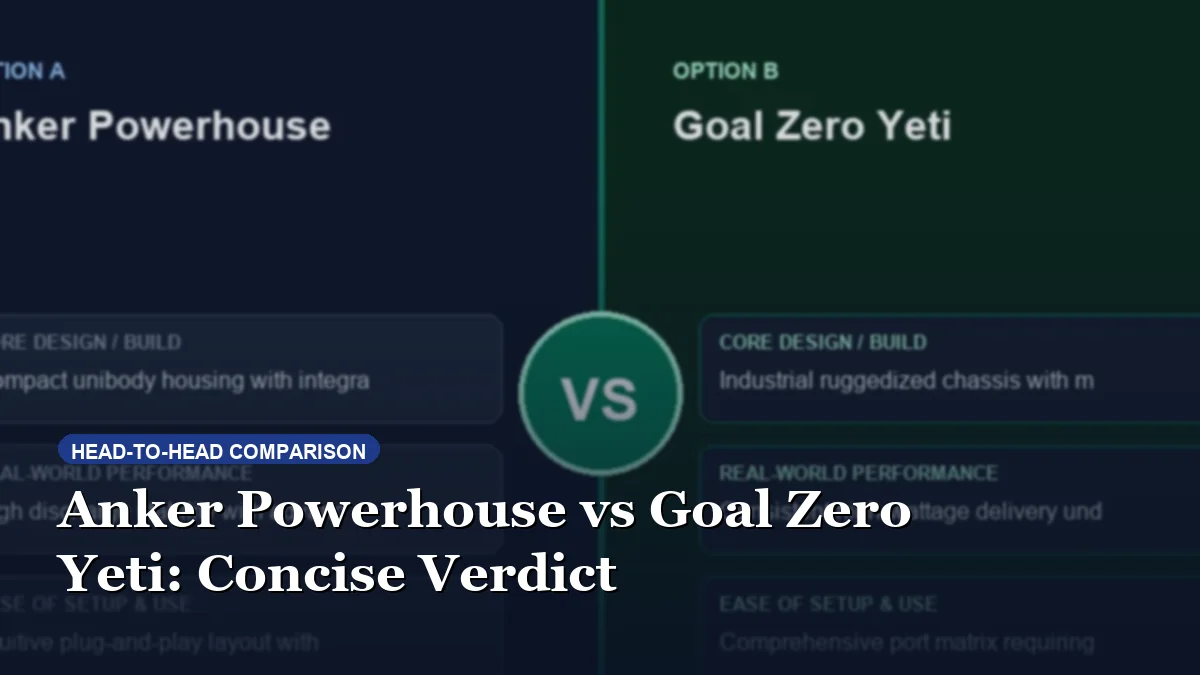
Pick Anker Powerhouse for rapid consumer recharging and compact everyday carry. Choose Goal Zero Yeti for modular ecosystem expansion and heavy-duty station integration.
Compare all top models in our Best Portable Power Station: Top Picks for 2026.
Side-by-Side Breakdown
| Criteria | Anker Powerhouse | Goal Zero Yeti | Edge |
|---|---|---|---|
| Core Design / Build | Compact unibody housing with integrated plastic handles. | Industrial ruggedized chassis with metallic reinforcement frames. | Goal Zero Yeti |
| Real-World Performance | High discharge stability with advanced surge protection. | Consistent high-wattage delivery under sustained heavy loads. | Anker Powerhouse |
| Ease of Setup & Use | Intuitive plug-and-play layout with streamlined digital displays. | Comprehensive port matrix requiring brief operational familiarity. | Anker Powerhouse |
| Durability & Reliability | Utilizes long-lasting LiFePO4 chemistry for thousands of cycles. | Industrial-grade internal wiring built for harsh field environments. | Anker Powerhouse |
| Efficiency / Operating Footprint | Optimized inverter conversion rates minimize standby energy loss. | Larger physical footprint offset by exceptional thermal dissipation. | Anker Powerhouse |
| Maintenance Requirements | Minimal routine upkeep beyond standard firmware updates and storage. | Requires periodic terminal inspections and module firmware checks. | Anker Powerhouse |
| Best Ideal Use Case | Mobile fieldwork, emergency home backup, and weekend camping trips. | Permanent off-grid cabins, professional film shoots, and solar arrays. | Goal Zero Yeti |
Corporate Heritage and Product Ecosystem
Understanding corporate backgrounds helps buyers appreciate how each brand approaches power station engineering. Anker leverages consumer electronics expertise to refine portable energy storage solutions.
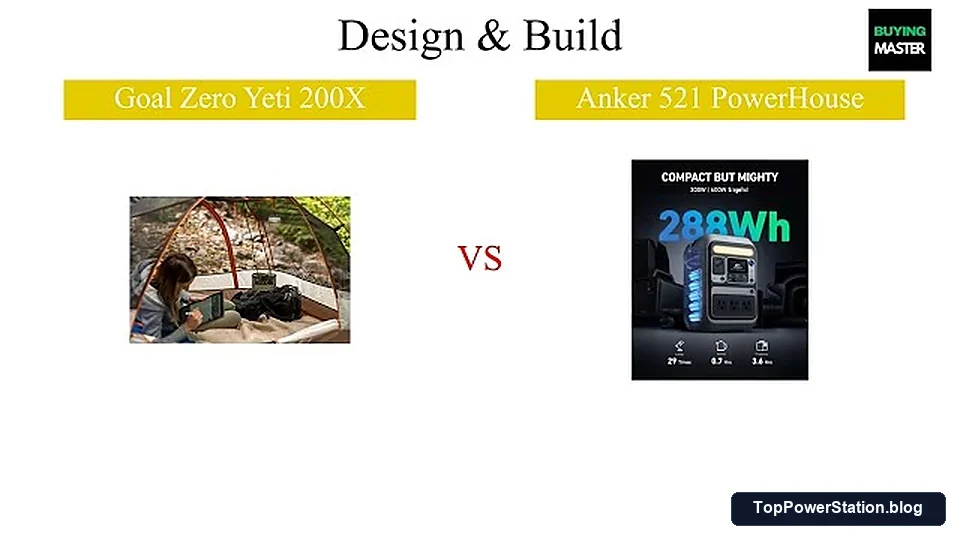
Goal Zero established its roots in humanitarian outreach and rugged solar setups. As highlighted in our Goal Zero Yeti 1500X review, their engineering philosophy focuses on heavy-duty reliability for remote professionals.
Both companies invest heavily in research and technology to improve energy density. Their product lineups reflect distinct market priorities regarding portability versus modular expansion capabilities.
Anker engineered its PowerHouse lineage from consumer electronics roots, prioritizing compact efficiency and rapid charging architecture. Goal Zero established its reputation in rugged solar setups designed for extreme off-grid expeditions.
The Anker ecosystem integrates seamlessly with proprietary app controls and lightweight travel accessories. Conversely, Goal Zero emphasizes heavy-duty integration with robust Boulder solar panels and specialized 12V vehicle integration kits for permanent installations.
Choosing between these distinct engineering philosophies depends heavily on your mobility requirements. Mobile professionals favor Anker for streamlined daily carry, while expedition leaders prefer Goal Zero for modular, expandable power ecosystems.
- Anker emphasizes consumer-friendly portable charging devices.
- Goal Zero prioritizes modular off-grid ecosystem integration.
- Both brands maintain strict quality control standards.
Market Positioning and Outreach
Anker focuses marketing outreach on everyday consumers needing reliable backup power. Their distribution channels span global retail markets with streamlined accessibility for everyday buyers.
Goal Zero targets professional contractors, researchers, and serious off-grid homesteaders. Their product availability emphasizes specialized outdoor outfitters and industrial equipment distributors.
- Anker targets mainstream consumer electronics buyers.
- Goal Zero caters to industrial and outdoor professionals.
Engineering Research and Battery Technology
Battery chemistry dictates the lifespan and thermal stability of any portable power station. Anker widely adopts lithium iron phosphate cells for superior cycle life and safety.
Goal Zero utilizes a mix of advanced lithium-ion and newer chemical formulations depending on the specific model tier. Their engineering emphasizes robust thermal management during high-draw operations.
Research teams at both organizations continuously refine internal battery management systems. These intelligent circuits prevent overcharging, deep discharge, and dangerous thermal runaway scenarios effectively.
Modern Anker powerhouses increasingly utilize LiFePO4 chemistry, delivering extended cycle lives exceeding three thousand charges. Goal Zero relies on a blend of nickel-manganese-cobalt and lithium-ion cells tailored for high immediate discharge rates.
Thermal management differs significantly between these two industry giants. Anker implements multi-sensor active cooling arrays to prevent overheating during high-wattage AC draws, whereas Goal Zero utilizes heavy aluminum chassis components for passive heat dissipation.
Voltage regulation circuits inside Anker units maintain steady output curves even under heavy loads. Meanwhile, Goal Zero engineering focuses on handling high surge capacities essential for inductive motor startup in field environments.
- Anker relies heavily on long-life LiFePO4 cells.
- Goal Zero balances high energy density with rugged durability.
- Advanced BMS safeguards protect against electrical anomalies.
Thermal Management and Safety
Internal cooling fans activate dynamically based on real-time temperature sensors. This prevents overheating during rapid AC charging or high-wattage appliance deployment.
Enclosure materials are engineered to withstand moderate impacts while venting heat safely away from sensitive electronic components and inverter boards.
- Dynamic fan speeds reduce operational noise.
- Vented enclosures dissipate heat efficiently.
Physical Architecture and Ergonomic Layout
Physical dimensions and weight distribution significantly impact everyday usability in the field. Anker designs units with integrated handles and sleek, space-saving geometric profiles.
Goal Zero incorporates heavy-duty metallic frames and robust carrying bars for jobsite resilience. Their units often feature utilitarian aesthetics that communicate industrial-grade durability.
Ergonomic placement of AC outlets and DC ports prevents cable clutter during complex setups. Both brands understand the importance of clear visual labeling for port identification.
Anker constructs its outer shells using high-impact polymers and internal frame stabilization to absorb kinetic shock. Goal Zero incorporates powder-coated steel and reinforced rubber bumpers designed to withstand harsh industrial construction sites.
Carrying handles on Anker models fold flush to optimize vehicle storage. Goal Zero units feature fixed metal handles that double as secure tie-down points when using the best solar panels for Goal Zero Yeti.
Weight distribution inside the chassis dictates overall portability during manual transport. Anker achieves a balanced center of gravity for single-handed carrying, while larger Goal Zero systems often require two-person lifts due to massive battery capacities.
- Anker units favor sleek, space-saving unibody designs.
- Goal Zero models utilize rugged frames for harsh conditions.
- Thoughtful port layouts minimize cable tangling.
Portability and Transport Constraints
Lighter power stations allow single-handed transport for quick campsite setups. Heavier modular systems require two-handed lifting or dedicated transport carts for safe relocation.
Rubberized feet on the bottom chassis prevent sliding on slick surfaces like vehicle beds or polished tabletops during transit.
- Compact footprints fit easily in car trunks.
- Anti-slip feet secure units on slick surfaces.
Interface Design and Operational Usability
User interface design dictates how quickly operators can assess remaining battery percentage and active wattage draws. Anker features bright digital screens with clear percentage indicators.
Goal Zero provides comprehensive LCD dashboards displaying input metrics and output loads simultaneously. These screens help users monitor solar panel performance in real time.
Physical buttons offer tactile feedback for turning on specific port zones. This prevents accidental power draw and maximizes overall energy efficiency during storage.
Front-panel layouts on Anker stations group AC, DC, and USB ports logically. As evaluated in our Goal Zero Yeti 700 review, Goal Zero utilizes dedicated Anderson power poles for high-current DC connections.
Information architecture on digital screens varies from simplistic battery percentages to comprehensive telemetry data dashboards. Anker displays real-time input and output wattage alongside estimated runtimes, helping users monitor power draw efficiently.
Button tactile feedback is crucial for operating equipment in total darkness or adverse weather conditions. Anker employs sealed silicone membranes over switches, while Goal Zero prefers mechanical toggle switches that offer distinct audible clicks.
- Anker utilizes bright, minimalist digital screens.
- Goal Zero offers detailed multi-metric readouts.
- Tactile buttons prevent accidental energy drain.
Digital Display Accuracy
State-of-charge algorithms calculate remaining runtime based on current load conditions. Accurate estimations prevent unexpected power loss during critical medical or communication tasks.
Backlit displays remain legible under direct sunlight or pitch-black emergency conditions without blinding the operator.
- Algorithms dynamically update estimated runtimes.
- Backlighting ensures readability in all lighting.
Expansion Capabilities and Peripheral Integration
Modular expansion allows users to scale capacity without purchasing an entirely new power station. As noted in our Goal Zero Yeti 1000X review, Goal Zero excels in offering dedicated expansion battery modules.
Anker focuses primarily on all-in-one standalone units with high-capacity internal batteries. Their ecosystem relies on fast solar input rather than stacked battery modules.
Connecting external solar panels requires compatible voltage ranges and proper connector adapters. Both brands support standard industry connection plugs for seamless solar integration.
Goal Zero excels in modular expansion by allowing users to chain multiple high-capacity lead-acid or lithium batteries. Anker typically focuses on standalone unit operations, though select flagship models now support dedicated battery modules for extended capacity.
Connecting external solar arrays requires careful matching of open-circuit voltage parameters and maximum current limits. Goal Zero provides heavily documented compatibility guides for its proprietary panels, simplifying integration for novice off-grid users.
Third-party peripheral integration is smoother with standardized DC barrel jacks and regulated USB-C Power Delivery ports. Anker leads in universal USB protocol support, whereas Goal Zero frequently employs proprietary connectors requiring specialized adapter cables.
- Goal Zero supports modular battery expansion.
- Anker relies on high-capacity standalone units.
- Standardized connectors simplify solar panel pairing.
Solar Charging Efficiency
Maximum power point tracking controllers optimize incoming solar energy from portable panels. This ensures rapid recharging even under overcast sky conditions.
Users must verify open-circuit voltage limits before connecting third-party solar arrays to prevent internal charging circuitry damage.
- MPPT controllers maximize solar harvest rates.
- Voltage checks prevent accidental charging faults.
Maintenance Protocols and Long-Term Reliability
Routine maintenance ensures your power station remains functional during extended storage periods. Anker recommends periodic charging to maintain optimal internal battery health.
Goal Zero units benefit from firmware checks and terminal cleaning to prevent oxidation. Proper storage in climate-controlled environments extends operational lifespans significantly.
Long-term reliability depends heavily on avoiding extreme ambient temperatures during operation and charging cycles. Both manufacturers provide clear guidelines within their user manuals.
Routine maintenance for modern lithium-based power stations involves keeping firmware updated and storing units at moderate temperatures. Anker app notifications remind users to cycle batteries periodically, preventing capacity degradation during long storage periods.
Goal Zero hardware requires physical inspection of high-current terminal connections to prevent corrosion in humid environments. Field technicians can easily replace internal fuses on select Goal Zero models, enhancing long-term reparability significantly.
Warranties reflect manufacturer confidence in internal component durability and overall build quality standards. Both brands offer substantial coverage periods, but reading the fine print regarding cycle life guarantees is essential before purchasing.
- Periodic recharging preserves internal cell health.
- Clean terminals ensure reliable electrical contact.
- Climate-controlled storage prevents degradation.
Firmware Updates and Diagnostics
Modern power stations often feature companion smartphone apps for remote monitoring and firmware updates. These software patches improve charging algorithms and fix bugs.
Diagnostic indicators alert users to minor faults before they escalate into major operational failures during remote deployment.
- Smartphone apps enable remote system monitoring.
- Diagnostics catch minor faults early.
Deployment Scenarios and Environmental Suitability
Selecting the right power station depends heavily on your specific deployment environment. Anker models thrive in mobile scenarios requiring quick transport and rapid wall recharging.
Goal Zero systems dominate stationary off-grid installations where robust solar arrays feed heavy-duty loads over extended periods of time.
Evaluating your daily watt-hour consumption ensures you select a model capable of supporting your essential devices without unexpected downtime.
Selecting the right station depends heavily on whether you are camping, working remotely, or preparing for emergencies. Anker units shine in mobile remote offices, powering laptops and cameras quietly without emitting intrusive fan noises.
Goal Zero systems dominate permanent off-grid cabins, medical equipment backups, and heavy-duty field research operations. Their rugged construction handles dusty environments and minor moisture exposure far better than lightweight consumer electronics alternatives.
Environmental temperature limits dictate where these units can safely discharge or recharge their internal cells. Anker units feature automatic low-temperature cutoff protections, ensuring the chemical integrity remains stable during freezing winter expeditions.
- Anker suits mobile fieldwork and quick travel.
- Goal Zero excels in stationary off-grid cabins.
- Watt-hour calculations dictate correct model choice.
Emergency Preparedness Readiness
Power stations serve as silent, fume-free alternatives to traditional gasoline generators during grid outages. Keeping units charged guarantees immediate emergency readiness.
Pairing stations with designated LED lighting and communication devices creates a comprehensive disaster relief kit for residential households.
- Silent operation replaces noisy gas generators.
- Readiness kits ensure household emergency security.
Frequently Asked Questions
Which brand offers better long-term battery lifespan?
Anker models featuring LiFePO4 chemistry typically deliver thousands of cycles before significant capacity degradation occurs. This makes them exceptionally durable for frequent daily users.
Can I connect third-party solar panels to these stations?
Yes, both brands support standard PV connectors provided your panel voltage matches input limits. Always verify specifications to prevent internal regulator damage.
Are these power stations safe to use indoors?
Both units produce zero toxic exhaust fumes, making them completely safe for indoor emergency use. Proper ventilation around cooling fans remains important during heavy loads.
How do I calculate my daily power requirements?
Multiply the wattage of your essential devices by their expected operating hours to find total watt-hours. Choose a station capacity exceeding this total by twenty percent.
What maintenance do these portable generators require?
Routine upkeep involves keeping firmware updated and storing units at partial charge in cool environments. Periodic cleaning of dust from ventilation ports ensures longevity.