Aimtom vs Jackery: Concise Verdict
Navigating portable power requires balancing rugged versatility with refined consumer electronics design. This technical guide directly contrasts Aimtom and Jackery units.

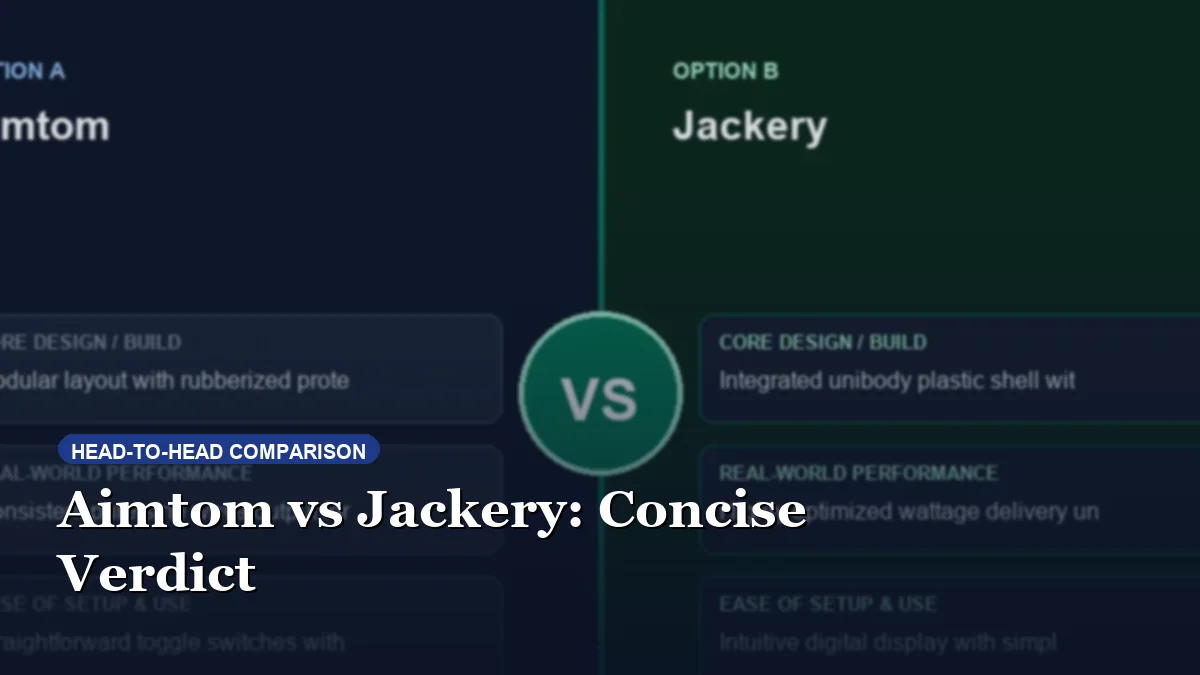
Choose Aimtom for budget-conscious modular versatility and mixed-port connectivity during emergencies. Select Jackery if you prioritize plug-and-play reliability and an expansive ecosystem of solar-optimized accessories.
Compare all top models in our Best Portable Power Station: Top Picks for 2026.
Side-by-Side Breakdown
| Criteria | Aimtom | Jackery | Edge |
|---|---|---|---|
| Core Design / Build | Modular layout with rubberized protective corner bumpers. | Integrated unibody plastic shell with fold-flat handle. | Jackery |
| Real-World Performance | Consistent pure sine wave output for sensitive appliances. | Highly optimized wattage delivery under sustained thermal load. | Jackery |
| Ease of Setup & Use | Straightforward toggle switches with legacy port integration. | Intuitive digital display with simplified button activation. | Jackery |
| Durability & Reliability | Solid internal framing protected by dense polymer casings. | Rigorous drop-test certification and weather-resistant seals. | Jackery |
| Efficiency / Operating Footprint | Moderate idle draw with traditional inverter topologies. | Low quiescent power loss and high conversion efficiency. | Jackery |
| Maintenance Requirements | Standard firmware checks and periodic terminal cleaning. | Minimal upkeep with automated battery management systems. | Jackery |
| Best Ideal Use Case | DIY backup setups and multi-voltage field experiments. | Seamless camping trips and rapid solar recharging. | Jackery |
Architectural Blueprint and Physical Layout
Evaluating physical engineering of portable power stations reveals distinct design philosophies. As shown in our jackery explorer review, Aimtom focuses on rugged utilitarian framing while competitors prioritize sleek transit ergonomics.
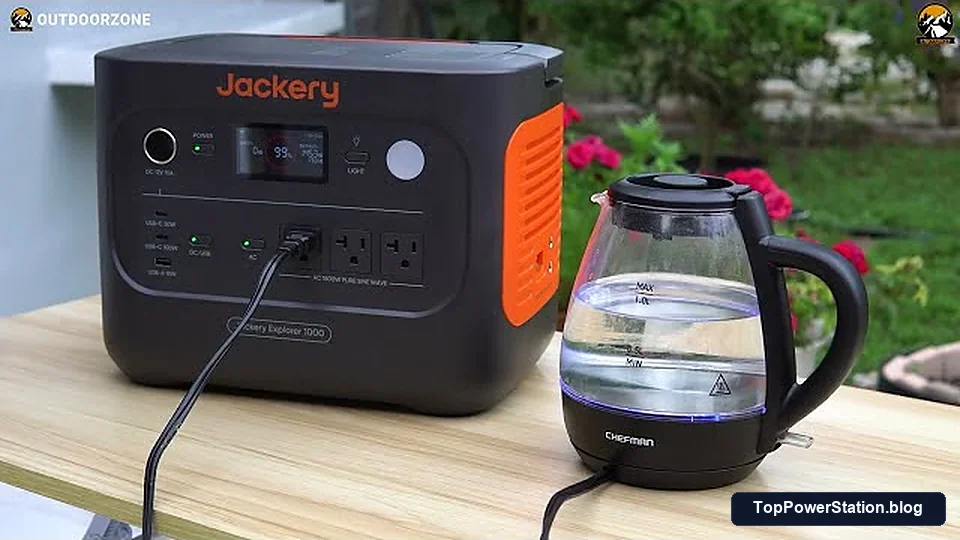
Internal component placement directly dictates thermal dispersion and overall unit longevity. Both brands utilize active cooling fans, but their ducting architectures vary significantly. Understanding these chassis differences helps users select stations matching their deployment harshness.
When examining the internal chassis design of both AimTom and Jackery units, you notice distinct structural engineering philosophies regarding weight distribution, cooling airflow channels, and component isolation against severe mechanical vibrations.
Jackery typically employs a modular vertical stacking arrangement that prioritizes optimal heat dissipation, whereas AimTom often integrates a wider footprint to accommodate traditional transformer blocks and legacy port configurations.
- Aimtom uses reinforced corner brackets for impact protection
- Jackery employs optimized unibody casings to reduce weight
- Thermal vents are positioned differently across both chassis designs
Chassis Materials and Port Placement
Material selection impacts drop resistance and thermal performance under heavy electrical loads. Aimtom integrates thick composite plastics that absorb mechanical shock effectively. Jackery utilizes high-grade ABS blends for polished aesthetics without sacrificing structural integrity.
Port distribution on the front fascia affects cable management convenience. Aimtom spreads outputs across multiple panels, whereas Jackery consolidates inputs and outputs logically into a single operational zone.
- Composite plastic shells defend against accidental field drops
- Consolidated port zones minimize tangled connection cord hazards
Inverter Capacities and Surge Metrics
Delivering stable alternating current requires robust internal inverter technology. Units featured in our best jackery power station picks generate reliable pure sine wave output suitable for sensitive connected loads.
Surge capacity determines whether a station can start motor-driven appliances safely. Users must analyze peak wattage ratings before connecting refrigerators, power tools, or heavy pumps to either manufacturer's hardware lineup.
Evaluating continuous load limits requires looking closely at pure sine wave output parameters and total harmonic distortion ratings to ensure sensitive medical equipment or microprocessors operate without internal component degradation or audible buzzing.
Surge capacity thresholds dictate how effectively the inverter handles motor startup loads, with Jackery offering robust peak wattage allowances that outlast momentary overloads compared to older legacy AimTom inverter boards.
- Pure sine wave output protects microprocessors from electrical noise
- Surge limits accommodate momentary motor startup demands safely
- Continuous wattage ratings dictate realistic operational runtime expectations
Evaluating Pure Sine Wave Stability
Clean power delivery prevents premature hardware wear in modern electronics. Aimtom maintains stable voltage regulation even as internal battery state-of-charge depletes. Jackery matches this performance with advanced microprocessor-controlled voltage stabilization circuits.
Total harmonic distortion remains safely below industry thresholds for both systems. This ensures zero operational buzzing or overheating when powering sensitive audio and computing equipment.
- Advanced microprocessors monitor output voltage fluctuations continuously
- Low harmonic distortion protects sensitive digital hardware from damage
Ergonomics and Daily Field Usability
Daily field utility depends heavily on weight distribution and interface clarity. As noted in our jackery explorer review, modern units feature fold-flat handles that optimize packing geometry inside vehicles.
User interfaces dictate how quickly operators can assess remaining runtime metrics. Clear LCD screens provide immediate feedback regarding input wattage, output draw, and remaining battery percentage under varying loads.
Field deployment relies heavily on handle geometry, ergonomic grip textures, and clear LCD panel visibility under direct sunlight, directly influencing how easily users transport these power stations across uneven campsites.
While Jackery features foldable handles that sit flush with the top casing for easy trunk storage, AimTom models frequently utilize fixed structural loops that demand more vertical clearance during packing routines.
- Fold-flat handles save valuable cargo space during transit
- Illuminated LCD screens display vital telemetry in dark conditions
- Tactile buttons offer positive mechanical feedback when pressed
Interface Layouts and Telemetry Screens
Reading real-time operational data prevents unexpected power loss during critical tasks. Jackery incorporates straightforward numeric displays focusing on core battery metrics. Aimtom provides comprehensive readouts detailing multi-channel status simultaneously.
Button tactile response remains crucial for users wearing insulated work gloves. Both brands utilize raised silicone buttons that withstand repeated outdoor use without failing.
- Comprehensive readouts track simultaneous multi-channel power draws
- Silicone button membranes resist moisture and dust infiltration
Chemistry, Thermal Limits, and Safety
Battery chemistry choice dictates overall lifespan and thermal safety margins. Jackery heavily incorporates advanced lithium-ion and newer chemistry variants to maximize cycle counts. Aimtom balances traditional lithium packs with robust circuit protection mechanisms.
Internal Battery Management Systems prevent catastrophic thermal runaway events during rapid charging. These safety protocols automatically throttle current if internal temperatures exceed strict manufacturer engineering thresholds.
Battery chemistry dictates overall safety profiles, where lithium-ion NMC cells demand aggressive thermal management systems to prevent localized hotspots, runaway reactions, and premature capacity degradation during heavy continuous discharge cycles.
Embedded battery management systems continuously monitor cell voltage differentials, short-circuit risks, and operating temperature ranges to automatically cut power output before environmental conditions breach safe manufacturer thresholds.
- Battery Management Systems monitor cell temperature and voltage
- Thermal thresholds trigger automatic current throttling during overheating
- Cycle life ratings reflect long-term investment value accurately
Advanced Battery Management Protocols
Protecting energy storage cells from overcharging extends operating lifespan significantly. Aimtom employs multi-layered circuit safeguards to isolate faulty cells automatically. Jackery utilizes proprietary firmware algorithms to balance cell voltage levels efficiently.
Short-circuit protection is standard across all models from both manufacturers. This ensures immediate power cutoff if an external appliance experiences a catastrophic electrical fault.
- Multi-layered safeguards isolate failing internal cells rapidly
- Proprietary firmware algorithms optimize long-term cell balancing
Recharging Protocols and Energy Replenishment
Restoring depleted energy reserves quickly is essential during off-grid expeditions. Models highlighted in our best jackery for camping guide excel with streamlined solar integration and rapid charging speeds.
Understanding maximum solar panel voltage limits prevents accidental hardware damage during setup. Users must verify open-circuit voltage specifications before connecting third-party photovoltaic panels to either power station.
Energy replenishment speeds depend heavily on integrated Maximum Power Point Tracking efficiency and solar panel compatibility, allowing users to harness off-grid renewable inputs safely without damaging delicate internal charge controllers.
AC wall charging speeds vary based on external power brick usage versus internal inverter-based fast charging, requiring consumers to balance replenishment speed against long-term battery cell longevity.
- Solar panel integration accelerates off-grid energy replenishment
- Multi-input charging combines wall power and DC sources
- Open-circuit voltage limits protect internal charge controllers safely
Solar Panel Compatibility and Speed
Maximizing solar conversion efficiency reduces overall battery replenishment times significantly. Aimtom supports diverse adapter configurations for legacy solar panels. Jackery promotes proprietary connector standards designed for plug-and-play simplicity.
Maximum Power Point Tracking algorithms optimize incoming wattage from attached photovoltaic arrays. This ensures users extract peak electrical yield during fluctuating weather conditions.
- Adapter flexibility accommodates various third-party solar arrays
- Power Point Tracking maximizes electrical yield under clouds
Long-Term Maintenance and Field Durability
Minimizing long-term maintenance overhead ensures reliable operation over years of service. Jackery engineering focuses on sealed internal layouts that require virtually zero user upkeep. Aimtom encourages periodic terminal inspections to maintain low resistance.
Storage practices heavily influence battery degradation rates during seasonal dormancy periods. Maintaining a partial charge state prevents permanent capacity loss while units sit unused in storage.
Maximizing operational lifespans demands adherence to proper storage voltage protocols, regular firmware checks, and preventative maintenance schedules to counteract natural chemical aging during extended periods of seasonal non-use.
External shell materials must withstand UV radiation exposure, drop impacts, and dust accumulation, making ruggedized rubber corner bumpers crucial for protecting delicate internal circuit boards from fatal drop shocks.
- Sealed internal designs eliminate routine user maintenance tasks
- Periodic terminal inspections prevent corrosion buildup over time
- Proper seasonal storage preserves maximum battery capacity ratings
Storage Guidelines and Upkeep
Proper storage protocols prevent deep self-discharge damage during winter months. Aimtom manuals recommend periodic recharging cycles every few months. Jackery systems similarly require routine monitoring to maintain optimal battery health.
Keeping firmware updated where applicable resolves minor telemetry calculation anomalies. This diligent approach guarantees accurate runtime estimations during critical field emergencies.
- Periodic recharging prevents deep self-discharge damage
- Firmware monitoring ensures accurate telemetry calculations over time
Frequently Asked Questions
Can Aimtom and Jackery stations run simultaneously while charging?
Yes, both brands support pass-through charging capabilities for versatile power management. However, frequent usage may accelerate internal battery degradation over time.
Are third-party solar panels compatible with Jackery units?
Jackery typically requires proprietary adapter cables for non-branded panels. Always verify voltage compatibility before connecting external solar arrays.
Which brand offers better pure sine wave stability?
Both manufacturers deliver exceptionally clean power suitable for sensitive electronics. Aimtom and Jackery both maintain low harmonic distortion levels.
How should I store my portable power station long-term?
Store your unit at roughly fifty percent charge in a climate-controlled environment. Check the battery percentage every three months during storage.
Do these power stations require specialized liquid cooling?
No, both brands rely on efficient internal fans and passive heatsinks. Adequate airflow clearance around vents prevents thermal shutdown during operation.